
 GHAM POWER |
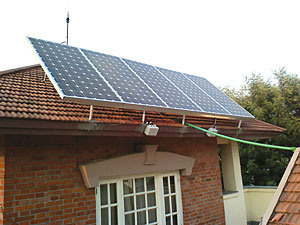
Solar is no longer the new kid on the block. Solar panels for passive water heating systems in urban homes have been around for a while now, but lately, photovoltaic (PV) solar cells have begun to make their presence felt. Nepal lies in a prime solar region, too, getting two to three times more solar energy than Germany, the largest producer of solar electricity in the world.
"Solar electricity is an eco-friendly technology and the most viable alternative energy source available here," says Moon Pradhan of Gham Power. "Loadshedding has forced people to look into solar as a convenient and safe power option." In operation since February this year, the company has already installed over 70 PV solar systems.
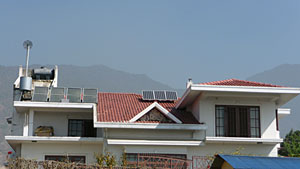 |
While interest in solar electricity has grown over the years, people usually shy away when they are confronted by the outlay required. True, a system to cover even the basic lighting requirements of a household can cost over Rs 50,000. "Solar might sound expensive upfront," acknowledges Rajeev Subba of Kathmandu Power Company. "But it is a one-time investment." And banks like Clean Energy Development Bank are now providing low-cost loans for solar systems.
The costs also come down if low-wattage electronic appliances are installed. "We need to be conscious about power consumption when we purchase electronic goods," says Manish Bajracharya of Lotus Energy. "It can easily cut down on our energy requirements and bills."
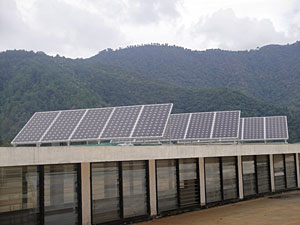 |
Surendra Mathema of Tahachal has a 200W solar backup in his house and is one satisfied customer. "I also use a solar cooker, which makes my cooking gas last longer, " says Mathema. He now has another 500W of solar capacity and is exploring the possibility of joining it up to the main grid.
However, the government is yet to introduce the concept of net metering, which would allow independent electricity producers to sell their surplus to NEA. "The government needs to have policies that will encourage people to become independent producers of solar electricity," says Madhusudhan Adhikari, Solar Component Manager of the Alternative Energy Promotion Centre. If consumers can realise an economic return on solar electricity then households will be motivated to be part of a solution to the nationwide power crisis, rather than wait for mega hydro-projects to deliver.
| Size/production | Capacity | Starting rate |
| 0.5 unit/day 95W panel | 4 11W bulbs and a TV | Rs 75,000 |
1.5 unit/day 185W panel | 6 11W bulbs, a TV and a computer or a water pump | Rs 145,000 |
| 3 units/day two 185W panels | 6 11W bulbs, a TV, a computer, a water pump, a fridge and a rice cooker | Rs 280,000 |
| Sample rates from Gham Power, finance available | ||
Rural power
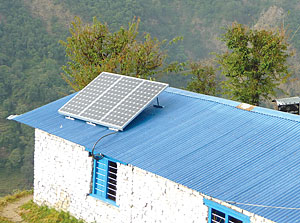 |
Use of PV solar modules for electricity started in Nepal with rural electrification projects in areas that did not have access to the main hydroelectric grids. "A solar lighting system does not require huge infrastructure, can be installed in a day and even a small system can power the energy needs of a rural household," says Yug Tamrakar of Solar Electricity. According to the Alternative Energy Promotion Centre, more than 225,000 PV solar systems have been installed in rural households, a total of 8MW of electricity. The use of solar in rural areas has been boosted by a subsidy for rural solar projects that ranges from Rs 5,000-Rs 10,000.
READ ALSO:
Good business, KATY WILLIAMS
From hydro to solar, NAVIN SINGH KHADKA
The age of enlightenment, AHMAD ISKANDAR