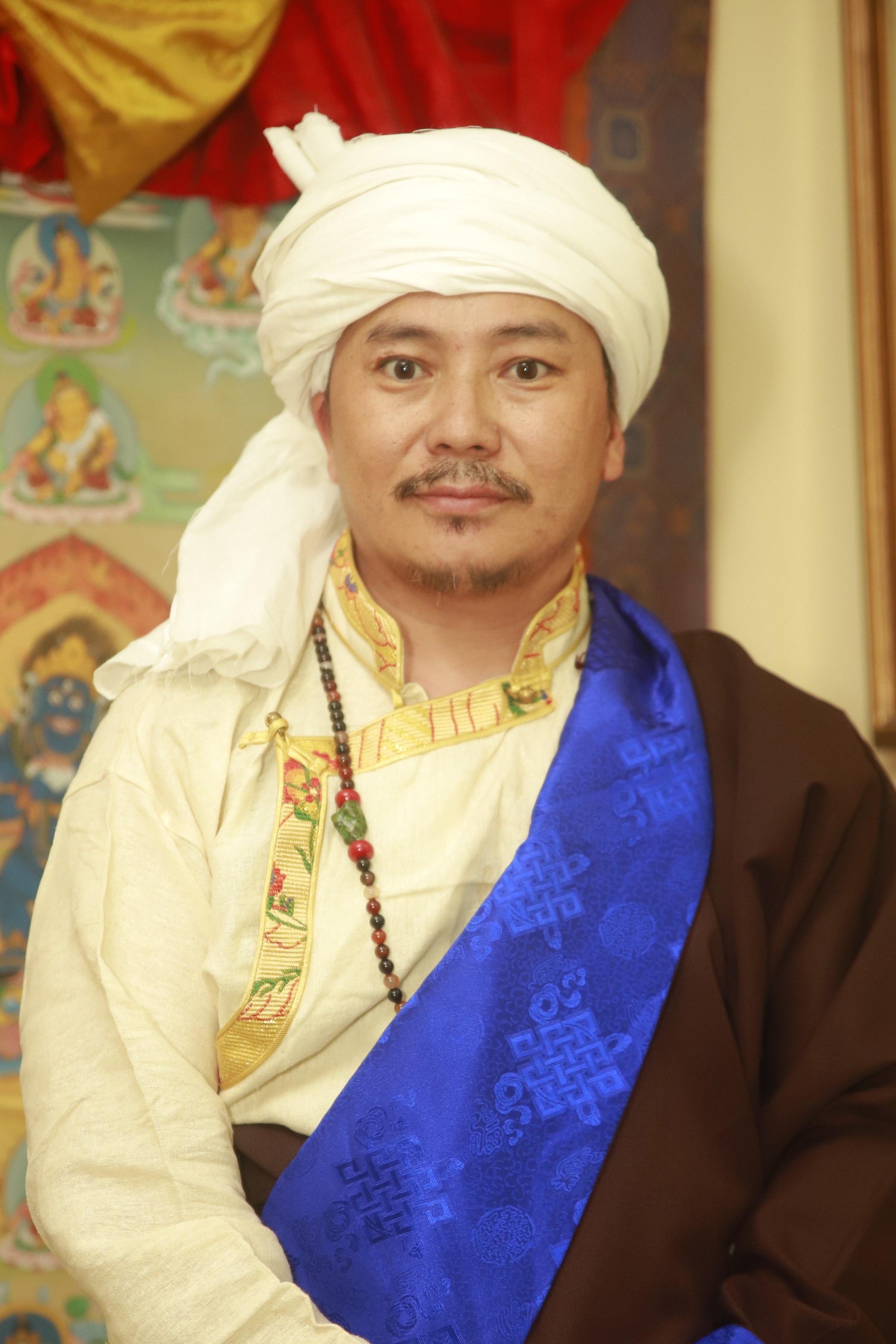
At the age of five, Dorjee Karmarong fell sick and his local healer-slash-thangka painter cut him a deal: in exchange for treatment, the young patient had to promise to become a painter.
The shaman may have been joking, but 38 years later, Karmarong is a successful international artist, and now has a solo exhibition at the Siddhartha Art Gallery.
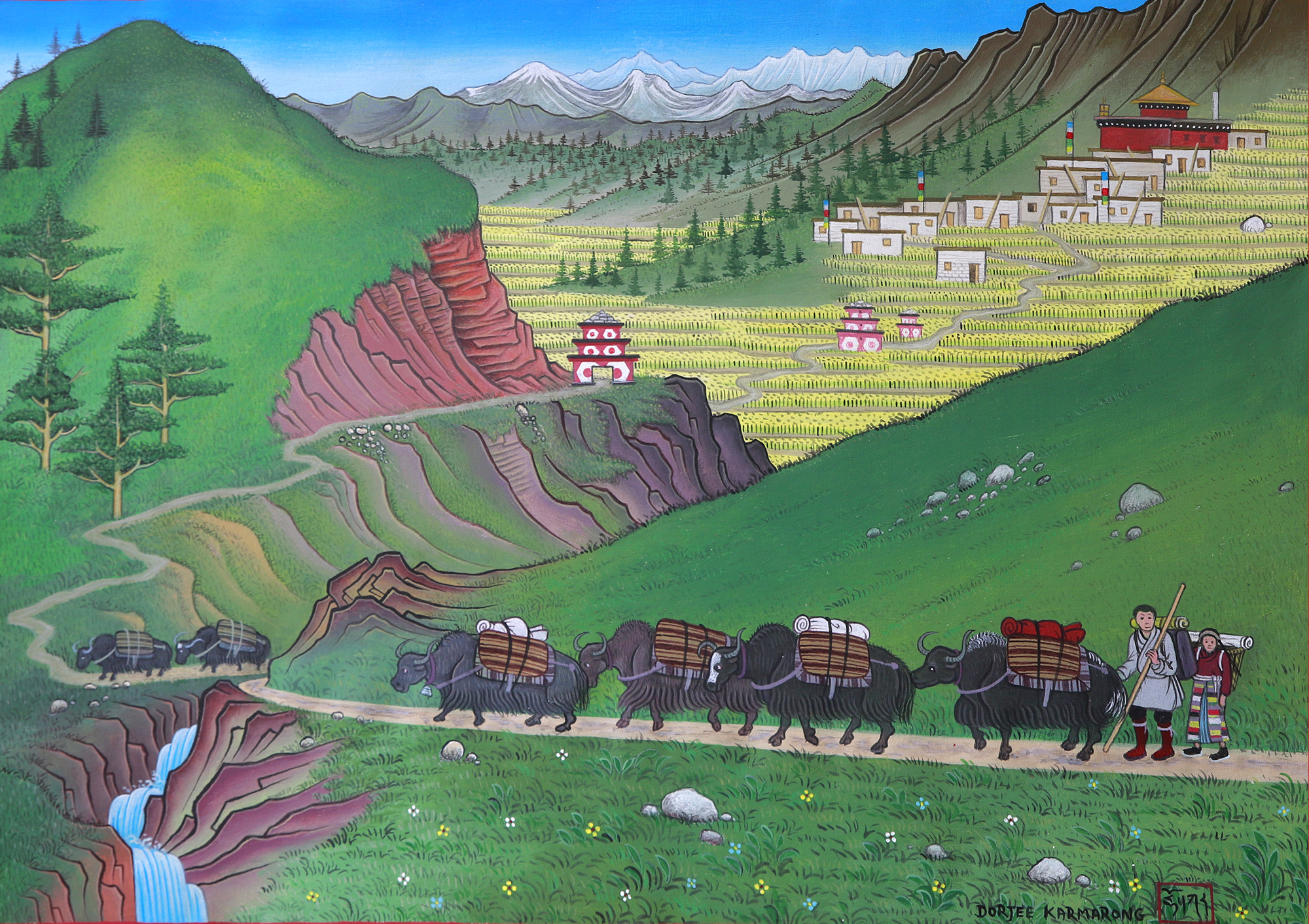
‘Karmarong: Hidden Valley in the Himalayas’ is a collection of 27 paintings spread across two floors that give the viewer a comprehensive feel for life among the Karmarong community in the remote Mugu district of Karnali.
Karmarong has a distinctive style featuring clean outlines, vibrant colours and detailed natural landscapes. Animals, mountains, trees, and the sun and the moon appear constantly. It is a style that took 20 years to perfect, as the painter practised teaching in monasteries of Bangladesh, India, Singapore, and most recently in Vietnam.
Mugu is one of the remotest districts in Nepal, but the Karmarong community of about 3,000 people live in about a dozen small villages in the remotest northern corner of the district near the Chinese border. They speak their own dialect.
Read also: The present meets the past, Pinki Sris Rana
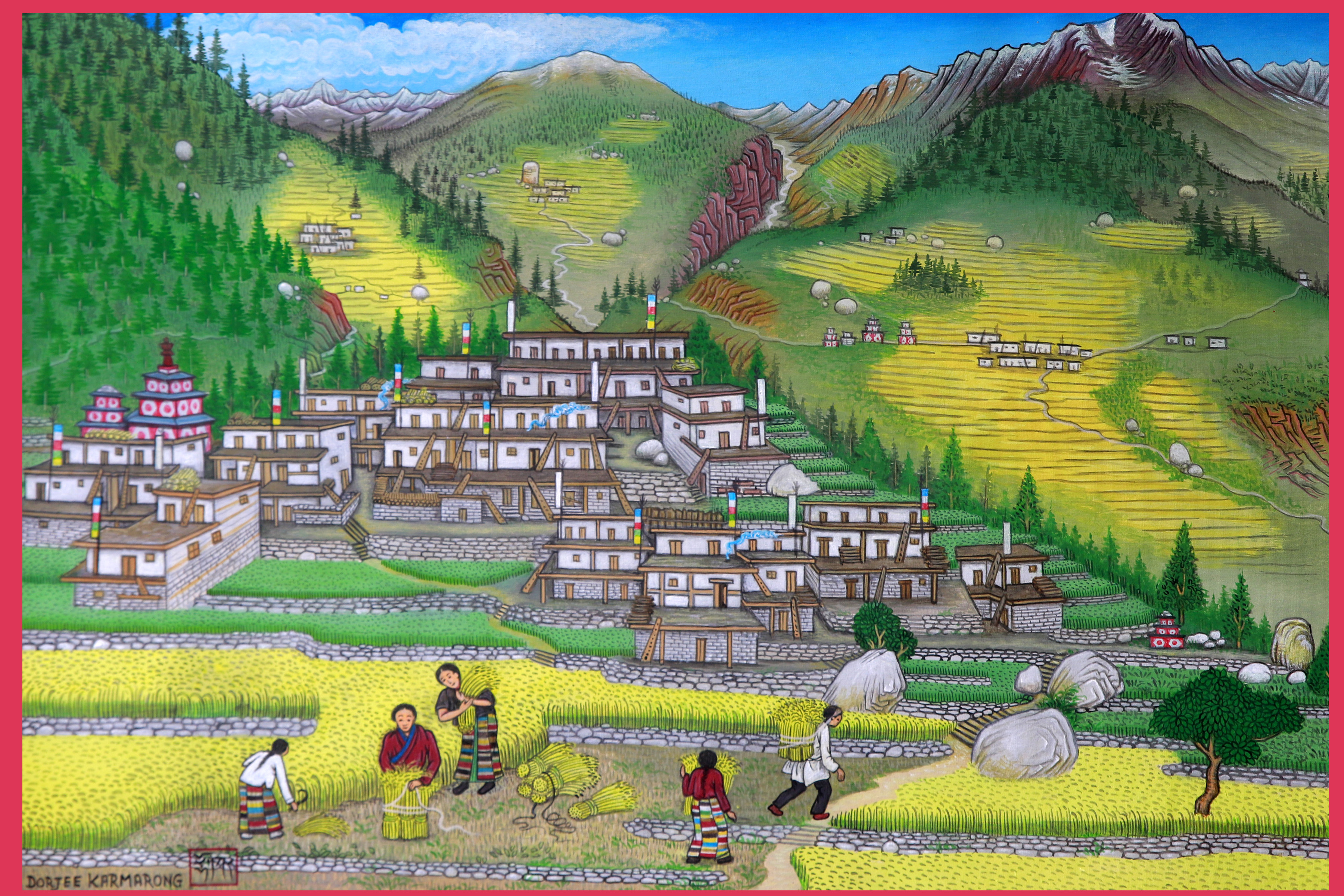
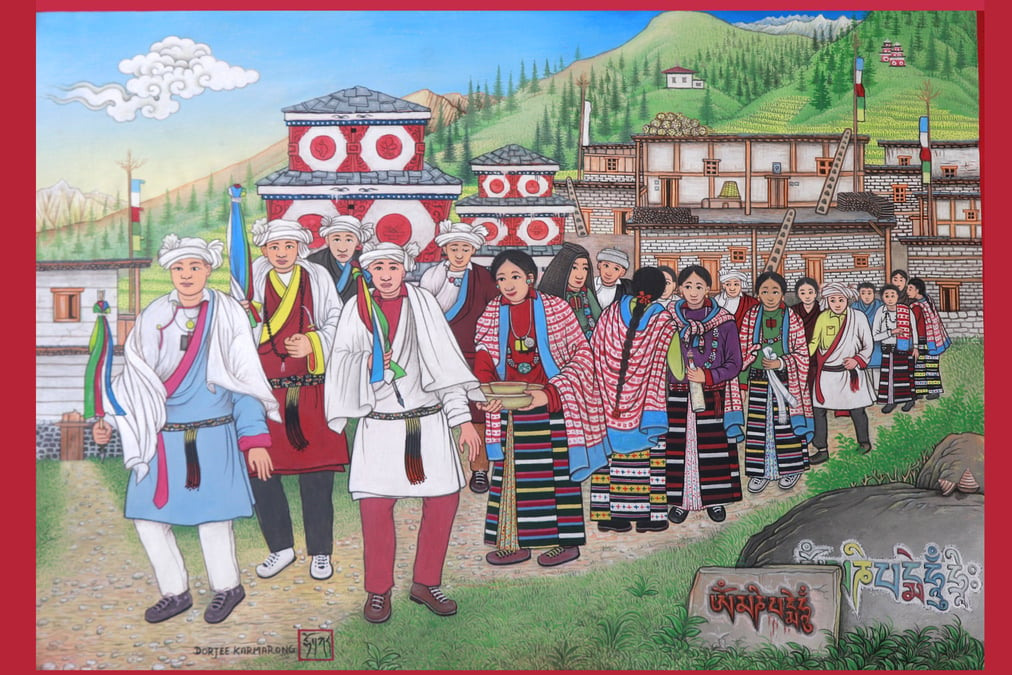
Some of the paintings show general goings-on in Karmarong, such as harvest time. ‘The Hospitality of Karmarong’ shows residents gathering to formally welcome an important guest. “In front is someone who is still lucky to have both parents,” explains the painter.
‘Magic of Milarepa’ is a closeup of a grey, cracked yak horn on the floor. There is water on the ground next to the horn, and inside is a green-skinned monk, meditating in robes.
“Milarepa was travelling with one of his students in Tibet, who was starting to act a little arrogant. They were suddenly caught up in a storm, and the saint shrank himself and sheltered in the horn, humbling his disciple,” Karmarong explains.
Yaks are a constant feature in the exhibition, and the painter Karmarong has given them sentient eyes, with emotions like anger, introspection, suspicion, and even wide-eyed and crazed.
“I was once told to study as voraciously as a yak grazes,” says Karmarong.
Read also: Human spiritual existence in a digital ecosystem, Kashish Das Shrestha
In the middle of ‘The Dance of the Elements’ is a face that is half yellow and half black holding a cigarette around which is coiled a multi-headed serpent. “Thia represents our animal impulses,” Karmarong explains. “It is about how nature makes beautiful things. But when humans tamper with it, something usually goes wrong.”