(Born: 1975, Allowed to die: 2009)
Fifteen years ago, while operating motorcycle tours across India, Bhutan and Tibet, I lived with my family in Kathmandu. Weekends were for exploring, by bicycle or when there was petrol by Bullet motorcycle.
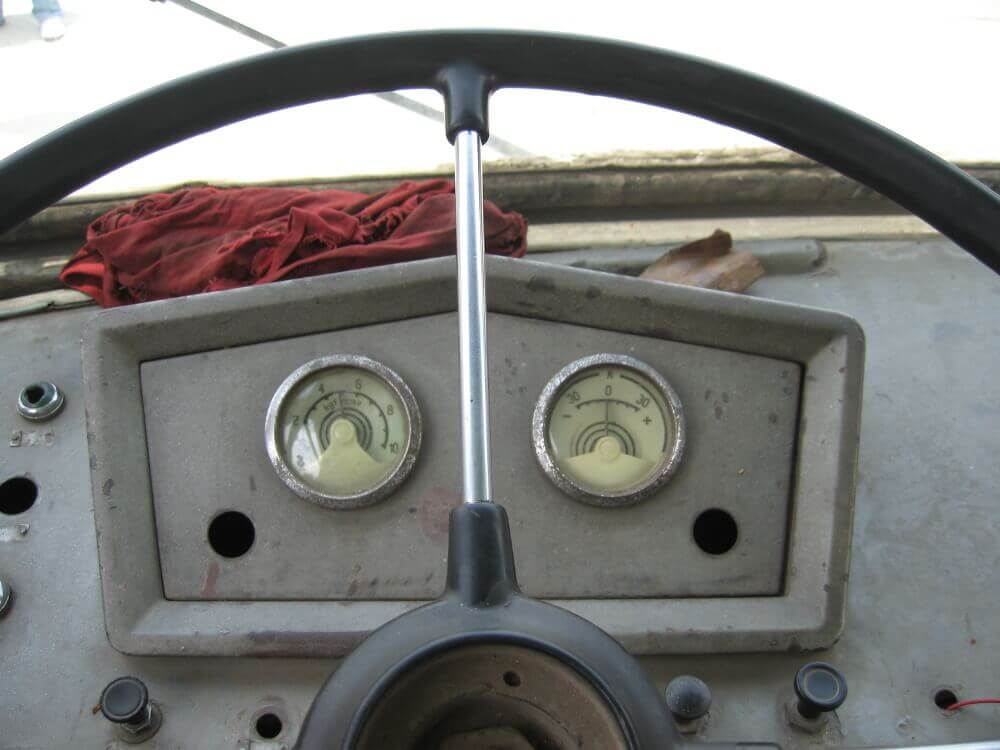
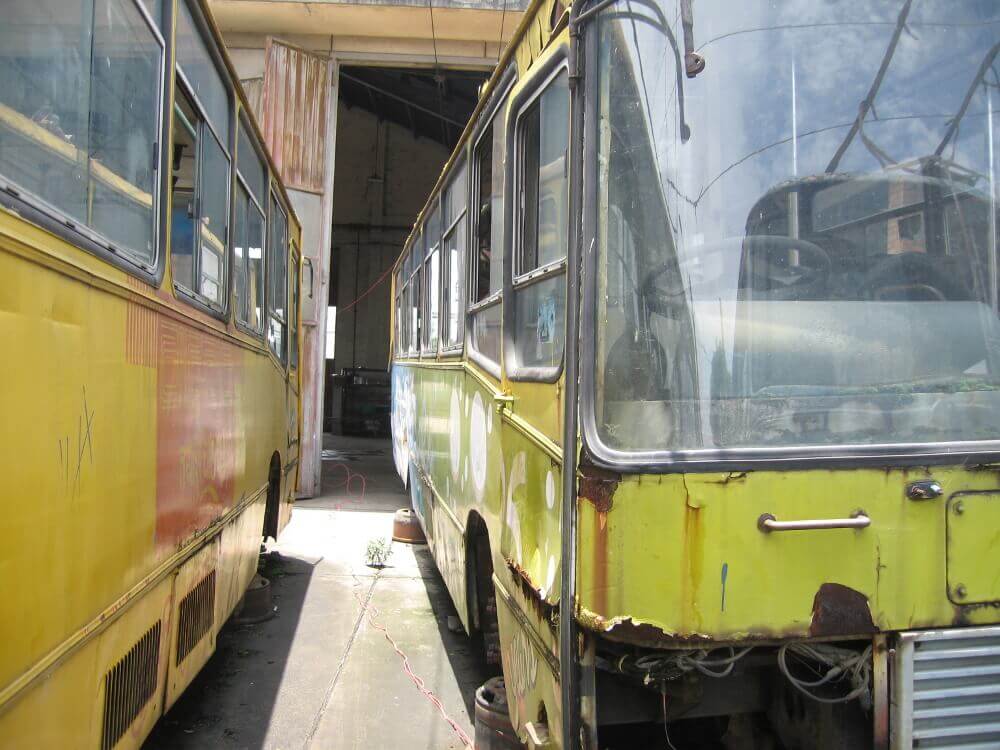
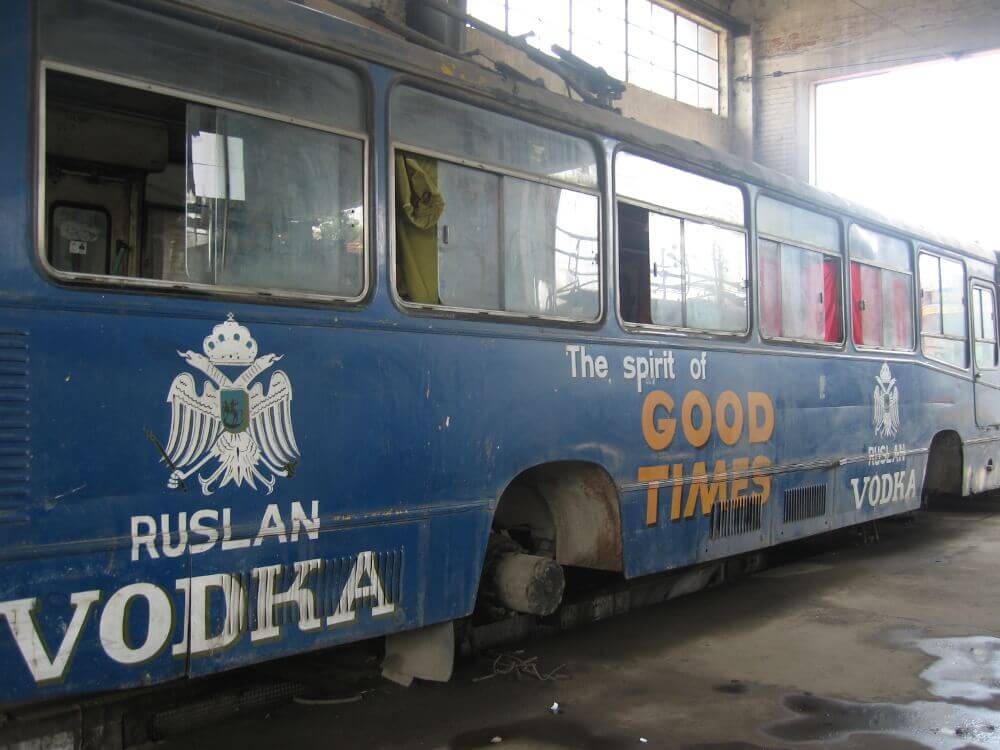
One Saturday we found the gates of the trolley bus terminus at Baneswor open, and cycled in. Grey scenes of decay and neglect. Tired, rusty, worn out machinery. A vintage fork-lift truck sat where it was parked for the last time. Overhead-line repair vehicles, cannibalised for crucial parts, lay awkwardly on wooden blocks. Battered bodies clung to rusty chassis. A bus parked over an inspection pit, waiting for a mechanic.
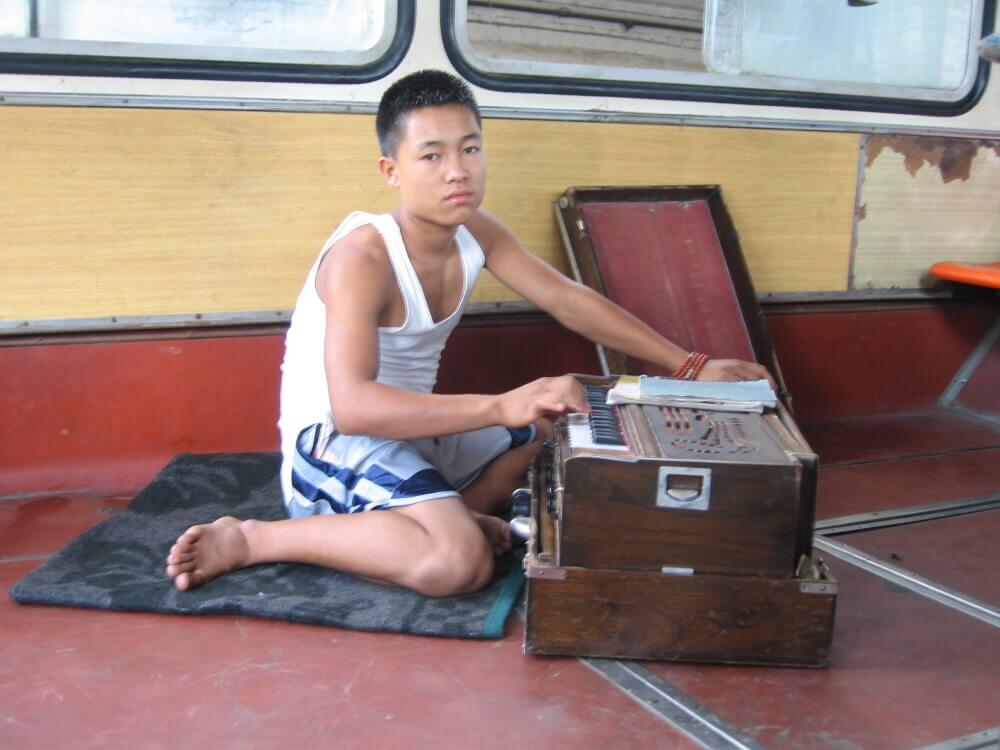
Recently demobilised Maoist guerrillas had settled in the administrative block. Some had made homes in the old trolley buses. Red hammer and sickle banners hung across broken windows, next to laundry on lines. A young man played tunes on an old wooden accordion, a sad tribute to Kathmandu’s pioneering mass transit project.
Opened in 1979, the inter-urban transport line covering 13km had operated for three decades. Suffering persistent faults, theft of overhead wires and lack of investment, the service finally came to an end in 2009.
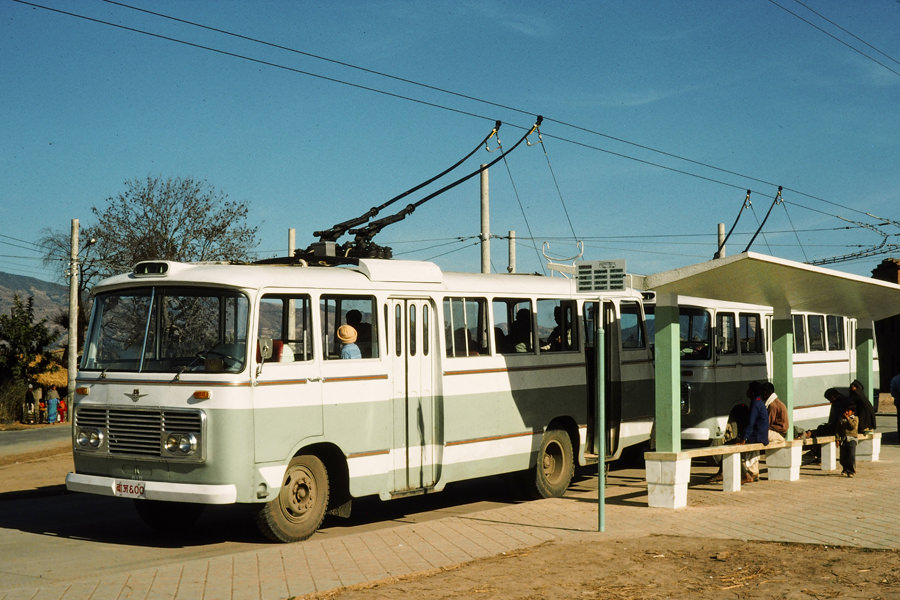
The trolley bus system was opened in 1975 with a Rs40 million grant from China for 22 standard trolley buses adapted to left-handed operation. Ten newer model buses were donated in 1997. The line was operated by the Nepal Trolley Bus Service, a branch of the Nepal Transportation Corporation (NTC). In 2001, the NTC was dissolved and the trolley bus operation was suspended, as it did not turn any profit since 1990. The reasons for NTC’s failure were stringent government bureaucracy and overstaffing, coupled with cronyism in management that resulted in poor technical expertise and inept operational policy.
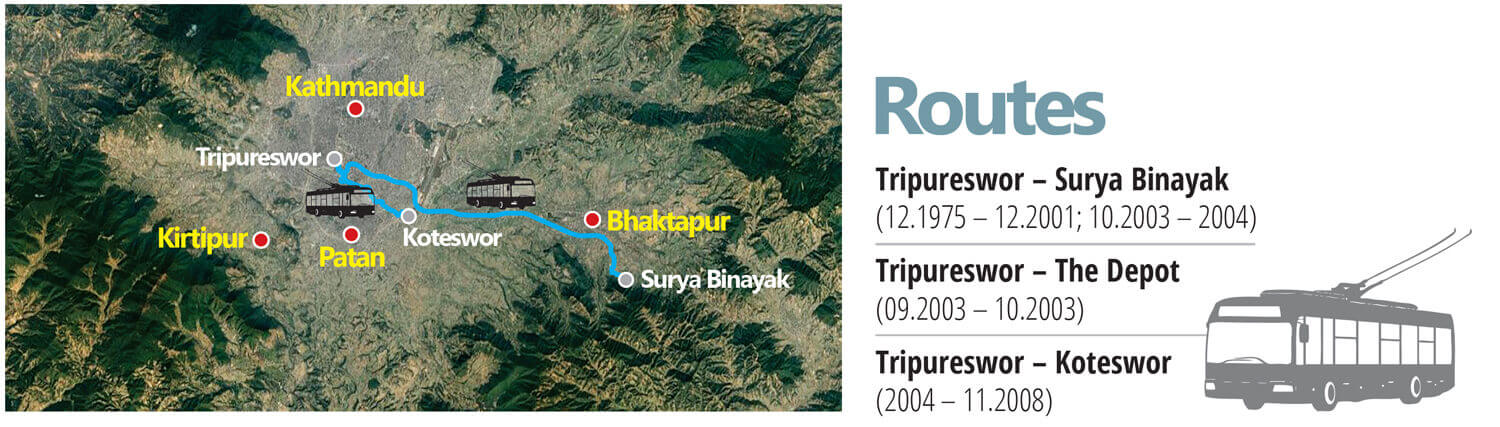
After 18 months, Kathmandu, Madhyapur Thimi and Bhaktapur municipalities agreed to restart the service and the trolley buses rolled again. Less than a year later, the Madhyapur Thimi and Bhaktapur municipalities opted out of the scheme as the service failed to attract riders and continued to lose up to Rs2 million a month. Consequently, the line was reduced to only between Tripureswor and Tinkune, and most wirework beyond city limits was removed.