
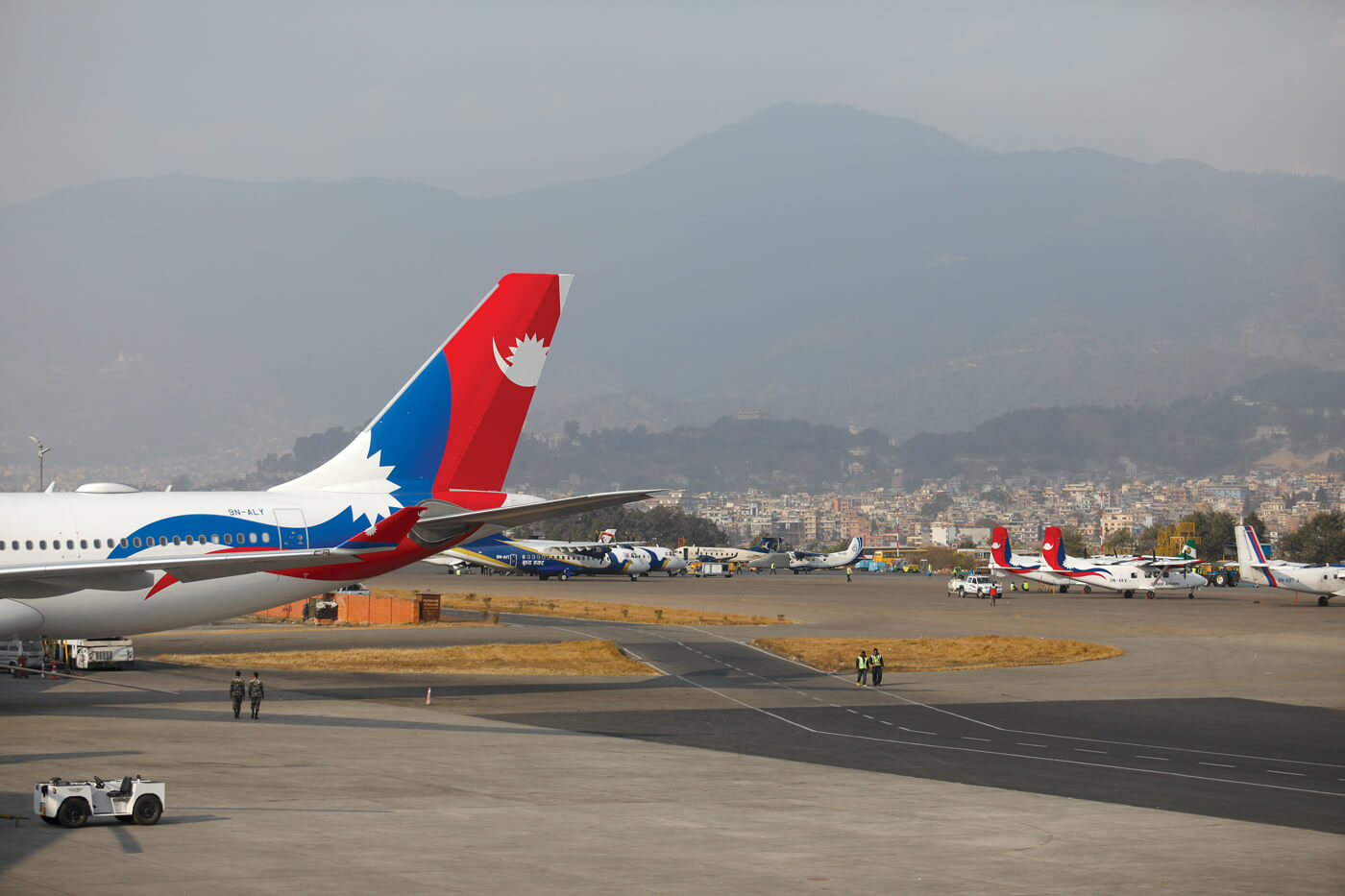
Nepal Airlines is once more making headlines for all the wrong reasons: this time it is over the state-owned carrier’s purchase of two Airbus 330-243s last year.
A sub-committee of the Public Accounts Committee (PAC) of Parliament said Wednesday that it found irregularities in the deal involving the widebody jets, that it violated the Public Procurement Act, did not meet specifications, and that Rs 4.36 billion in kickbacks was involved.
A parliamentary sub-committee on Tuesday recommended that the airline’s Managing Director Sugat Ratna Kansakar be sacked, and action be taken against Tourism and Civil Aviation Minister Rabindra Adhikari and two of his predecessors, the present and two past secretaries in the ministry, and dozens of other officials.
Scandals are not new in the history of Nepal’s flag carrier, especially after 1990 when politicial interference in the airline ruined Nepal’s once-reputed flag-carrier. Allegations of corruption on appointments of general sales agents in Europe, kickbacks on the lease of jets and high-level corruption dogged the airline throughout the 1990s.
Read also: What can Nepal learn from Ethiopia?, Kunda Dixit
The $210 million Airbus deal is the biggest ever in the country’s aviation history, and so is the sound and fury surrounding allegations of payoffs. Once again, the airline is caught in a web of political and financial intrigue.
The sub-committee report says the airline inflated the cost of the plane to $104.8 million, whereas the 2016 price tag was $88.09 million. It also says the plane's weight is only 230 tons when it should be 242 tons.
But airline sources say the $88.09 was the price of the plane in 2009, and the escalation corresponds to inflation. They add that the jet's maximum takeoff weight was configured for full payload long-haul takeoffs from Kathmandu airport's high-and-short runway.
The Airbus case has become political football as agents for aircraft manufacturers who lost out on the deal, rival carriers that stand to lose if Nepal Airlines does well, and those interested in its future privatisation, are all involved in stoking the crisis.
Read also: More than luck in Lukla, Rikki Walters
Last month at an employees union meeting, Foreign Minister Pradeep Gyawali warned: “There is a whole mafia involved in trying to wreck Nepal Airlines.”
He said rivals felt threatened by the carrier’s route expansion plans with the acquisition of new jets, and were deliberately trying to bring it down. There are indications that some vested interests in the airline’s own management are abetting this effort.
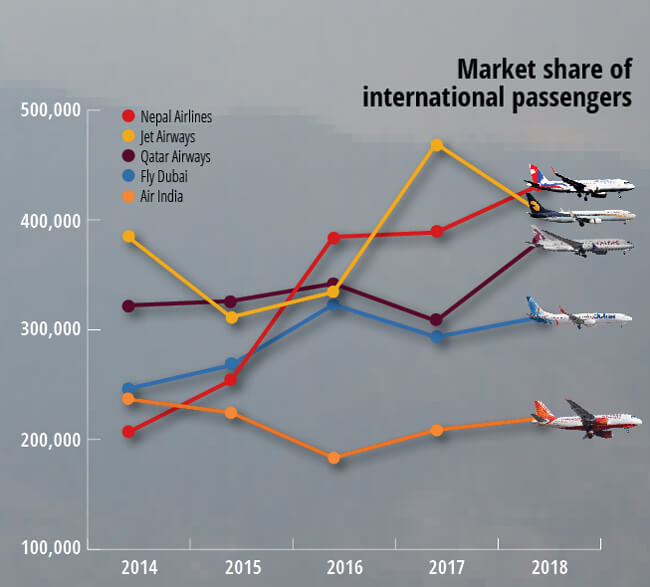
The coordinated attacks coincide with the airline finally showing signs of a turnaround. In 2018, Nepal Airlines became the number one international carrier with a 12% market share, outpacing Jet Airways (see graph).
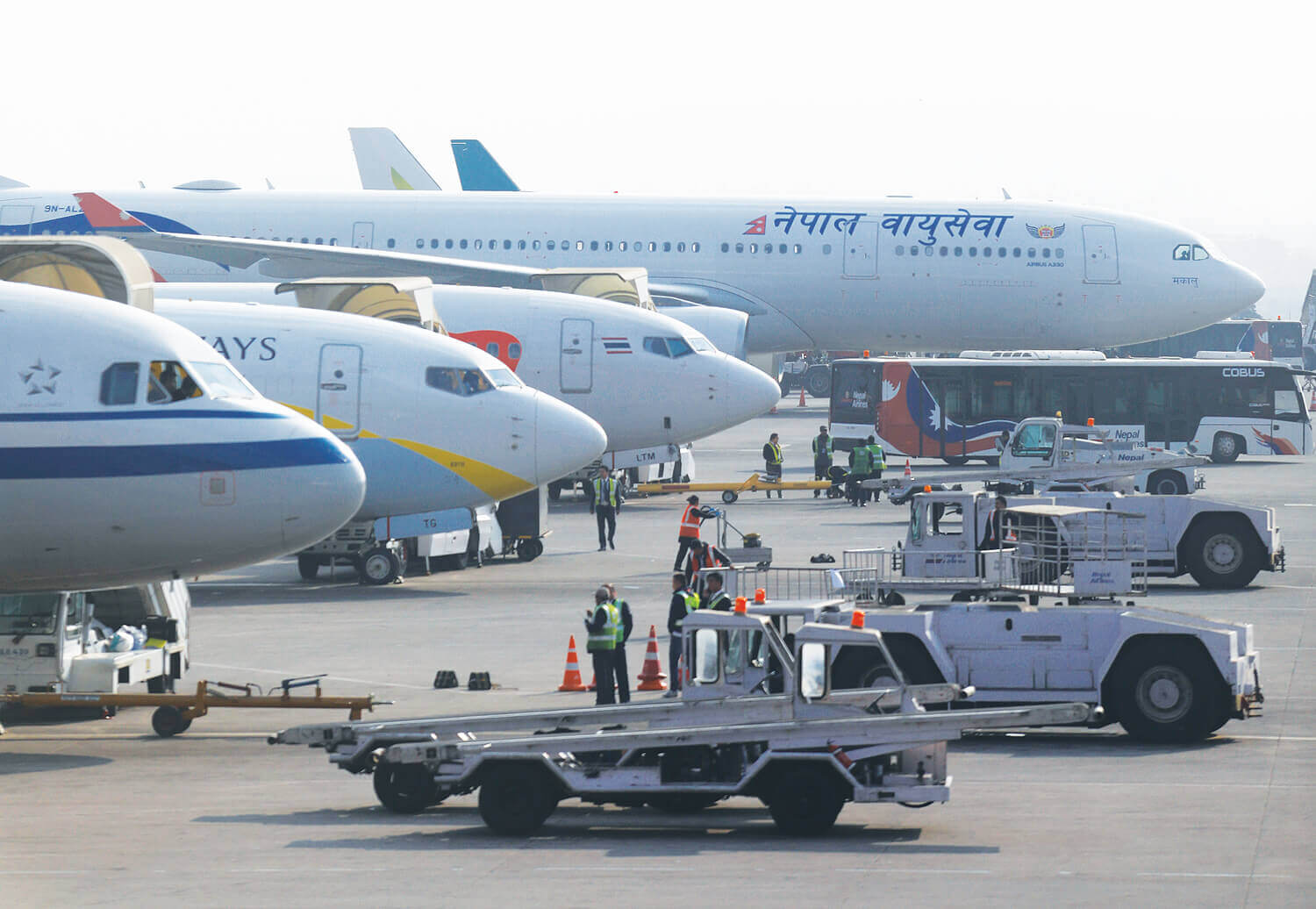
This despite the fact that its management had made no preparations for training extra pilots, or renewing route rights for destinations in China, Korea, Japan and Australia before the 330s arrived in mid-2018.
The Airbus 330s need to be in the air 16 hours a day for full utilisation, but currently fly only 7 hours on short and medium-haul routes like Delhi, Kuala Lumpur and Doha. Even so, in the first six months of operation, the Airbus 330s registered an imprssive 72% load factor, while the Airbus320s operate at 80% of full capacity.