
|
|
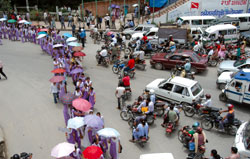
It could be Kathmandu. On a recent trip to Kolkata, it took me two hours to get from the airport to the city because a mob had gathered along the way to pelt stones at a police station. Once in the city, you have to deal with a centre that is paralysed everyday for two to four hours due to rallies and processions. There are cabs confidently propped below no parking signs, squealing horns, and pedestrians insinuated into every possible space. Kathmandu, which is now one large staging post for loktantrik assertions, is never far from one's mind.
But dig deeper, and you realise that most apt comparison is through the lessons of time. Now Kolkata is a near-constant presence on the corporate radar, as the Beed's favourite Buddhadeb Bhattacharya manages to package everything under the sun in communist gift-wrapping. But in the 25 years from 1977 that West Bengal spent under the Left Front, mistakes were made that we in Nepal can learn a lot from, as our society from right of centre to left. Industries moved away from Kolkata and people started migrating to other parts of India and the world.
Unionised labour rights activists made industrial growth impossible. The ironic result was that some who refused to work at home under relatively fair terms, ended up working abroad in jobs with absolutely no guarantees. Power cuts paralysed the city and the urban infrastructure was crumbling. Political leaders brought the city to a standstill with regular shows of strength on the Esplanade and student leaders shut down schools and colleges, and occasionally set off bombs in College Street. Students had to make 'voluntary' donations and businesses paid a parallel tax. With this violence and mayhem, Kolkata slipped in national as well as international rankings.