
 If you asked anyone in Kathmandu a week or so ago what the chances were of Parliament starting an impeachment process against Lokman Singh Karki, you would have been laughed out of the room. The political parties were too disunited, and Karki’s reign of terror had silenced top leaders, MPs, the bureaucracy, police and most of civil society and media.
Yet, the impossible does happen in Nepali politics from time to time. And so it was that a motion for the impeachment of the dreaded head of the Commission for the Investigation of the Abuse of Authority (CIAA) was hurriedly passed by Parliament which started debating it on Tuesday before it adjourned for a two-week recess.
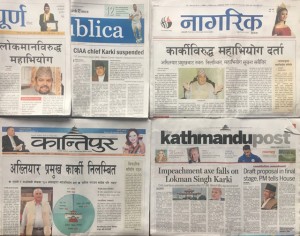
It was a sight to behold parliamentarians from across the political spectrum walking up to the lectern to lash out at Karki. Tv stations beamed the speeches live and national dailies the next day carried them prominently on page 1 — all in sharp contrast to the climate of fear and culture of silence that had descended over the country these past months.
That one person could wield so much power in a democracy with all its check and balances holds an important lesson for the future, and is a critical test for the new constitution. Nepal’s mainstream press and online portals which had been silenced by Karki in the past months are now publishing exposé after exposé of the man’s shenanigans. It is as if a lid has been lifted to allow an eruption of revelations of his sordid past.
After entering the bureaucracy thorough the backdoor of a royal appointment, Karki exhibited very early on hints of the traits that would one day make him notorious. After the 1990 People’s Movement, he cosied up to the Nepali Congress and used choice positions in the bureaucracy to extort, embezzle and blackmail. When King Gyanendra tried to take the country back to the days of the absolute monarchy, Karki returned as Chief Secretary and was later singled out by the Rayamajhi Commission for corruption and crackdowns on pro-democracy protesters in 2006. He was even being investigated by the very agency he was later appoint to head, the CIAA.
Some of the investigative reports in the Nepali press about his appointment in 2013 raise strong questions about the collusion of top political leaders. Mystery shrouds the dramatic overnight turnaround by Prime Minister Sushil Koirala and President Ram Baran Yadav, which NC minister Gagan Thapa mentioned in his speech to parliament on Tuesday (see translated excerpt on page 13). Other MPs unleashed a litany of woes: how Karki ran a parallel government, and commandeered all agencies of government to target institutions and individuals for revenge or extortion.