
SHORT-TERM: emergency food, medicine and shelter
MEDIUM TERM: Semi-permanent housing, seeds for planting season
LONGTERM: Reconstruction, jobs
In all the criticism about the slow government response to the 25 April earthquake, what many forget is that governance in Nepal was a disaster zone even before the earthquake. Slow delivery of services, lack of coordination, mismanagement, ad hoc decisions and corruption have been the hallmarks of our soft state. Despite the restoration of democracy and regular elections, accountability has somehow always fallen between the cracks. Leaders who traditionally thrived on patronage have felt no need for performance-based legitimacy.
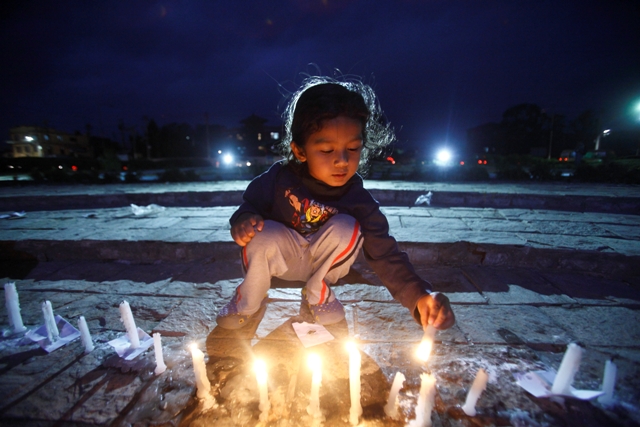 Photo credit: Gopen Rai
Although it can’t be an excuse, poor management of earthquake relief was a given. Why were we even surprised? How could we expect the Nepali state to become the epitome of efficient management and speedy delivery overnight, just because there was an earthquake? In an ideal state, elected leaders would be forced to be decisive, to prioritise and act to ameliorate the massive suffering caused by this disaster. It would have streamlined procedures to receive maximum assistance instead of creating hurdles, it would have expedited delivery of urgent medical and food supplies to remote areas instead of letting it pile up at the airport, it would have encouraged donations to pour in instead of creating obstacles and obfuscation.
Instead, what we saw were politicians and bureaucrats showing the same inertia and lethargy as they have during ‘normal’ times. They pushed paper, waited for rubber stamps and ‘clearance from higher-up authorities’ as if it was just another humdrum day in our banana republic. All right, we’ll say it: the bureaucratic delays in the initial days after the quake cost lives. The earthquake killed people, red tape killed many of the survivors.
Then there are the politicians. There are? We haven’t seen them since the earthquake. This would have been a time for the top leaders, ministers, elected members of the Constituent Assembly, to be observed to be doing something. Politicians thrive during times of disasters to demonstrate their crisis management skills. Even cynical politicians will “never let a serious crisis go to waste” as former White House Chief of Staff Rahm Emanuel once notoriously put it. Here in post-earthquake Nepal we didn’t even see many examples of leaders exhibiting the energy to even do token relief. The Prime Minister toured Sindhupalchok by air 10 days after the earthquake, Maoist leader Pushpa Kamal Dahal has been holed up in a secluded villa in Man Bhavan for the past week, and only briefly gate-crashed a relief distribution event organised by the Guru Dwara. The President, it must be said, shunned media attention and made low-key personal visits to ruins of Kathmandu’s historic heart.
And when the politicians and the government did act decisively, it was to spread even more hopelessness and confusion. Just like the famously absurd sound bite by a palace official after the royal massacre in 2001 about it having been caused by the “accidental discharge of an automatic weapon” this time too, officials were busy shooting themselves in the foot every time they opened their mouths.
The Central Bank issued a dreadful statement that all earthquake aid had to be channeled through the Prime Minister’s Disaster Relief Fund (‘otherwise they will be seized’) that immediately halted most emergency cash donations from abroad. The PMO tried to clarify it was only for NGOs set up after 25 April for earthquake relief, but its interpretation sowed even more confusion. Then some wiseguy in government said we don’t need any more aid. Not to be outdone, another smartass told foreign rescue workers “we don’t need you anymore we can handle it ourselves”. The government is the subject of ridicule across the world, it is squandering the goodwill that Nepal and Nepalis command internationally – testament to which is the tremendous and prompt delivery of relief flights.