With this contribution, I am beginning a monthly column in Nepali Times and Himal Khabar in which I will select one piece of contemporary Nepali art from the collection of MoNA (Museum of Nepali Art), and try to explain the technique and medium used, the message being communicated, as well as the significance it holds in the country’s cultural history.
There are rare moments in the lives of great artists, when they create something for themselves and no one else. In those works of art they give us a glimpse of their soul, a secret sentiment not to be shared. An exposé of inner romanticism.
Self-portraits can be made during important milestones in an artist’s life, an illustration of an obstacle overcome, a portrayal of a life-altering occurrence, an interpretation of a discrete romantic escapade, a visual representation of a magical encounter.
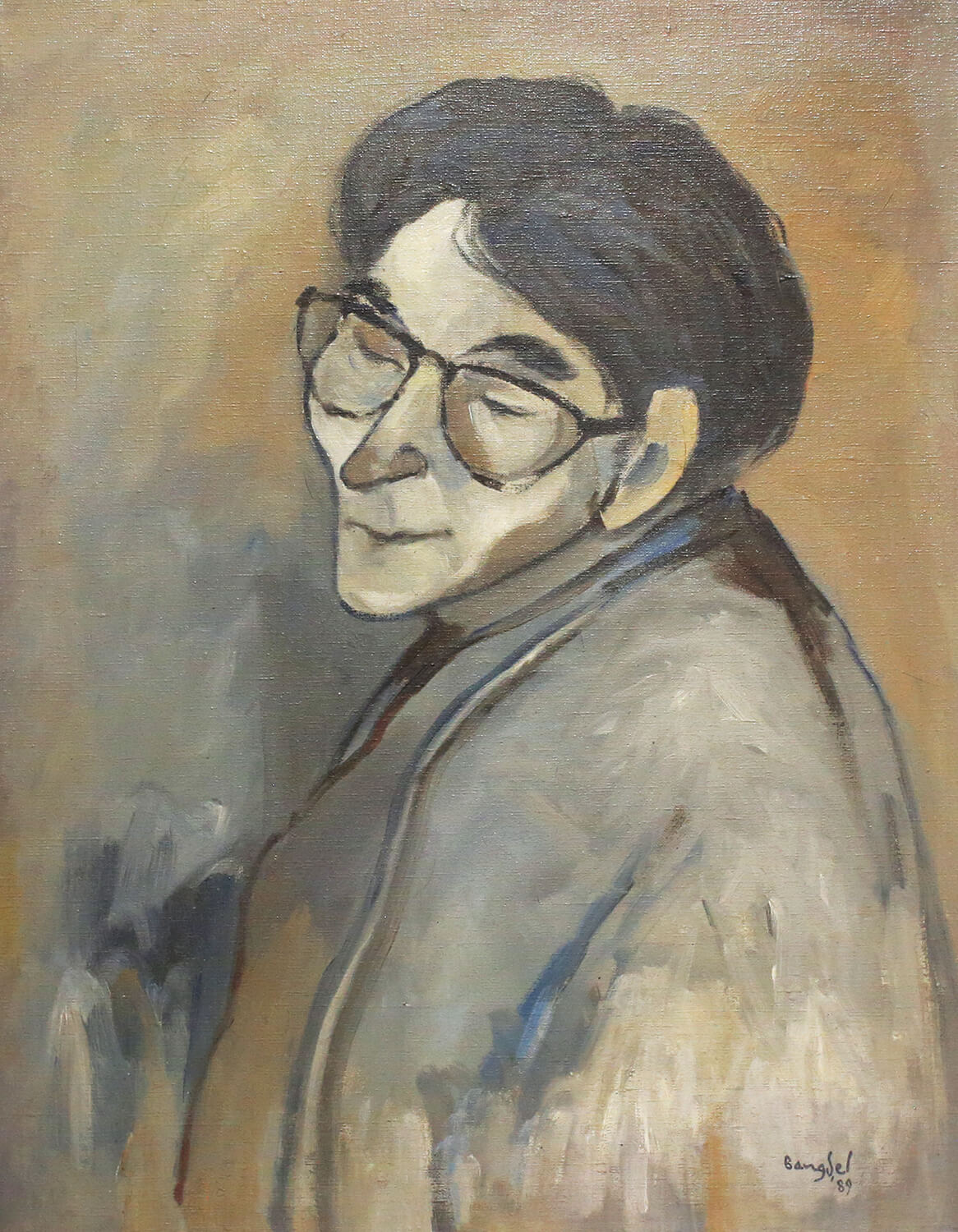
Lain Singh Bangdel’s self-portrait from 1989 represents such a work. It is a ‘sigh’ that evokes a sense of fulfilled bliss in the artist’s life.
Bangdel deserves this attention, recognition of his struggle and successful life, which resonated with inspiration and motivation long after his death in 2002.
Bangdel was the founder of modern and contemporary Nepali art. His authoritative and exemplary books explored the realisation and preservation of Nepali culture, introducing it to the international art arena. His contemporary and abstract works are now revered across the world, and depict nature and creation in one way or another.
But this particular self-portrait stands apart. In it, Bangdel paints himself with contended closed eyes, an inconspicuous smile, a rough and incomplete brush stroke where his ear should be, a face expressing satiated relief about something, an assertive yet deferential posture, an unpretentious shoulder with a shawl of honour draped around it. The painting is finished with confident last strokes.
And a frame, an ordinary frame that he painted for himself as a laurel as if to encase his accomplished self. The self-portrait speaks of something beyond that which the eyes can see. It may be Bangdel’s reflection of himself at his best.
Self-portraits by famous international artists capture a moment of rapture, a reminder of an emotion, of a particular sensation, never to be forgotten or revealed, but an aide-mémoire to the self.
A self-portrait is a maze of discoveries. The viewer has to unravel the artists’ secrets layer by layer, see, feel and understand. It is a message from the past, by a person who has departed, containing clues for future generations about the lived life of an artist.
Everyone’s life is filled with expectations, successes, failures, joys and sorrows. When we learn and understand from each other, we develop empathy. In a life tethered to obligations and responsibilities, it seems impossible to break away from every day struggles.