
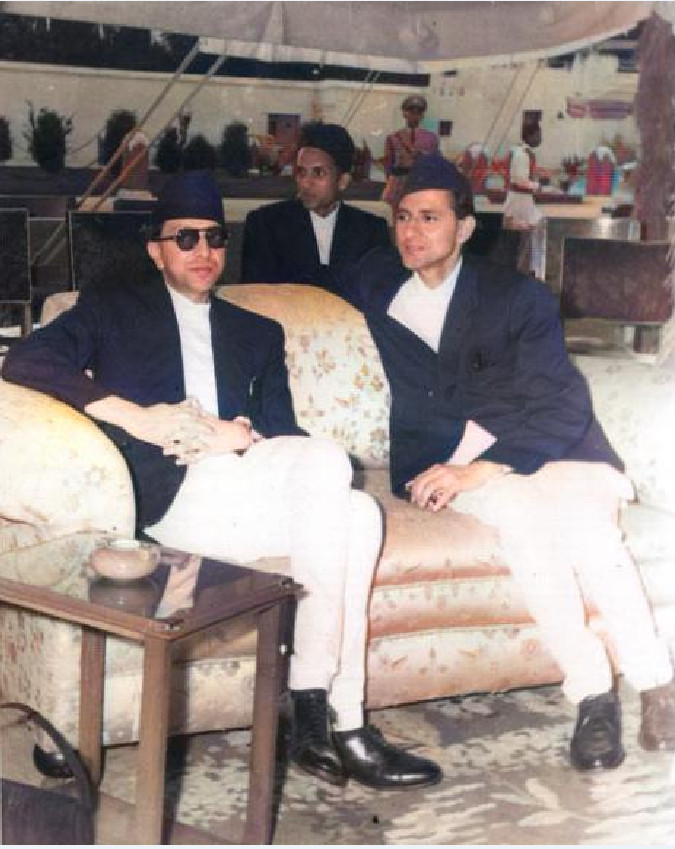
It was a hazy winter afternoon when without warning at exactly 1PM, soldiers appeared on the streets of Kathmandu. Singha Darbar was cordoned off. Politicians, including Prime Minister B P Koirala who had been elected a year-and-half previously, were picked up simultaneously from their homes or offices, and hauled off to prison.
On Tuesday, 15 December it will be exactly 60 years since that fateful day which would determine the course of Nepal’s history for decades.
King Mahendra and Prime Minister BP Koirala met at the palace for dinner a few days before the putsch. The King had just returned from a four-month trip to Japan, the United States and UK, and top secret plans were already in place for the coup d'état.
Years later, Koirala related how towards the end of that meal, Mahendra (wearing trademark shades even though it was dark inside the room) gestured to Queen Ratna to leave and told him: “There cannot be two lions in a cage.”
BP writes in his memoir that he had a ‘love hate’ relationship with Mahendra, who appreciated his work ethic, but was increasingly jealous of his popularity.
The King’s aversion to political parties was well known, zamindars hated BP’s new land reform bill, and Mahendra sensed that Nehru’s India and Mao’s China, for different reasons, could live with a coup, as long as it did not make Nepal unstable.
So, on पुस १, २०१७ (first day of the month of Pous 2017) the King made his move. In a speech he accused the Nepali Congress government of “failure to maintain law and order, being anti-national, corrupt and unaccountable”. The Swiss Ambassador was visiting Kathmandu from New Delhi on 15 December, and wrote a long cable to Berne about how BP Koirala had earlier talked about the difficulty of maintaining Nepal’s neutrality amidst Cold War tensions.
US Ambassador Henry E Stebbins had met King Mahendra on 9 December in which he was given no hints of what he was planning, even though preparations must have been at an advanced stage.