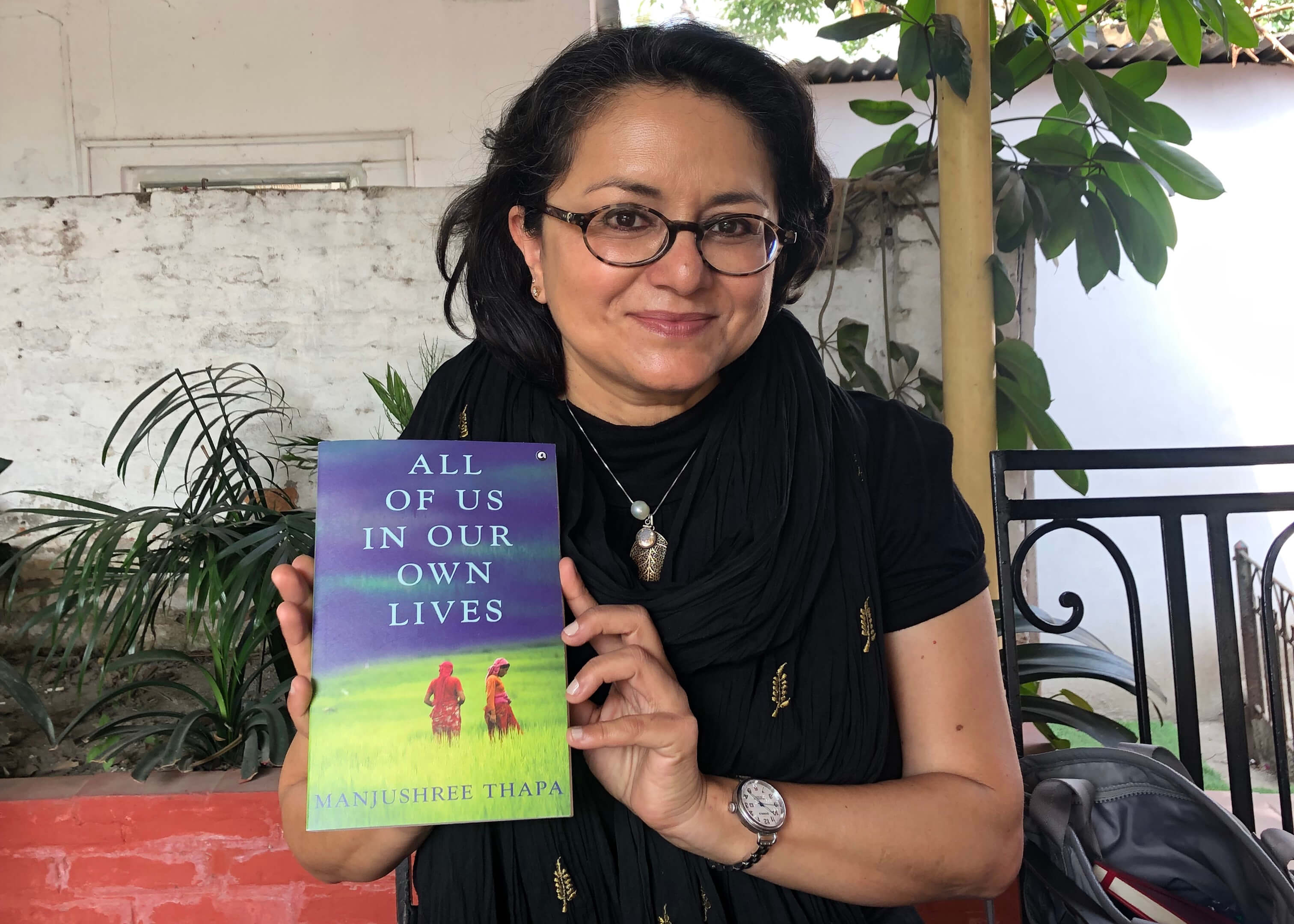
At Café Soma of Baluwatar on a recent morning, Manjushree Thapa is sitting by herself at a table and is recognisable even from a distance. Not just because she looks exactly like her pictures on Google Images, but because she has an orange notebook in front of her.
Pen in hand, she is writing cursive words in blue ink, words that must either be coming out of her in spades, or maybe trickling down like water from ancient stone spouts. Nevertheless, they were words that must have been important to this Nepali writer in the English language.
There is much to learn about Manjushree Thapa from an Internet search. The columns she wrote for Nepali Times twenty years ago are fascinating profiles and translations of Nepali writers and poets. The columns introduced the best of Nepal’s literature to the outside world.
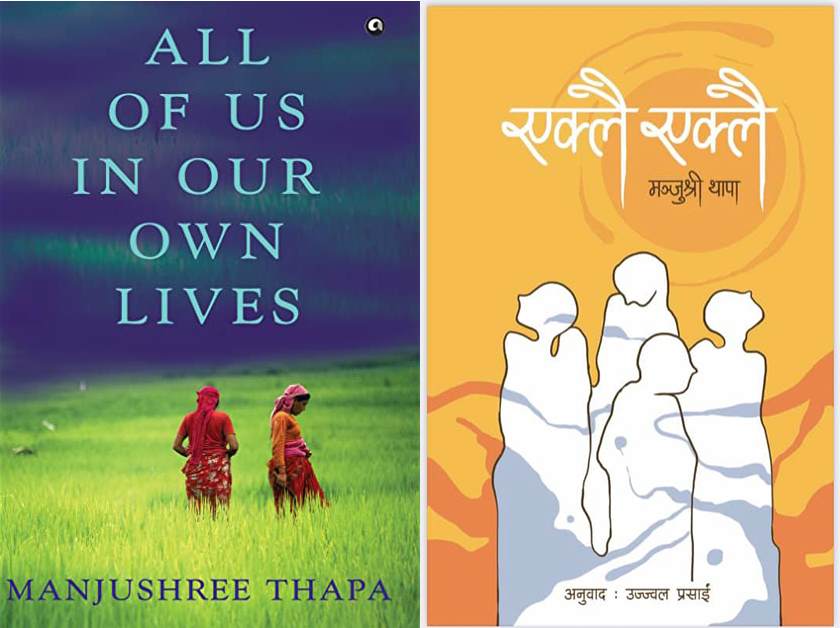
Now, the Toronto-based writer is introducing her English writing to Nepal. The Nepali translation of the 2016 book All Of Us in Our Own Lives by Ujjwal Prasai and published by Shangri-la Books was launched on Friday in Lalitpur.
‘What differs between my current writing process and when I started to write in my twenties is that I must now figure out the pragmatics of the writing life,’ Manjushree wrote last year in an article for The Record. She called herself an ‘engaged writer’, and I ask her what she meant.
“In Nepal, writers are not just given the space to pronounce on things, but are also expected to. They were part of the first democracy movement, the democracy movements in 1979, 1989, and the conflict years,” she explains. “We were all very much part of speaking out against injustice, or about atrocities or whatever was going on. Engaged writing is a very established tradition.”
Manjushree considers herself to be a part of the post-1990 generation where everyone was involved in the process of learning about each other and the country. She says, “A lot of the castes, communities that had been somehow embarrassed about their past had begun to assert themselves. Now, there isn’t a big existential search for a soul in the way that my generation experienced it. Then, for me, it became inseparable with my own personal search for what it means to live in Nepal, and what it means to be a Nepali. There has been such a strong push for change over my lifetime and things are changing so fast that one of the things it means to be a Nepali is to be totally open to see where things are going to go. For me, this search of self-discovery and self-redefinition is very much central to what it means to be a Nepali.”
Manjushree Thapa is eight novels old. She does not look her age, her skin glows in the morning sun and spurts of laughter resonate in the cafe’s corners. Yet, she confesses that no matter how much experience you have with it, writing does not get easier with time and every book is a creative challenge on its own.
There is something confessional and self-aware in Manjushree’s words, in a way similar to her own books, and the way she talks about them. She talks about the ethical and aesthetic responsibilities of being a writer.
“As a Nepali writer, I can write about Nepalis. Or I could be writing about people who have lived experiences different from mine. I feel that becomes ethically challenging. Not that you should never do it. But if you’re going to do it, you need to really put in the amount of work it takes, to really understand someone else’s experiences,” she says.
“If you want to write about characters who are not part of your immediate lived experience, then, aesthetically, you need to give them the same complexity, the same beauty, the same importance and value as you would anyone else, and not caricature people, or stereotype. That’s an aesthetic consideration that is very much linked to ethics.”
Especially as a writer in the English language, she says, authors already tend to have more privilege because the audience is more international. Perhaps for Manjushree Thapa, some part of the ethical and aesthetic consideration is also part of her decision to provide creative license for translating All Of Us in Our Own Lives into Nepali.