
For centuries, Nepalis have been migrating to seek their fortune. Poverty, indebtedness, discrimination and disasters drove them out in droves.
Even while young men lined up to be enlisted in the British military in India, some trekked down to Gorakhpur to be shipped out as indentured labour to colonial sugarcane fields in Fiji and Trinidad. Others went to Assam, Bhutan and Burma.
Not much has changed. Lack of opportunity is still pushing Nepalis out to India, Malaysia, the Gulf states, or further afield. The money they send home is the backbone of the economy. Migration and disasters are interlinked.
But what will really lift Nepal into a golden age will be our vast hydroelectric potential — or so we were told. Over and over again, the mantra has been repeated that we sit on 73,000MW of energy that will propel Nepal into prosperity.
That figure was a myth, and persistent political failure means that Nepal today is importing half its electricity needs from India. School textbooks try to instil pride among Nepalis that we have the highest mountain in the world, but gloss over the fact that we share Mt Everest with China.
We are also not taught just how fragile and disaster-prone these mountains are.
Our forebears knew they could farm floodplains, but not live on them. They settled on higher slopes, set up towns along ridgelines to be safe from landslides, and left the fertile flats below to farm. Today, educated Nepalis can read and write, but this traditional wisdom that protected us from disasters is forgotten.
The Himalaya is the world’s youngest mountain range, and its geology makes the terrain inherently prone to slope failure. The Kosi has some of the highest sediment loads of any river in the world because of the constant weathering of the mountains. Himalayan topography blocks the southwest monsoon, forcing it to dump 80% of annual precipitation on its southern slopes in three months.
All this means that landslides and avalanches, earthquakes and cloudbursts, flash floods and cataclysmic bursting of dammed rivers are all natural phenomena. These events have been happening for millions of years. But just as a tree falling in a jungle has not really fallen if no one is there to record it, they became ‘disasters’ only when humans started settling along the foothills.
We may be tempted to conclude after last year’s deadly landslide season and last week’s devastating floods that these disasters are getting worse. But are they?
It may just be that more people are settling in high-risk areas, and visuals of the destruction can be immediately disseminated because of the spread of media. There are just more of us now to post videos of the tree falling in the jungle.
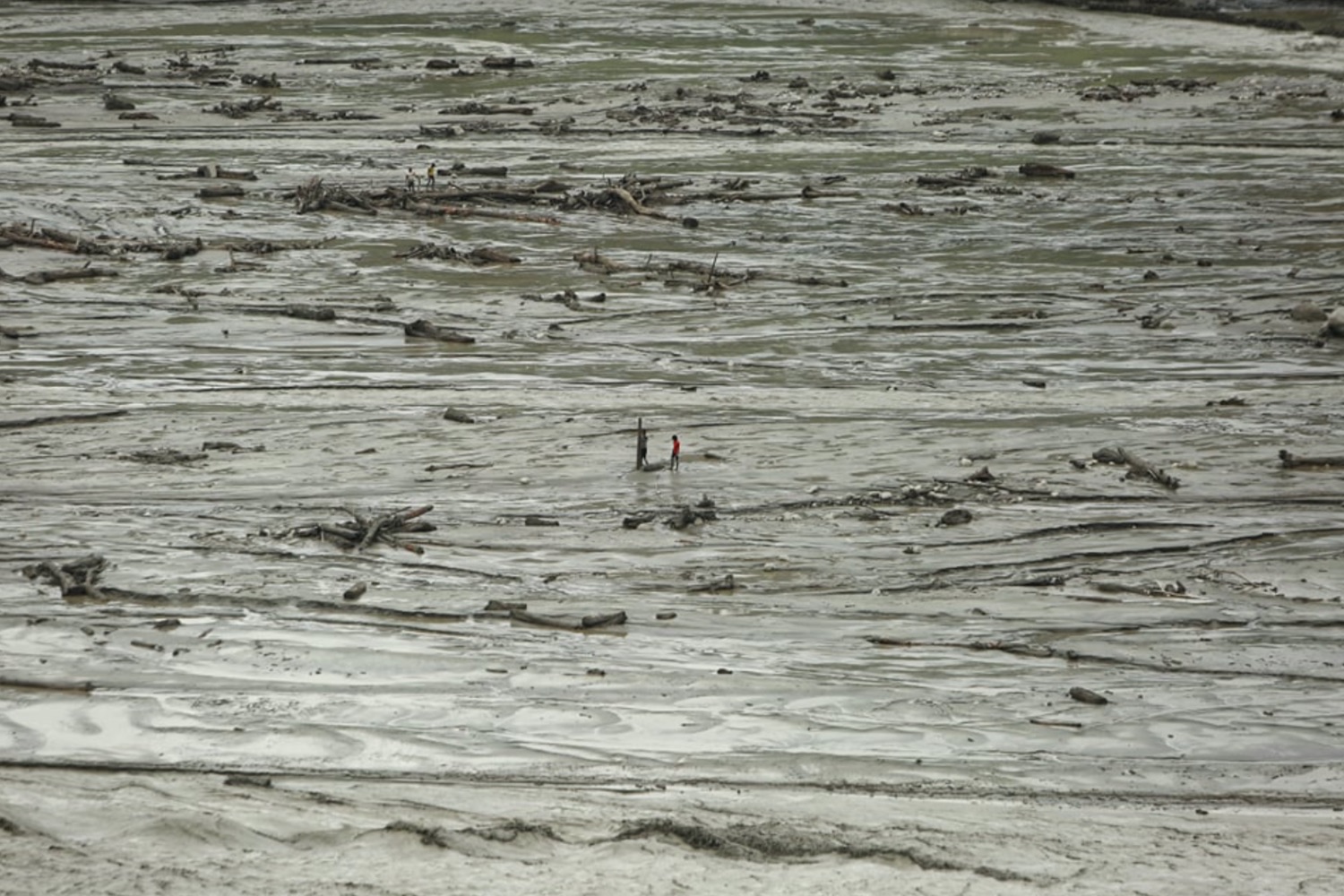
At least 12 hydropower projects that were either under construction or already feeding electricity to the grid, were knocked out of action in Central Nepal on 12-14 June. One of them was the 44MW Super Madi project in Kaski. The damage runs into billions of rupees, and it will take at least a year for many of them to be rebuilt.