The banyan is often mistaken for the holy pipal. The banyan is ‘bar’ in Nepali and is often found in consort with the pipal on chautaris, where they give shade to travellers. Both are of the genus Ficus, and both regarded as holy by Hindus and Buddhists alike.
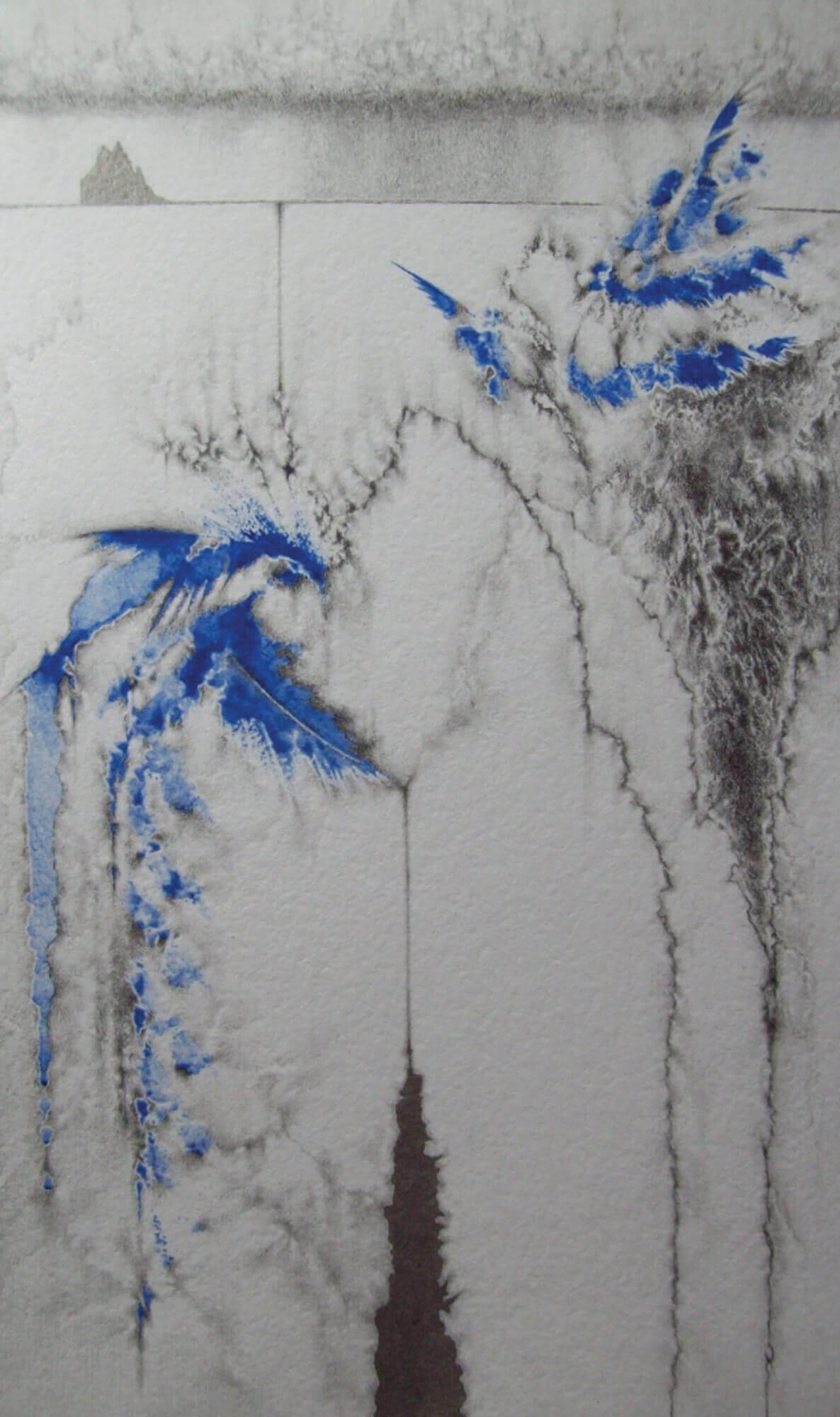
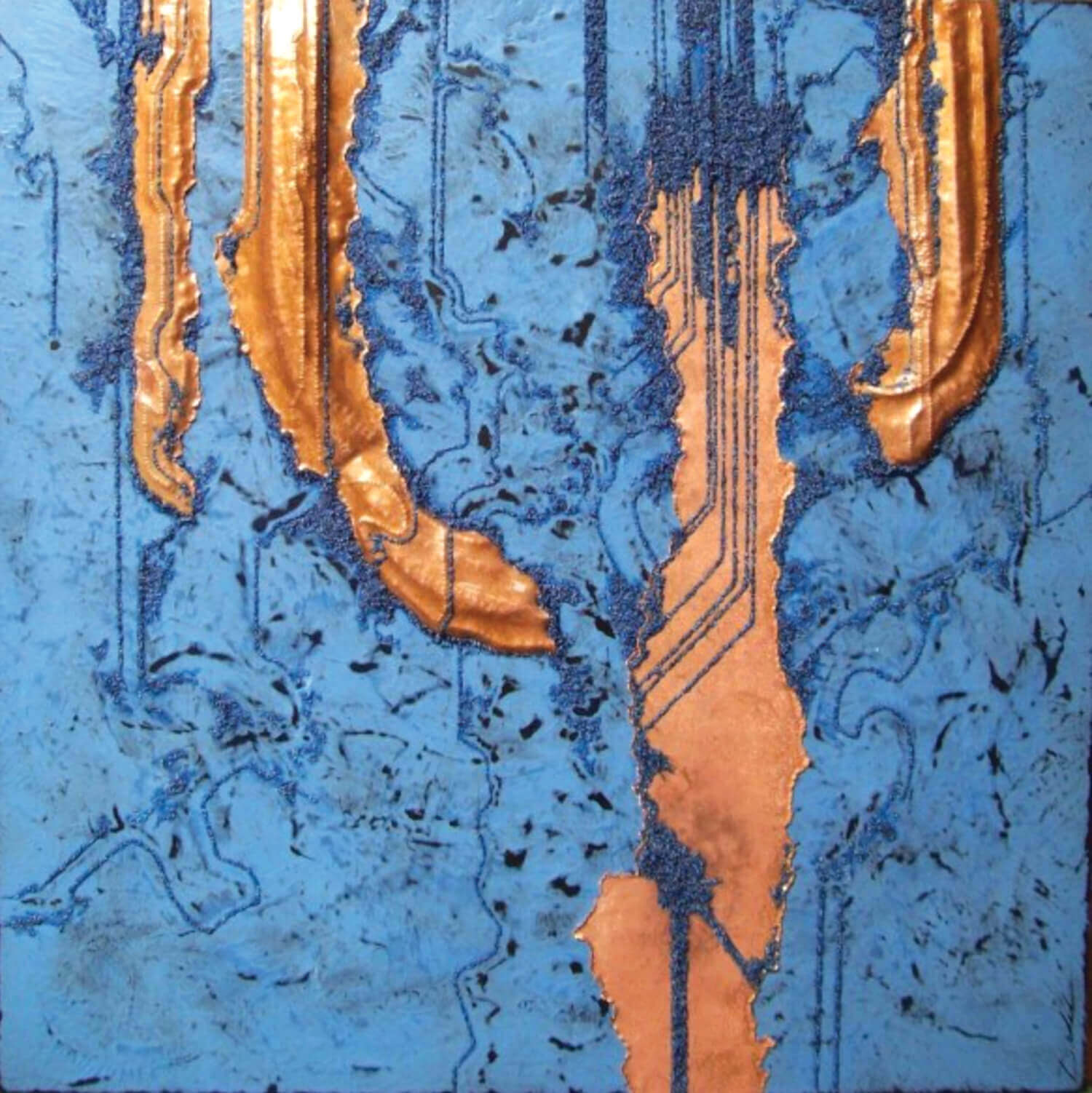
It does not matter that American artist Maureen Drdak has confused the two trees in naming her latest art exhibition at the Taragaon Museum. The displays are in blue and white, and evoke trees grasping for light and gasping for air as the humans that worship the trees in the name of religion poison the air, soil and water.
Drdak was inspired to render the painting series while on a walk through Kathmandu, when she passed an ageless banyan on a chautari while the diesel exhaust of gridlocked traffic swirled about. Banyans have aerial prop roots that spread over a wide area and drop down from the branches and embed themselves in the soil so the parent tree can suck up water and nutrients.
However, Drdak remembers that this tree’s prop roots had been amputated so as to enclose the branches in the traffic roundabout. For Drdak, the tree’s tragically doomed attempt to reach the earth is a metaphor for nature’s losing battle with human development, of haphazard urbanisation and the malignancy of economic growth.