
 KISHOR K SHARMA |
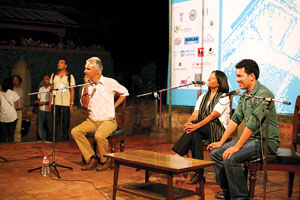
To think I was impressed by the audience when, at the conclusion of my session at the Kathmandu Literary Jatra, they held out against the waxing rain to ask questions of the panellists. Two hours later, as the final session drew to a close with the fading light, the ground beneath us began to move.
Incomprehension turned to horror, and as Narayan Wagle announced "bhuichalo ayo!" from the stage, we stumbled towards the centre of the Patan Museum courtyard, wide-eyed. Session moderator Buddhisagar exclaimed "Sakiyo hai …dar lagyo!", but when I next looked to the stage, I was astonished to see a ponytailed youth with a microphone, asking a question. Apparently, the show had to go on.
This level of engagement was characteristic. By most standards, the festival that concluded last Sunday was an unmitigated success. The rain held off, and barring a few unforeseen reschedulings, the crowds were treated to a seamless succession of sessions and lectures on literature and society, supplemented by kid's events, a photo exhibition, poetry readings, and heritage walks. The future of the Jatra seems assured.
The Jatra was great fun, of course, as any self-respecting jatra should be. The question of what it has achieved is less straightforward. The idea that such events merely provide a stage for writers to strut around as celebrities is as unfair as the notion that a babble of writers can change the world is hubristic. Yet the fact that thousands of people came, not just to gawk at writers but to actually engage with them (favourite question, to William Dalrymple: "How can I develop a sense of humour?"), come rain, shine or quake, indicates that many Nepalis seek intellectual sustenance of the soulful kind, that which only literature can provide.