
Over the last three decades, Nepal’s national government has spent Rs2.1 billion to beautify the holy river that flows through the capital. The Bagmati is still a cesspool. Now, the government wants to take a big loan to build a 95m high dam inside the Shivapuri-Nagarjun National Park to flush the river.
As we reported last week, it is an expensive bad idea. The reservoir carries seismic, ecological and financial risk.
So far, attempts to rehabilitate the river have resulted in constricting its flow into narrow canyons, building walkways and planting trees along its banks. To be fair, the Bagmati would be uglier without these half-complete measures. But storing monsoon water to regulate the flow of the Bagmati will not clean it up if we keep on dumping the city’s sewage and garbage into it.
The new Rs25 billion project funded by the Asian Development Bank (ADB) to build the dam is being justified because ‘there is no other viable option to preserve the Bagmati civilisation’.
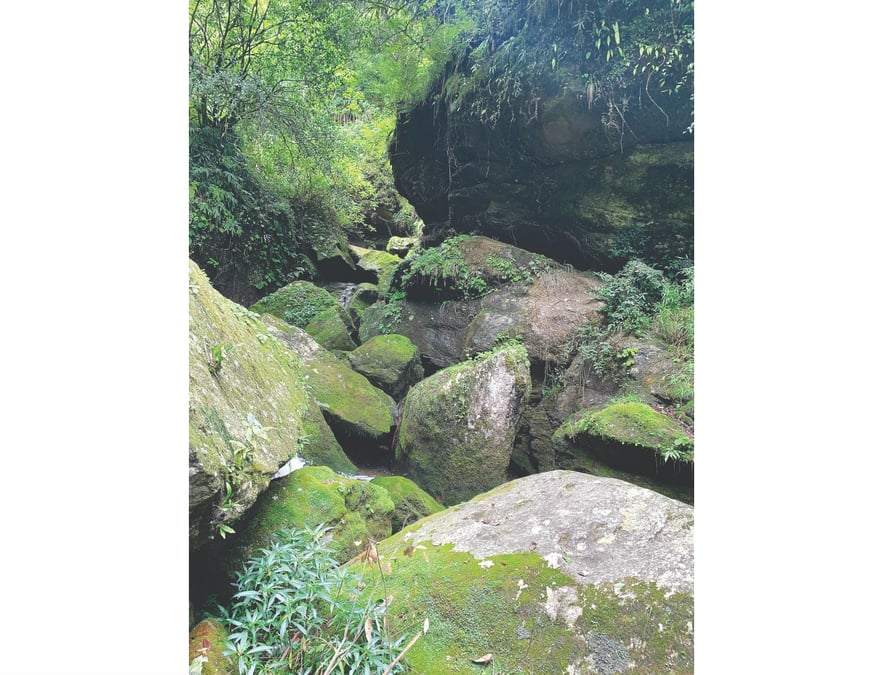
The proposed dam on the Nagmati stream which is a tributary of the Bagmati in the dense forest of the national park will be just 18km upstream from the city centre. It will create a reservoir 50 hectares in area.
When released in the dry season, the stored water is supposed to wash away the waste, flush the stench of sewage, and raise the level of the aquifer. However, no amount of water released into the Bagmati will clean it as long as it continues to be a sewage canal and a dumping ground for solid waste.
Even the project's Environmental Impact Assessment (EIA) report concedes that the quality of water in Bagmati can only be restored by blocking the direct discharge of sewers into the river.
We talked to engineer and former joint secretary at the Ministry of Drinking Water Rajan Pandey. He has calculated that even when 450 l/s of water is released from the reservoir, it will only raise the water level in the river by 3cm.
Officials directly involved admit that water released from the dam will not be sufficient to purify the Bagmati, but argue that it will “dilute the pollution” and buy time to divert sewers to wastewater treatment plants. But the construction of that system has already been delayed by more than 30 years.