
Nepal’s post-1990 foreign policy
Since 1990, Nepal's foreign policy has mustered little innovation, confidence, or drive. Nor has it even had to try. Notwithstanding their social democratic pedigree, the new ruling elite from the Nepali Congress party enjoyed little room for maneuver or fallback. With Moscow in decline, Europe preoccupied with reintegrating its eastern flank, Beijing struggling to reclaim legitimacy after the 1989 Tiananmen Square crackdown, and New Delhi vigorously embracing IMF-prescribed reforms during the 1991 peak of a humiliating balance of payments crisis, the new government was left with few options but to sing along to the song-sheet of liberal universalism eulogized suchlike in Francis Fukuyama's The End of History and the Last Man. And as ideological lines blurred in the West and the ‘globalists’ made their big, international push for neoliberalism through bilateral diplomacy and multilateral aid, Kathmandu soon became an early adopter of the Washington Consensus.
Three decades on and several experiments later, Nepal finds herself back in the clutches of clientelist politics, firmly in the grip of special interests. While the rest of the world resets its goals to reflect new and emerging realities, Nepal's priorities appear increasingly inchoate. Between a citizenry inured to circumstance, a ruling class impervious to outrage, and friends abroad prone to conflating failures so conspicuous with ‘resilience’, Nepalis, by and large, find their life choices reduced to a sad binary: escape Nepal or be thankful for small mercies.
Nepal-India-China Triangulation
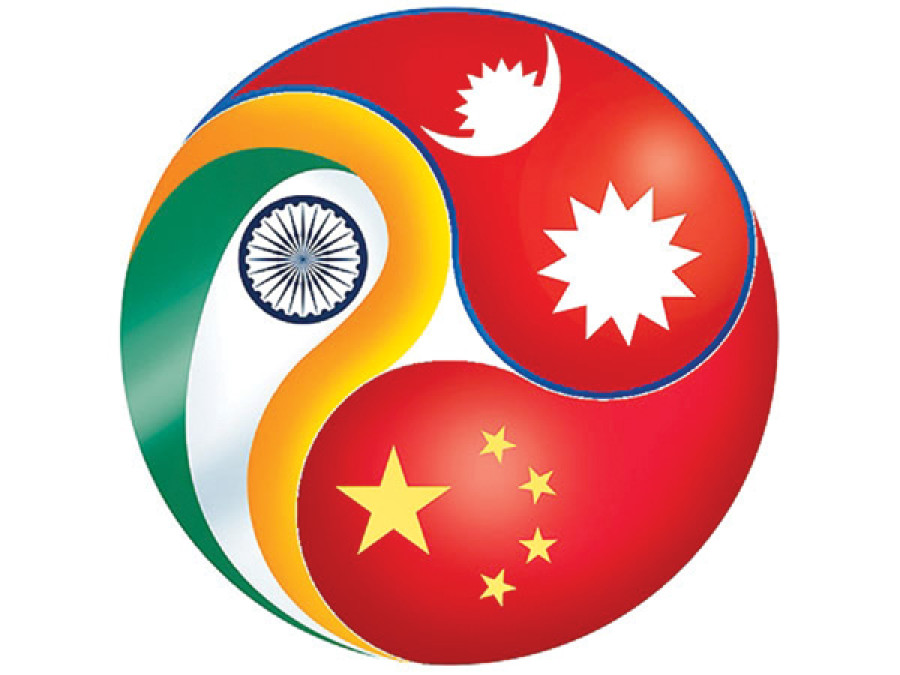
India-China relations matter deeply to Nepal, for they determine the potential triangulation of interests and our ultimate path to scale. Take it from a Nepali—a neighbor adjacent to both; landlocked and dwarfed by geography and demography alike: India and China bring different strengths to the table. More of India should not have to mean less of China. And more of China should not have to mean less of India.
Be that as it may, our border regions are having to serve as unspoken cordons sanitaires and undeclared spheres of influence, not because of our compatriots' rightful stations there, but owing to the ‘security first’ disposition of our neighbors. To be fair, much of this is of our own doing too. If only we were to approach our neighbors as co-creators rather than inhibitors. If only we were to treat our geolocation as a pride of place rather than a bad hand dealt by nature. And if only we were to bring three-way value proposition to the tremendous upsides of civilizational overlap. It may very well take the thick skin of a Nelson Mandela and the clever brains of a Lee Kuan Yew, but a meaningful trifecta could still be within generational reach should we put our hearts and minds to it.
Not that Kathmandu can effect a rapprochement between New Delhi and Beijing on its own. But we can do more than just moan on the sidelines. The onus still lies on our diplomatic machinery to promote strategic convergences. And in doing so, we should not miss any opportunity to assert that Nepal's interests do not deserve to be held hostage to an uneasy peace between our estranged neighbors.
A neighboring superpower
While the story of China's rise to global superpower is awe-inspiring, its prescriptions for prosperity are frustratingly tangential to Nepal. China’s political economy and her institutions of governance are decidedly unique. That said, Nepalis should still find many levels of developmental learning. But to take advantage, Nepal must invest in sharpening our faculties and cultivating curiosity to experience China firsthand. All too often, we subject our understanding of the Chinese civilizational mindset, cultural DNA, and contemporary worldview to hackneyed accounts recycled from the West.
If the outgoing unipolar order is to be replaced with an incoming multipolar one, someone might as well take a crack at articulating it. And who better than the Chinese? But any depiction of Beijing as a force for good seems to fly in the face of closet ‘cold warriors’ and their credo that security is zero-sum; all or nothing.
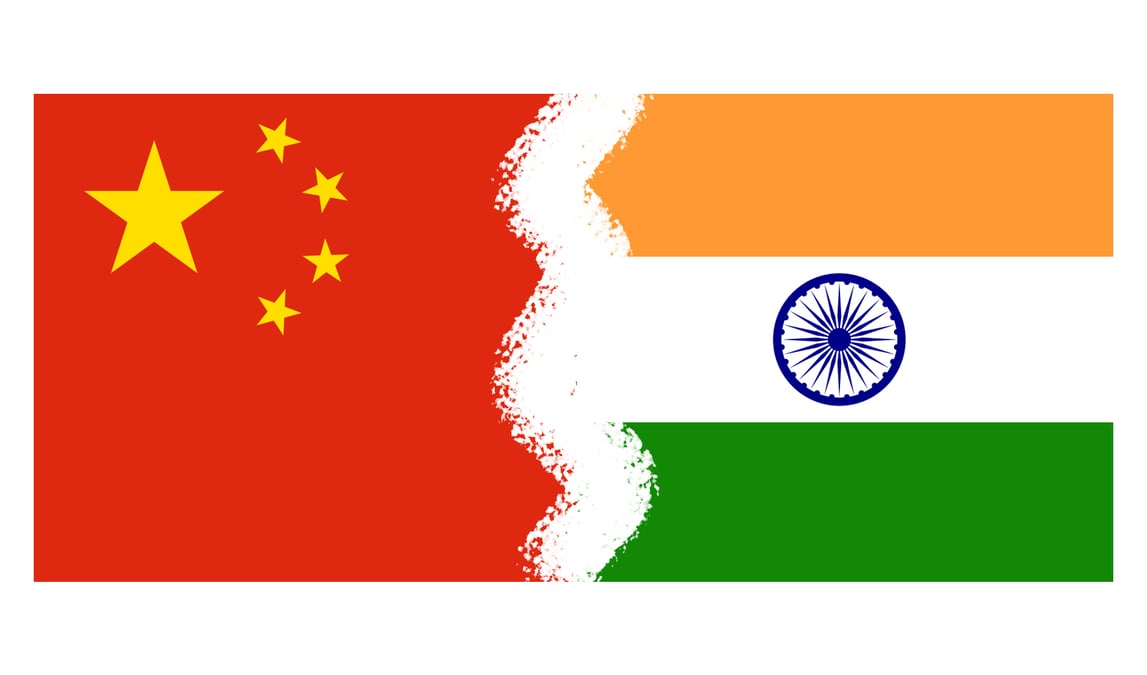
A rising neighbor
India’s development choices still bedevil an influential section of her professional class. As bizarre as it may sound, this disquiet is actually more salient and intelligible to a similarly challenged Nepal. By sheer size and spread, India’s predicaments appear enormous. Yet they are also instinctively relatable on a human scale, for India and Nepal share many of the same exigencies that our political, administrative, and economic practices commonly demand. Shared antecedents and belief systems, cultural familiarity, and even a partiality for contemporary regional pop culture help anchor the construct of an ‘imagined community’ between large swathes of our peoples.
While there is little to doubt in the vast reservoirs of fellowship that prevails between our peoples, one must also acknowledge the presence of loose cannons and poison pills. Unfortunately, when signaling is indistinguishable from noise and spats spill outside of the realm of coded, restrained diplomacy, bilateral cooperation tends to take the hardest hit. Our recent diplomatic history bears witness to several dark moments when red lines were trampled, oblivious to potential consequences. All too often, we take inconsiderate liberties with each other nowadays. After all, red lines exist for good reasons. They mark the boundaries of vital interests and sovereign sensitivities that nation-states hold sacrosanct.
Few would doubt that the Nepal-India relationship is unique if not ‘special’. But not in ways that the policy hawks in New Delhi tend to constrain it to reductionist and outworn Nehruvian ideas. The adjective ‘special’ is highly loaded to Nepali ears when applied to ‘relationship’, as prime minister Nehru was once fond of describing India’s relations with Bhutan and pre-annexation Sikkim as ‘special’ as well. Nepalis like to believe that ours is a far more nuanced one. Yet we must also acknowledge that our relationship is by no means exclusive, lest we find ourselves fulminating endlessly over schoolyard issues. Striking that sweet spot and maintaining a delicate balance is crucial—our history stands testimony to the likelihood of mishaps occurring when we sway too far.
China, India and the West
Having aided and abetted China’s phenomenal rise for a heady four decades, the West is now experiencing a severe bout of buyer’s remorse. It rides roughshod over Beijing at every opportunity because the reigning superpower, the US, has trained the challenger in its crosshairs as a ‘pacing’ peer-competitor. India, on the other hand, has long been handled with kid gloves. If anything, the rise of China has concomitantly elevated India’s profile as a regional counterweight; a ‘doorstop’ to Beijing's ambitions. In this calculus, the US and its allies often pitch India as a ‘pro-West bulwark’ in Asia—a stamp that New Delhi sometimes welcomes with a wink and a nod but, at others, stridently protests. After all, ‘strategic ambiguity’ is a valid practice in the conduct of foreign policy.
India is today where China was in 2008: a $4 trillion economy with a per capita nominal GDP of $2600. With thirty million people entering the middle class every year, there is little reason to doubt that India will be close to where China is today by the 2040s: an $18 trillion economy with a GDP per capita of $13,500. Barring the unforeseen, New Delhi would also likely be asserting its economic, diplomatic, and military heft in the direction of cementing the multipolar order—moves that could be further misread in the West as India having also grown too big for its britches. 2026 will be an interesting year to witness the reshaping of global power relations, especially as India chairs the BRICS as the voice of the Global South and the US leads the G20 as the presiding deity of the Western-led order.
Nepal’s case for climate justice
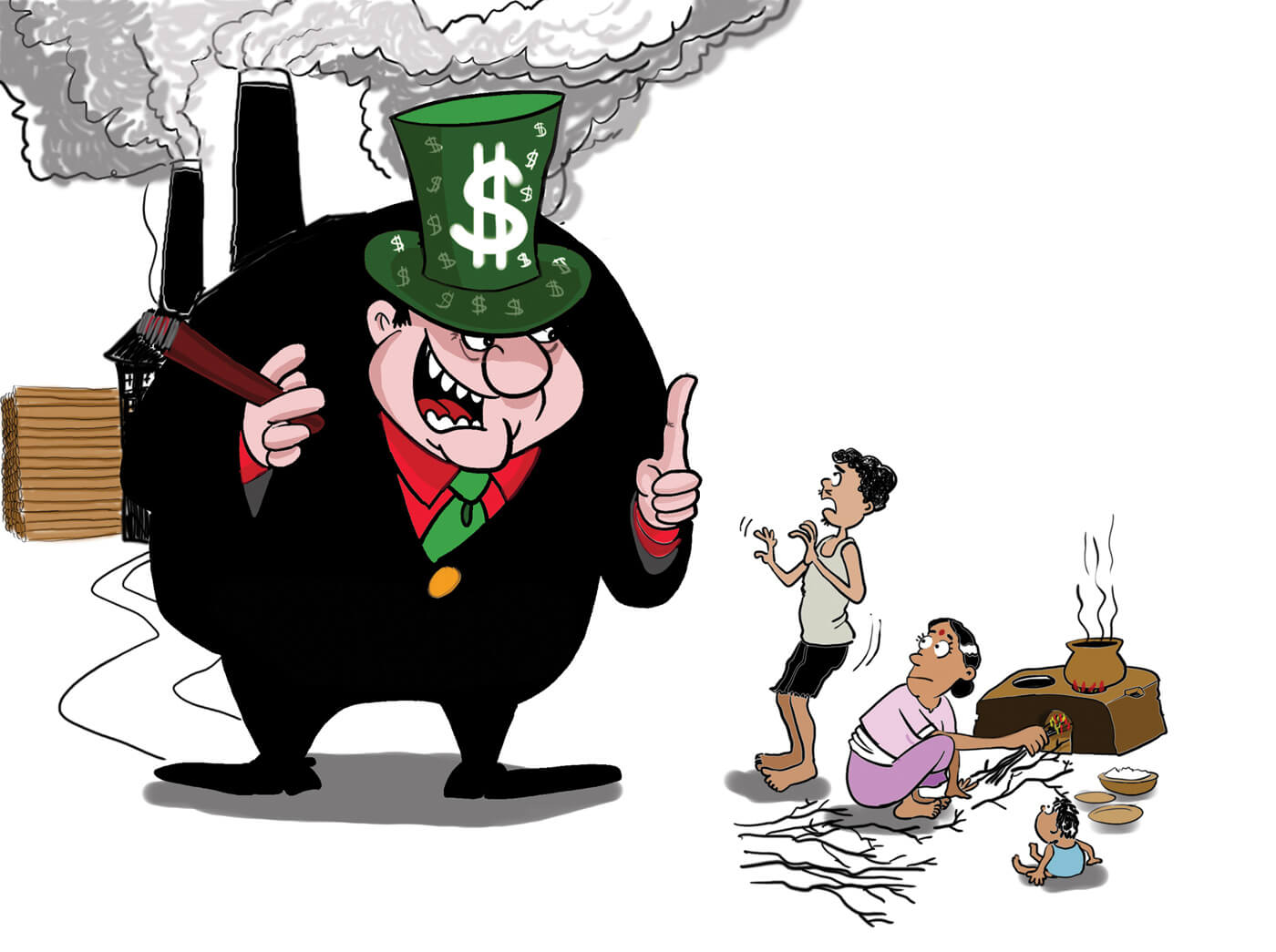
Climate .. is both our identity and our destiny. It is central to understanding how we have evolved as a people, a society, a nation, and a civilization. To the extent we rally fitting stewardship, climate will determine the security of our future. Meanwhile, in Kathmandu, the response to our climate dilemmas has been dumbed down to a mere ‘development’ problem, bureaucratized as one more check-box for surly Singha Durbar to tick off. Something as core to our essence deserves a far higher, heavier lift in our national consciousness, one would think. Merely updating Nationally Determined Commitment (NDC) documents and costing them upward at every Conference of Parties (CoP) to mirror the latest pie-in-the-sky funding assumptions will simply not cut it.
Nepal risks losing far more in climate loss and damage every year than it can ever hope to redeem through poverty alleviation programs, social investments, economic growth, and development. Yet the last things we need are corporate greenwashing, donor double-dipping, and myriad ‘green-collar’ hustles masquerading as climate finance.
The nuclear threat to Nepal
Deterrence and diplomacy are two legs on which the nuclear security regime has stood since the Cold War. But neither approach holds reliably in today's world where the number of nuclear-armed states has expanded; technical information is imperfect and harder to acquire; threat perceptions and command-and-control structures are trickier to read; ‘no first use’ principles and second-strike capabilities are compromised by technological advances in cyber-warfare, low-yield tactical nuclear weaponry and hypersonic glide vehicles; and arms limitation treaties and inspection and verification regimes have broken down.
Responding to the recklessness with which the big powers have taken to rattling the nuclear sabre, and reacting to how they appear to have lost their fear of nuclear war, the Bulletin of the Atomic Scientists in early 2026 advanced the iconic Doomsday Clock by four spots to 85 seconds to midnight—the closest that humankind has approached global catastrophe.
Although Nepal is a bystander in the nuclear arms race and an improbable target for direct attack, intensifying rivalries between India, Pakistan, and China still expose us to destabilization risks. Should one draw a Venn diagram to illustrate overlaps in the striking ranges between the nuclear stockpiles that each maintains, Nepal would lie smack in the middle, way too close for comfort. The threat of an accident and the risk of miscalculation multiply several-fold as one prices in the premise that the nuclear race in South Asia is, in fact, four-way: while Pakistan ensures that it does not fall behind India, India is responding to China’s force expansion. China, for its part, is attempting nuclear parity with the US. Any which way, Nepal is an unwitting participant.
Lessons from the Russia-Ukraine war
Wars, they say, are clarifying. “The sword will carve what the pen will sign,” as one axiom has it. Once the guns fall silent, military strategists will analyze the Russia-Ukraine theater for combat lessons in every battle move and all manner of Wunderwaffe deployed or disabled. Economists will assess the impact of military Keynesianism on Russia’s economic resurgence. Peacemongers will shock us with the scale of human loss.
In Nepal, lessons in prevention and peacebuilding will be far more pertinent, heaven forbid, should we ever be lured into a proxy situation even fractionally on this scale. Understanding how Ukraine got swept up in the drumbeats of war pounded by faraway patrons should encourage us to identify our own vulnerabilities in order to reinforce our guardrails around national sovereignty, over and above what we have already worked into our constitutional practices. As someone wise once said, “great powers don't lose wars, they only lose interest.” This should serve as a blunt reminder that the only guarantor of national security is the nation-state itself.
For small nations like Nepal, it only makes sense that a robust defense of international law and its instruments of multilateral enforcement should form a rational substitute for hard power. After all, the ultimate security guarantee derives from not having enemies and desisting from posing threats to one’s bigger neighbors. Mencius, the 4th-century BCE Chinese philosopher, offers handy advice: “Great powers should be benevolent and small states should be wise.”
The coming reset in the international financial system
Governments around the world are watching the dollar system with trepidation, quietly shopping for alternatives. Many wish to not remain at the mercy of any single reserve currency. The question being asked of America today is: Did enlightened minds like George Washington, James Madison, and Alexander Hamilton ever intend to allow the US Treasury free rein to wage unilateral economic warfare against anyone and everyone it pleases? Madison himself provides useful insight in the Federalist Papers: “Enlightened people will not always be at the helm.”
But the search for a wholesale replacement of the dollar system will remain elusive, at least for the time being. Barring an outright geopolitical breakdown, the world will likely settle for a financial architecture where parallel universes compete, coexist, and often overlap. Yet this is hardly the first time that the Global South is calling for a reset. As early as May 1974, the Group of 77 coalition comprising postcolonial and developing countries in Africa, Asia, and Latin America, called for a New International Economic Order (NIEO) and rallied behind proposed revisions to trade rules, reforms to the international monetary system, and new forms of South-South cooperation. As a founding member, Nepal has lent its voice to the G77 agenda since 1964.
The will for equity and fairness lacked agency in the past. Aspirations for amends were limited largely to lofty speeches in the halls of ‘Third World’ diplomacy and in the progressive discourse of rarefied symposia. Today, it has entered the mainstream in discussions about multipolarity.

NEPAL's 2025 youth uprising
While it can be parsed in many ways, the uprising belies decades of creeping disillusionment with Nepal's ‘one-day democracy’, desperately in need of some tough love.
Yet if democracy is still the answer, the uprising reminds us of the question: to what end? Predictably, armchair analysts—many apologists for the old guard—spot the globalist ‘deep state’ unleashing its ‘toolkit’ on Kathmandu. Fight, flight, freeze, or fawn, resident powers under threat often smell conspiracies where there are none. A false flag here; a red herring there—they will try to cling to privilege and kill all green shoots of change. This, by now, is second nature to them— obfuscation and plausible deniability—as regular Nepalis increasingly reject political panaceas and economic edicts that are forever short on delivery but still in circulation well past their shelf lives. It may well have been the case that the online platforms of youth mobilization were affiliated with the West. But so were the targets of their ire: crony capitalism, suave socialism, and cosmopolitan communism.
Learning from our past
It would be highly presumptuous on the part of any student of Nepal today to embark upon yet another grandiose inquiry into the political, social, and economic breakdowns that possibly every Nepali is a victim already. Governance, justice, rule of law, economic management, entrepreneurship, social mobility—Nepalis are hardly hankering for another discursive exposition on the privations of their everyday lives.
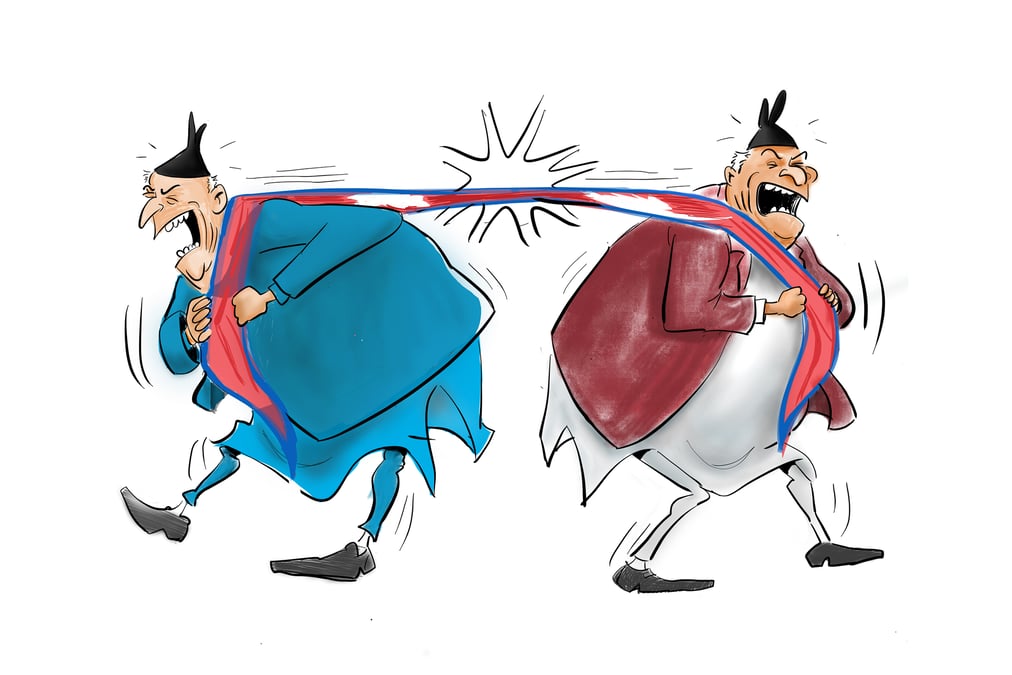
There is really no mystery to the art and science of development. By now, well into our 16th Five Year Development Plan, practitioners from many disciplines and spanning many generations have all acquired top-class mastery over the whys and wherefores of our circumstances. Yet we let our guard slip; allowed our sense of urgency to slide somewhere in the political theatre and hollow rhetoric. Where we were meant to fortify the economic foundations of our young democracy, we went about building castles in the air. We lost sight of the very pathways we promised ourselves: committed leadership, strong and inclusive institutions, skilled and healthy human resources, open markets, modern infrastructure, environmental stewardship, and effective governance. Put another way, we never missed an opportunity to miss an opportunity.
Shape up or ship out; the gig is up—the message of the September 2025 youth uprising could not be any starker. Duck and cover tactics will no longer apply. Our leaders cannot go on behaving like holdouts from a different era, constantly condemning the past or conjuring up fanciful futures. It will take a certain kind of grit, pluck, and ingenuity to thread that needle—the type that can dwell on the here and now.
Nepal in a multipolar world

Nepali Times: Why do you say that the 2020s will be a pivotal decade for the world and Nepal?
Rajib Upadhyay: The 2020 pandemic presaged the unravelling of collaborative multilateralism. The 2022 outbreak of war in Europe exposed the foibles of Western hegemony. The 2023 genocide in Gaza declared the demise of the liberal secular order. The 2026 fiasco in the Hormuz Strait revealed to the world that the global policeman has lost its shiny gun. Meanwhile, China is winning every race without having to fire a single shot. With a resurgent Russia, Beijing is roping in the non-Western world’s support for ‘changes not seen in a century’.
Is this why ‘multipolarity’ is suddenly a buzzword in global affairs?
Post-World War II generations everywhere are contesting the fidelity of their taught history and received wisdom. Multipolarity offers a peaceful, logical anchor for interstate relations. It represents the best hope for overhauling international institutions and bringing them up to snuff to urgently, competently, and inclusively address the big questions of our time: war and peace, the climate chaos, social inequalities, debt distress, and human security for all. Multipolarity is about reinventing multilateralism, not rejecting it.
Your previous book Cabals and Cartels was about Nepal held back by domestic constraints. Has anything changed for us to benefit from this reordering?
While India and China both position themselves as natural heirs to the leadership of the Global South, Nepal is eminently placed to speak truth to power. We can hold the mirror up ever higher to invoke the esprit de corps that both our neighbours swear by. And we can call them out if they ever lapse into what they once condemned. By expanding our touch points with the rising powers and straddling multiple, overlapping circles of friends, we stand to bring significant assets to bear. But to benefit from the grand bargain that a multipolar order promises, we must cleanse our worldview of the claustrophobia that clouds it. We must expand our mind-space to explore every realm of possibility.
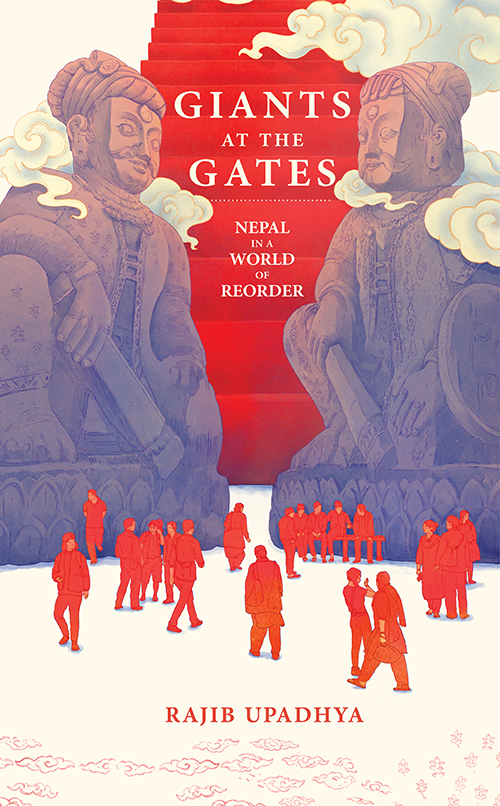
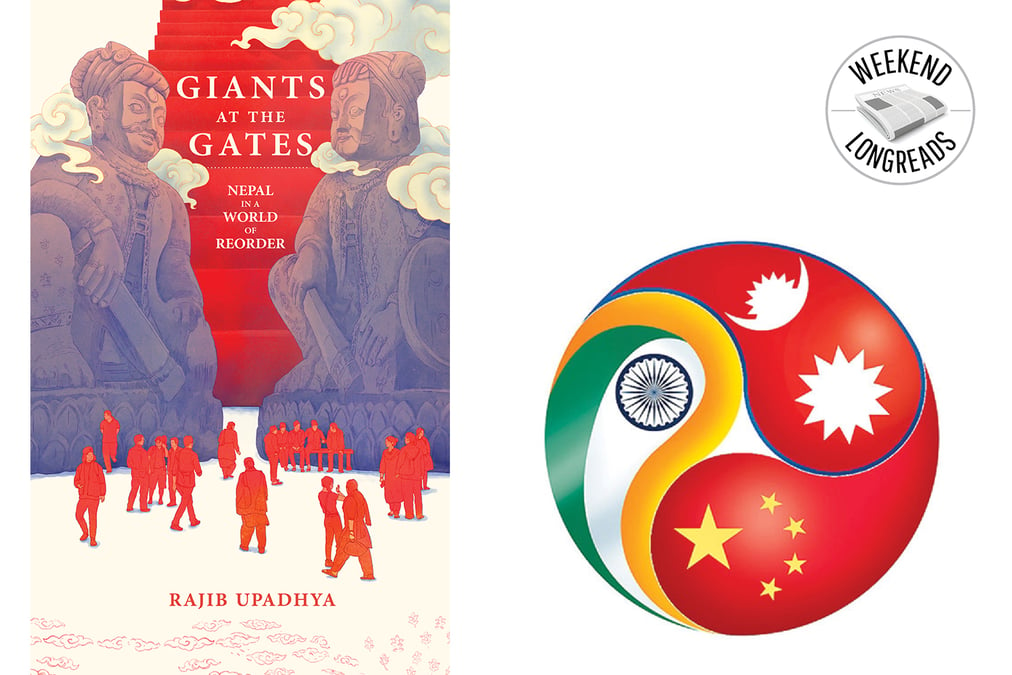
Giants at the Gates
Nepal in a World of Reorder
by Rajib Upadhya
FinePrint, Kathmandu August 2026