
In sharp contrast to Europe and the United States, the Western Pacific, South and Southeast Asia have reported relatively fewer cases of COVID-19 despite having their first cases in January itself.
As of 13 April Nepal has recorded 13 confirmed cases out of which 11 were imported infections. Despite being in the neighbourhood of the epicentre, the South Asian region have shown a relatively lower prevalence of the disease. Most of these countries have resource constraints, illiteracy, poverty, inefficient health system, and poor hygiene -- all conducive to the spread of epidemics.
Cities like New Delhi, Karachi, Kathmandu and Dhaka are so densely populated that a virus capable of human-to-human transmission like COVID-19 would be expected to be rampant -- just as tuberculosis is.
Tuberculosis is primarily a respiratory illness spread by droplet infection in the same manner as the novel coronavirus. On 14 April, India recorded more than 1,248 new positive cases for COVID-19- its highest figure yet- and 29 deaths. India's nationwide caseload is now at 10,815 and there have been 353 fatalities, but this is still much lower per capita than in the United States (7 cases vs >1,000 cases per million population in India and the US respectively).
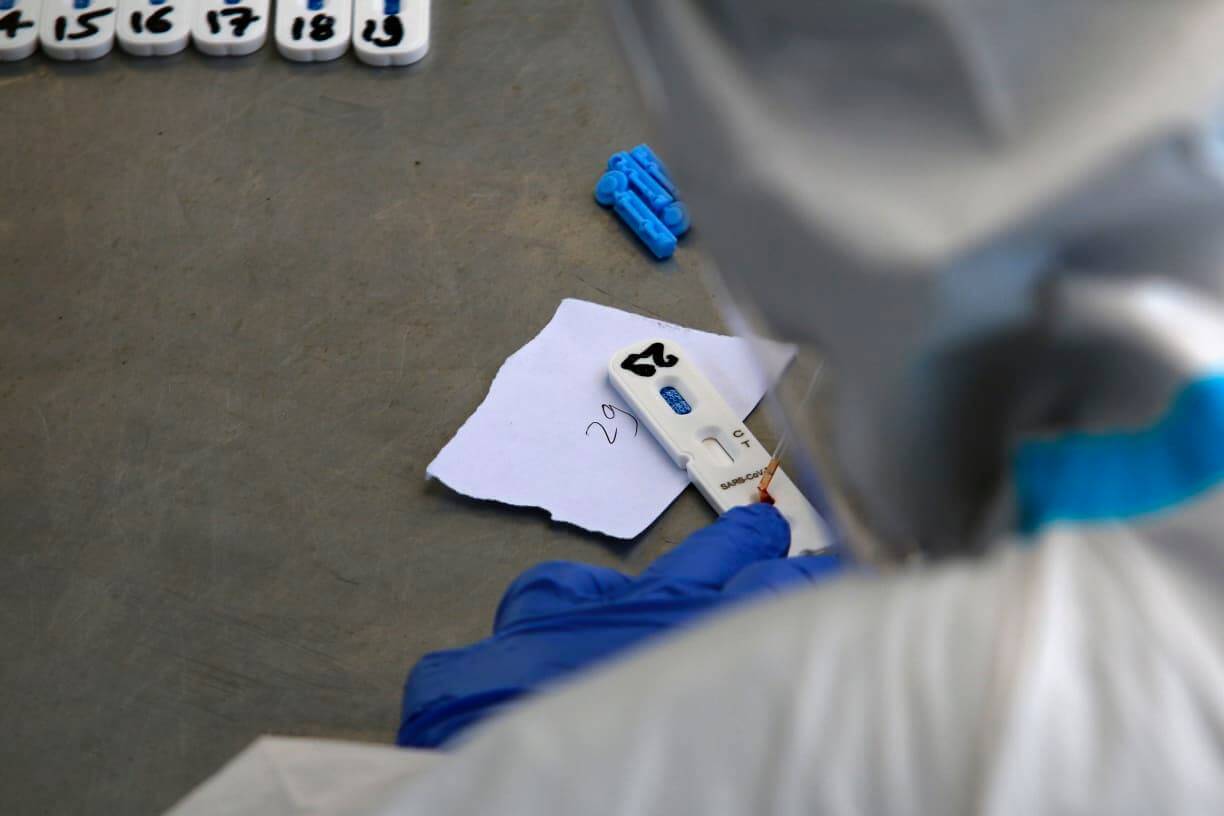
Is this lower prevalence a true picture, or is it giving us a false sense of security because we have not performed enough tests? Nepal had tested only 5,184 people till 13 April.
There is a possibility that the disease is circulating in the community, and more will be detected once testing is scaled up. However if this was true, there should have been reports of increased hospitalisation and mortality associated with some unknown and unusual pneumonia. Most of the hospitals in Nepal have set up fever clinics, but none so far have reported an increase in the number of suspected patients.
Mathematical models are used to predict outcomes in infectious diseases. Crucially, most models predict that the exponential ‘wave’ has yet to hit our region. The lockdown may have in fact pushed the wave further back, and bought us time. It is also possible that some element in the agent-host-environment interaction, could have hindered the virus from spreading. But this could be just a feel-good hypothesis.
Amazingly, Nepalis who are not known for following directions have taken to heart the importance of a lockdown, and the constant wearing of a mask. Nepal enforced a lockdown immediately after detection of the second case, while many countries in the West did it only after the disease exploded.