‘Do you want people to have access to telephony or do you want to fight corruption? If you want to fight corruption, these people will be completely cut off from information highway for the rest of their lives, okay, full stop. Make up your mind.’
British businessman and self-proclaimed ‘thought leader’ Mohamed Amersi sits across from The Guardian journalist Tom Burgis at his lawyer’s offices in London as he makes this matter-of-fact statement.
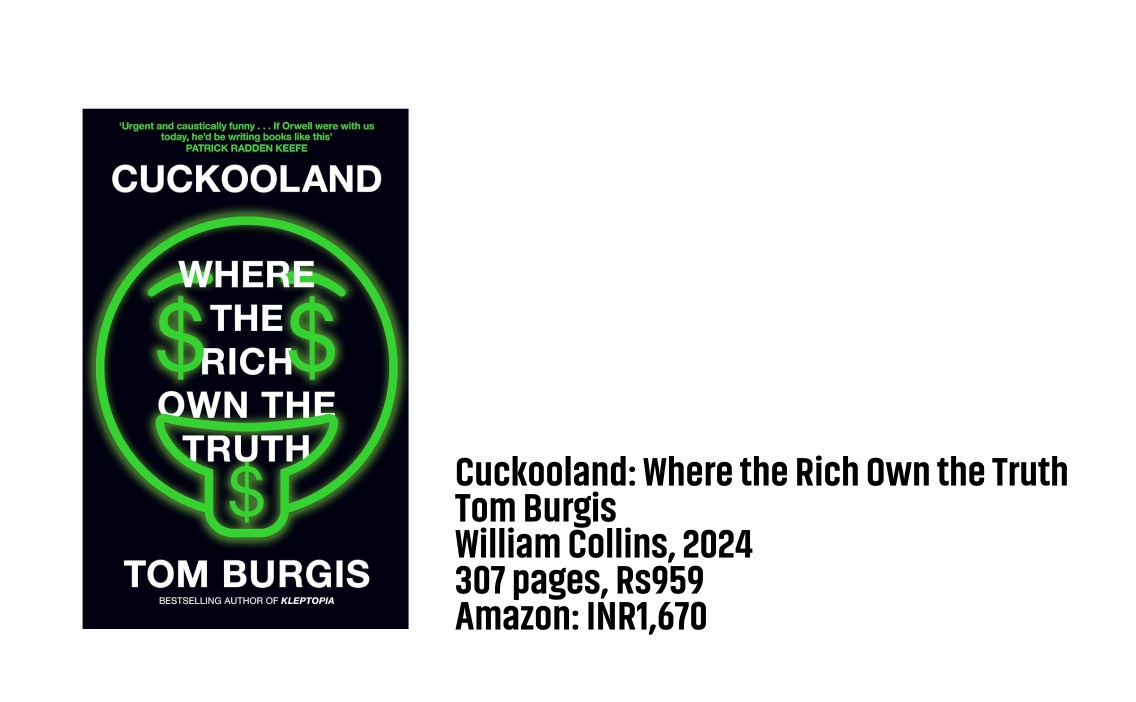
Amersi was referring to the dealings of Nepali businessman and fixer Ajeya Sumargi, one of the many subjects of his 2024 book Cuckooland: Where the Rich Own the Truth. This is Burgis’ third book, and he weaves a fast-paced tale with investigative reporting to chart the deal-making career of Amersi in the global telecommunication industry.
The investigation traces Amersi’s backroom deals with associates of Russian president Vladimir Putin to Gulnara Karimova, the daughter of an Uzbek dictator. Inevitably, Burgis follows the trail to Nepal where a former Maoist commander turned prime minister wants to strike a deal with Lars Nyberg of the Swedish-Finnish firm TeliaSonera to break into the emerging market.
Burgis' account of Amersi’s dealings in Nepal begins with the royal massacre in 2001 and Gyanendra’s ascension to power. The new king stages a coup in 2005 and reimposes absolute monarchy, and on this new stage enters Ajeya Sumargi.
Read also: Nepal’s richest man in the Pandora Papers
Sumargi starts out a smalltime businessman in Hetauda but soon climbs into the circle of movers and shakers in Kathmandu. He is self-made and has made a vocation out of knowing the right people in right places.
And the right person to know in Nepal’s new political landscape was Gyanendra’s son-in-law, for whom Sumargi becomes a fixer, ensuring he becomes indispensable. Eventually this leads into his foray into telecoms just as mobile telephony was making inroads in Nepal.
But Nepalis are sick of the conflict that had claimed 17,000 lives and of an authoritarian king. A people’s movement in April 2006 forced Gyanendra out, and the Maoists were subsequently elected to a Constituent Assembly.
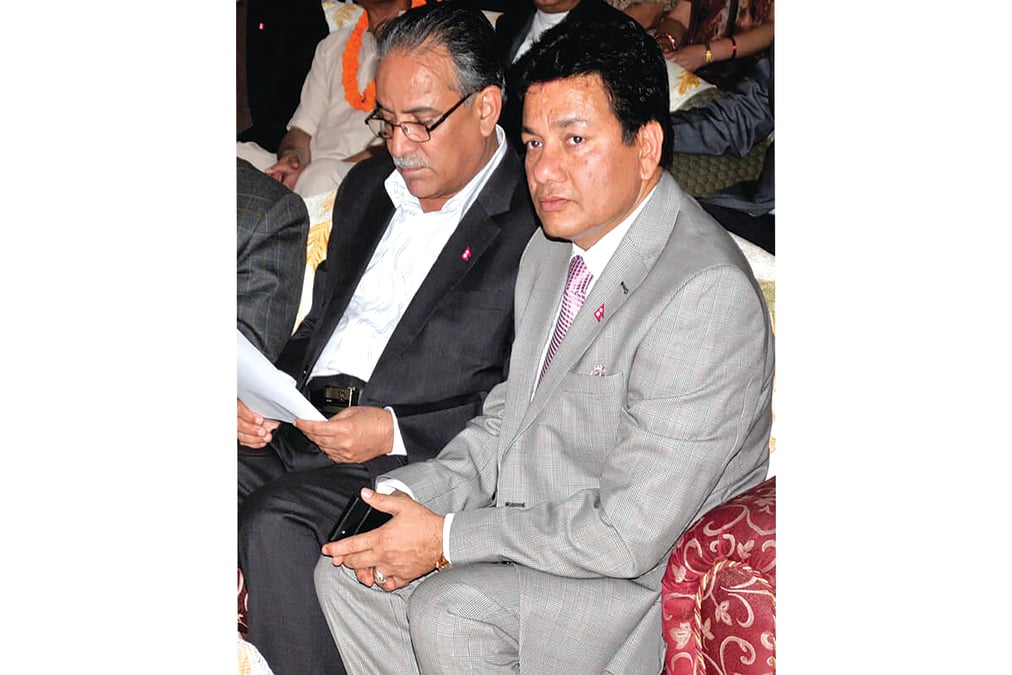
By then Sumargi had switched sides and sidled up to Prime Minister Pushpa Kamal Dahal (aka Prachanda, the Fierce One) Both are pictured, above. He is soon cleaning up illicit funds the Maoists allegedly purloined from stipends meant for former guerrillas in UN-supervised demobilisation camps.
Sumargi arranges luxury lodgings in Lazimpat for Dahal in a house purchased in the name of his sister-in-law. Sumargi’s proximity to power earns him a license for Hello Nepal.
Enter: TeliaSonera, which at the time also owns and operates Kcell in Kazakhstan and Ucell in Uzbekistan, and Ncell which it acquired in 2008 in Nepal. At a meeting with TeliaSonera boss Lars Nyberg, Prime Minister Dahal suggests purchasing Hello Nepal to make the pesky issue of license renewal go away.
Sumargi opens the doors. Telia Sonera opens its wallet. And Sumargi, says the book, coolly pockets $74 million from TeliaSonera’s acquisition of Hello Nepal. He greases the right palms, makes TeliaSonera’s problems go away, and prepares to become an additional $200 million richer.