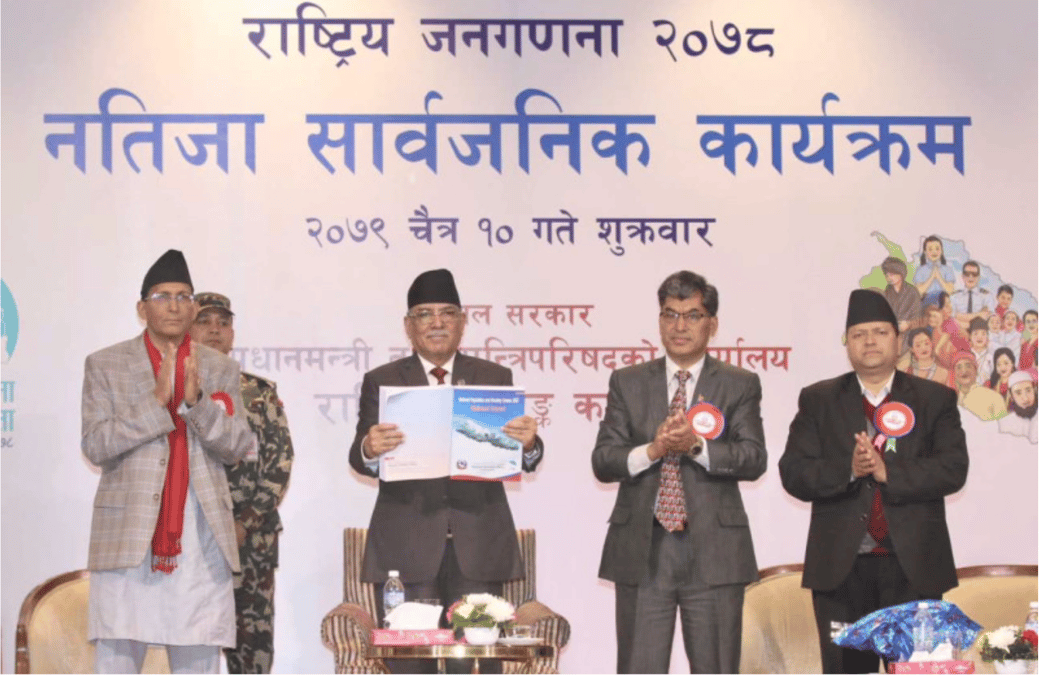
A year-and-half after the Nepal’s 2021 National Population and Housing Census was conducted, the final results were finally published on 24 March.
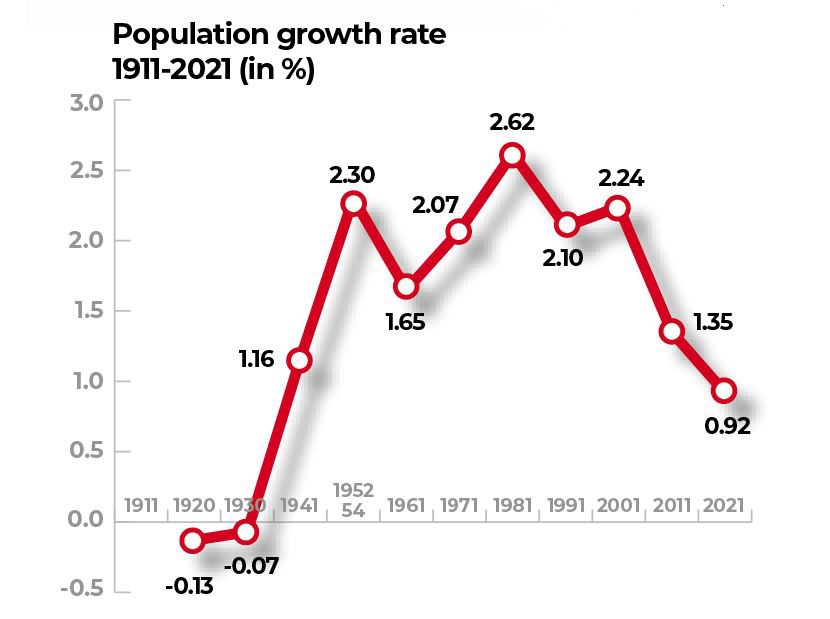
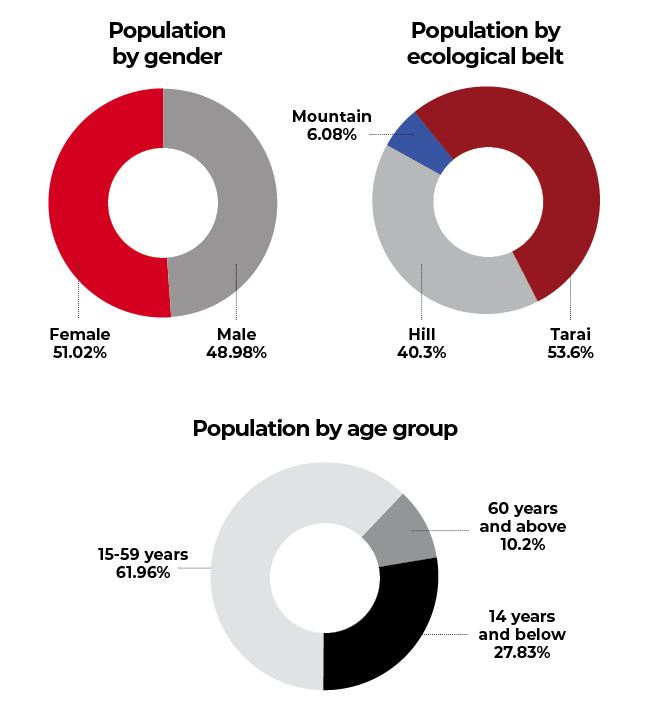
Nepal’s population has crossed 29.1 million but annual growth has slowed to 0.92% from 1.35% ten years ago. The gender ratio is even more skewed, with only 95.6 males per 100 females. There are now 6.6 million households across the country, an increase of 23% over the decade, which means more nuclear families.
The population pyramid now shows fewer children, a youth bulge, and greater numbers of elderly. Ten years ago, 35% of the population was below 14, that proportion had gone down to 28%. Meanwhile, the number of people older than 60 has climbed to 10% from 8%.
“The decrease in the population growth rate is characteristic of the state’s efforts to drive socio-economic development, and is similar to global population trends,” says Keshab Prasad Adhikari at the Central Department of Population Studies at Tribhuvan University. “What the government and related agencies need to do now is formulate programs and policies so that the annual population growth rate does not go down any further. And if it does, not less than 0.5%.”
Prof Adhikari finds it alarming that the number of female births and the female population under 14 is lower than males. Which shows a cultural preference for boys, even though women tend to live longer.
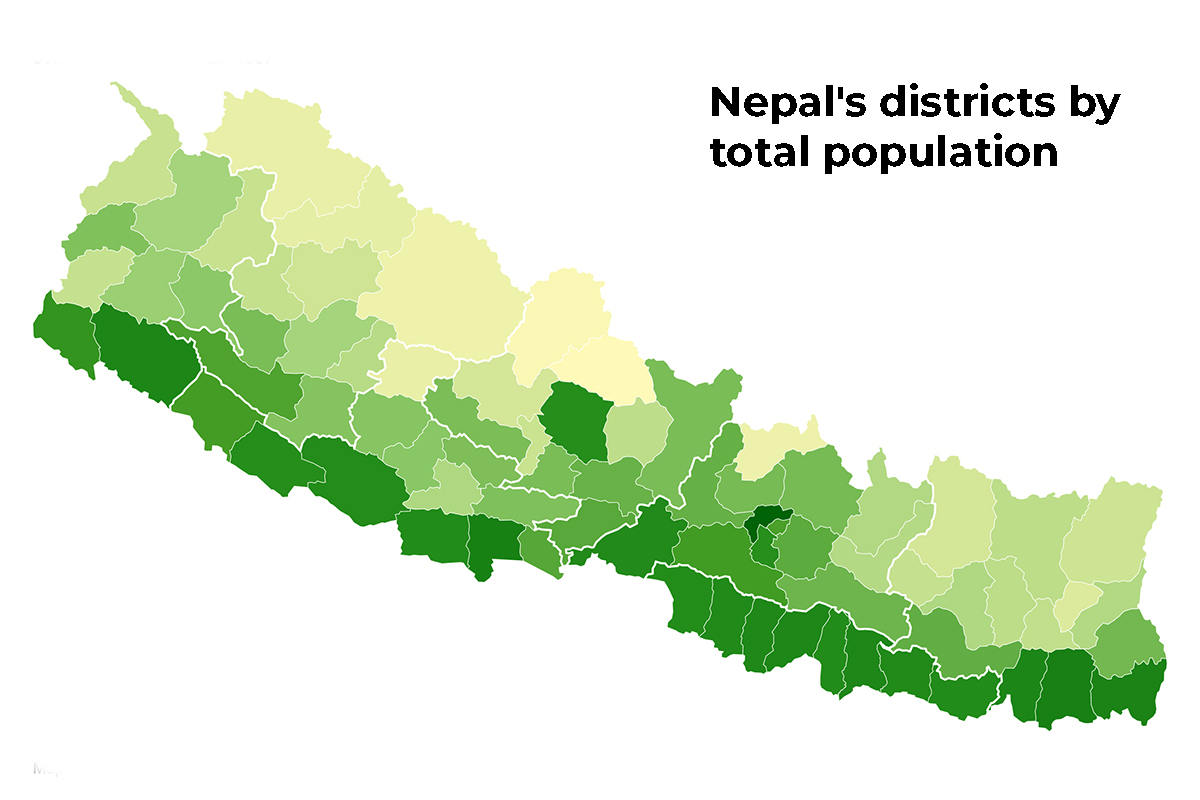
More than 66% of Nepalis now live in urban areas, but that is only because of the new demarcation of municipalities. Even so, there is a mass migration of the mountain population from the mountains to city hubs in the plains. Nearly 54% of Nepalis now live in the Tarai, while only 6% remain in the high mountain districts.
Read also: Counting on Nepal, Editorial
“Transmigration to urbanised spaces and to the plains has been haphazard. And in many cases, areas that do not need to be have been unnecessarily assigned as urban,” adds Adhikari.
The 2011 census had shown that 64% of total households used biomass for cooking, and this has gone down to 51%, mainly because 44% of homes use LPG. Access to piped drinking water has gone up to 57% in 2021 from 48% a decade ago.
Almost 73% of Nepali households have smartphones while 37% have access to internet services, and nearly half of households own a television. Meanwhile, 27% of the households own a motorcycle, with only 3% having a four-wheeler.