
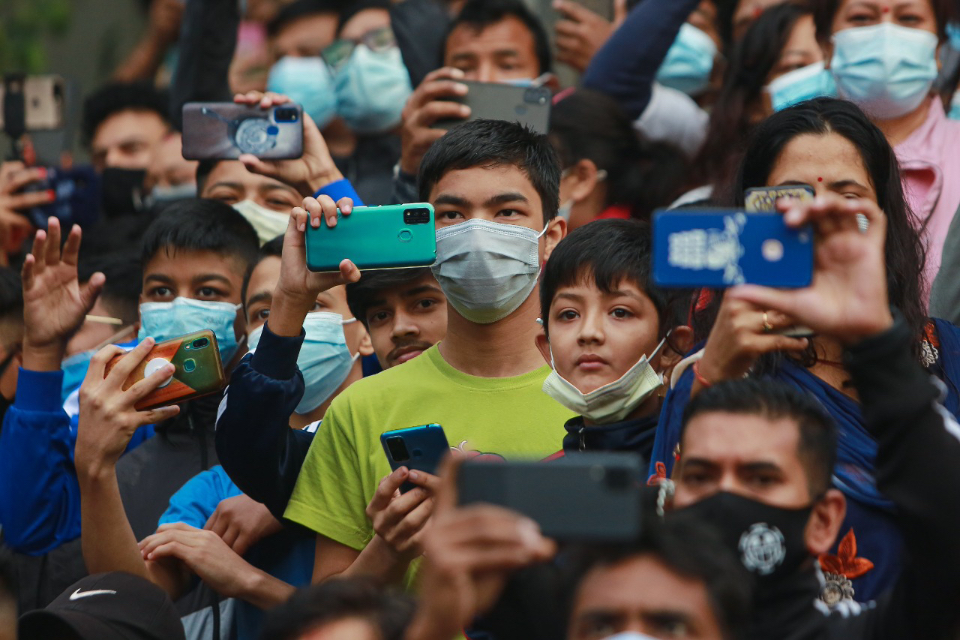
A new survey of media trends in Nepal conducted nationwide earlier this year shows that the use of social media networks has left radio, tv and the print press trailing further behind. But even though they interact with and share social media content, most citizens have little trust in it.
Sharecast Initiative Nepal conducted the survey among 5,582 respondents above 18 years in face-to-face interviews. They were selected from 351 local wards, rural municipalities, municipalities, sub-metropolitan cities and metropolitan city proportional to the population size from 77 districts. The sampling of the survey is based on the 2021 census results.
The 2022 results are useful for tracking media consumption trends by comparing them to previous surveys and seeing the changing popularity patterns among various groups.
Most dramatic changes have been in the decline in the audience for national and international news on radio, television and print in just two years. Compared to 2020, the percentage of respondents saying they watched television news fell from 47% to 31%. Newspaper and magazine readership for national news, already small, decreased further from 8% to 4%.
Radio, which was once the main source of local news for Nepalis, especially in rural areas, has now fallen from 44% to 26%.
Users seem to have migrated en masse to the internet. When asked about which medium they relied on for local news and information, respondents saying YouTube increased from 4% to 15% in two years – signifying the proliferation of channels on that platform that have usually sensationalised news and current affairs content.
Read also: Nepal’s new digital landscape, Sonia Awale
The percentage of respondents saying they got their information from Facebook rose from 21% to 41%, although the caveat here is that they may be clicking on links to the Facebook accounts of the mainstream media.
Despite this surge in users of social networking sites, there appears to be a trust deficit. Radio, tv and print media still top the ranking for credibility, with only 3% of respondents saying they trust content on social media.
Interestingly, trust in online portals is also a low 8%.
In answer to another survey question, most respondents who said they do not read print media (85%) said they did not read newspapers and magazines because they were not available in the area or delivered at home. Other reasons for not reading were: stale content, boring, or they have other sources of news.
On the other hand, while nationwide use of Twitter is very low, the number of print media readers who say they are also on Twitter is much higher (42%) than on Facebook (20%) or YouTube (20%).
Left to their own devices
The changing pattern of consumption of media content is determined by access to new information technology. Just as radio surged with Nepal’s rural radio revolution in the 1990s, and television took audiences away from print, the legacy media are now all in the same boat – competing with the internet for eyeballs and, therefore, revenue.
Nepal’s mobile penetration rate is now reaching saturation, with 90% of individuals above 18 years in the survey saying they owned a hand phone. Of these, 67% were smartphones and can access data internet. Although this proportion has gone up sharply since previous Sharecast surveys, it shows there is still potential for growth if 4G access spreads and mobile data package costs come down.
Read also: Nepalis are drifting to digital media, Madhu Acharya and Bhumiraj Chapagain
_________________
An increasingly online nation
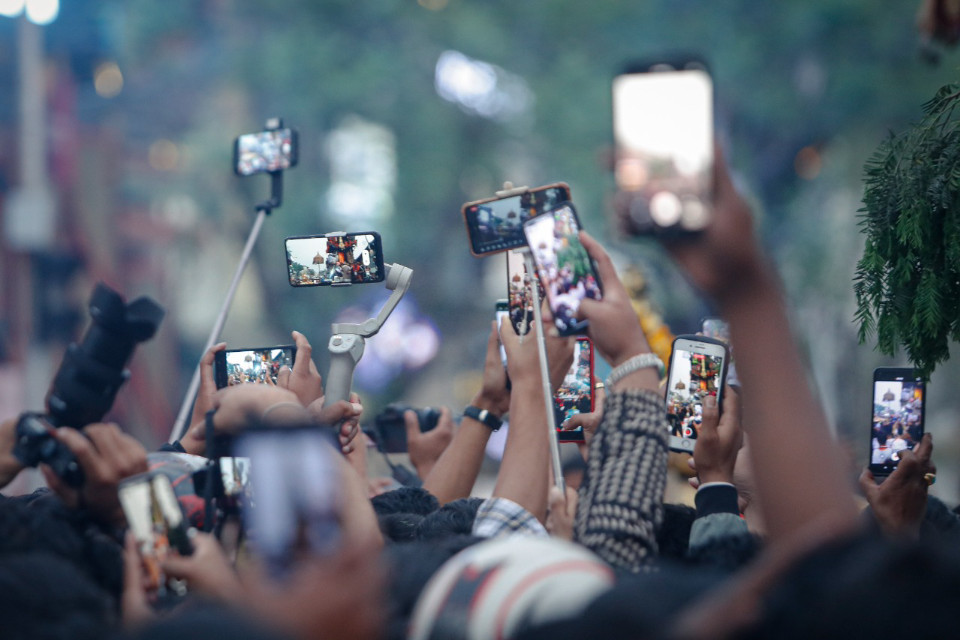
More than one-third of respondents above 18 years in a nationwide survey conducted by Sharecast Initiative Nepal said they do not have access to the internet.
When asked why they are not using the internet, 62% of the respondents said it was because they did not own a device, and 29% lacked the confidence or skill to go online. Of the other responses, 19% said they feel too old to learn, 14% had neither the interest nor the need of the internet, and 7% were too busy doing other things. 7% said that although they would have liked to have access to the internet, there is no connectivity where they are.
These results show that there are still a substantial number of adult Nepalis who are not online (6.4 million), and most of them do not own a device. Although, in answer to another survey question, nearly 90% of adult Nepalis say they have mobile phones (and 67% of them are smartphones), showing that internet penetration in Nepal is lagging behind phone use and has not yet reached saturation.