
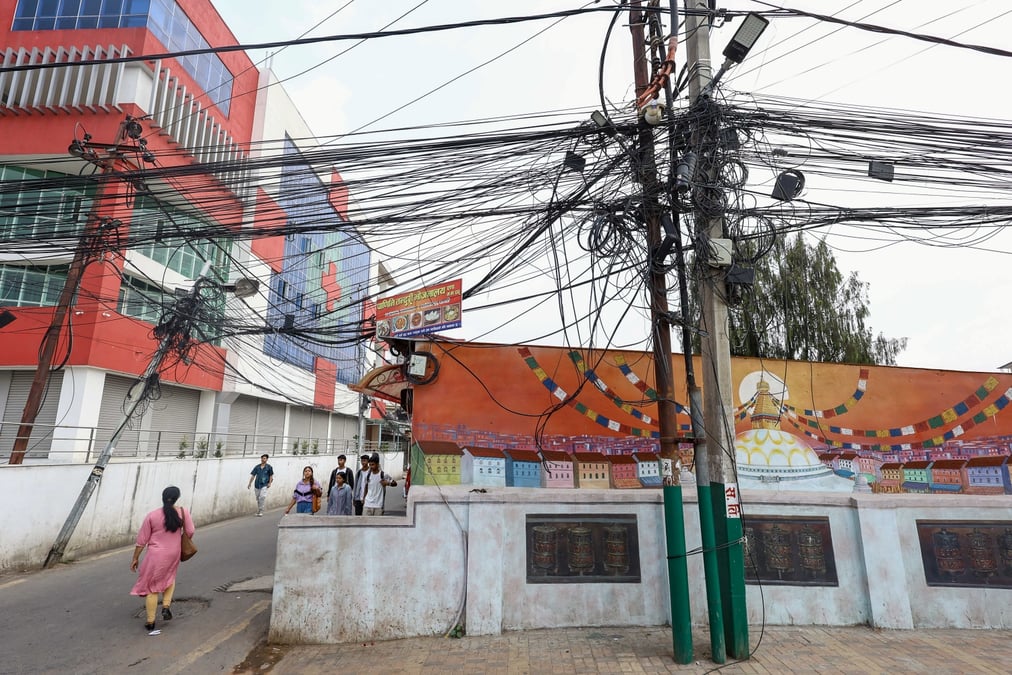
The recent removal of Kulman Ghising a few months before his tenure heading the National Electricity Authority (NEA) ended made headlines. Hitendra Dev Shakya, whose previous tenure ended amid similar behind-the-scenes politics that never saw a final court verdict, was put back in charge.
For many, Ghising was the architect of the end of 18-hour-a-day power cuts till a decade ago. His abrupt removal sparked outrage across the public sphere, and the political spectrum.
Leadership at the NEA has never been just about performance, it has long been entangled in political proximity, not merit. The agency is more than a power utility, it is more about control of budgets, contracts, and narratives.
As long as the lights stay on, many Nepalis will willingly overlook the messy compromises that greases the system. Appointments, removals, court cases, and backroom political bargain are the norm. Sometimes like with Ghising, a figure emerges as a public hero, sometimes, they do not.
A decade after routine load-shedding ended, political leaders still scramble to claim credit, over what should fundamentally be just the day-to-day work. The sector is mired in controversies, from metering disputes to ad hoc political committees, tariff issues, to negotiating cross border power trade.
Even basic statistics like electrification rates are held hostage to executive narratives with no clear standards and compliance on what counts as real access. Nepal's power sector seems to be running without a referee.
There are three agencies involved: the Ministry of Energy, the NEA, and the little-known Electricity Regulatory Commission (ERC), each with a distinct mandate, at least on paper.
In a well-regulated market, issues like metering disputes and executive appointments would barely register outside the industry. In Nepal, such decisions often spill into political crises and can shake the fate of governments. Yet, the ERC is rarely seen or heard, even when these issues strike at the heart of its regulatory mandate.
Blurred roles have left Nepal’s power sector in a state of chronic overlap. The ministry often interferes with operations, drawn by the quiet influence that comes with the turf: contracts, budgets, and visibility.
NEA straddles the line between implementer and influencer, while the regulator still seems hesitant to assert its space.
Created in 2019 after years of industry bargaining, the regulator’s job is to establish rules, resolve disputes, and bring predictability and fairness back to the system. And this critical role remains a blind spot in Nepal’s energy debate and power struggles.
Disputes that should fall under regulatory inquiry and consultation, from the Time-of-Day (ToD) meter disputes and industrial payment defaults, to the NEA’s role in cross border power trade negotiations have instead become political flashpoints.
Despite the politics, if a regulator cannot assert itself in matters squarely within its mandate like pricing, contracts, disputes, compliance, what exactly is it regulating?