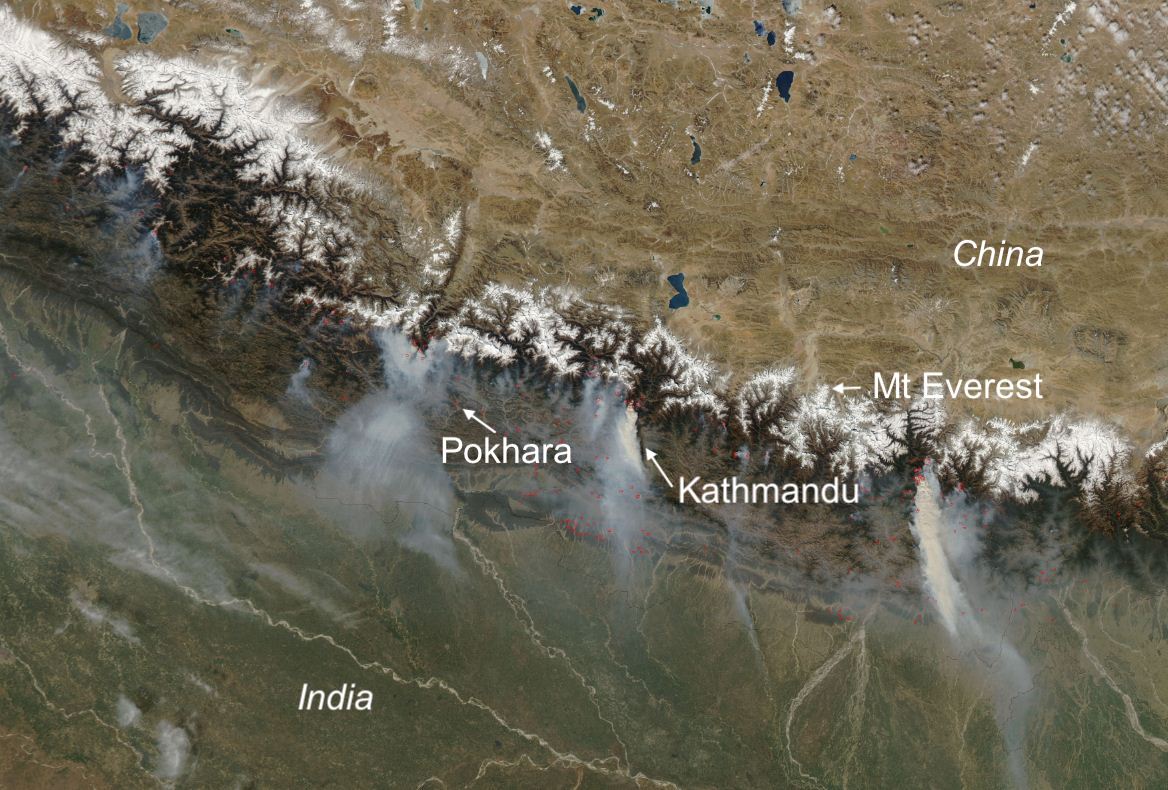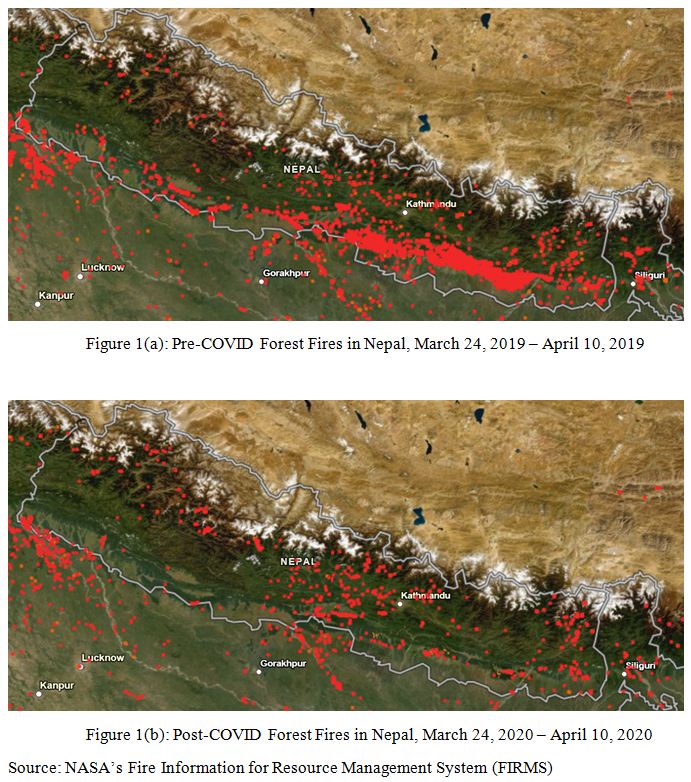
Comparisons of satellite images show that the Covid-19 lockdown has resulted in a reduction in the number of wildfires in Nepal in the spring of 2020 compared to the previous year.
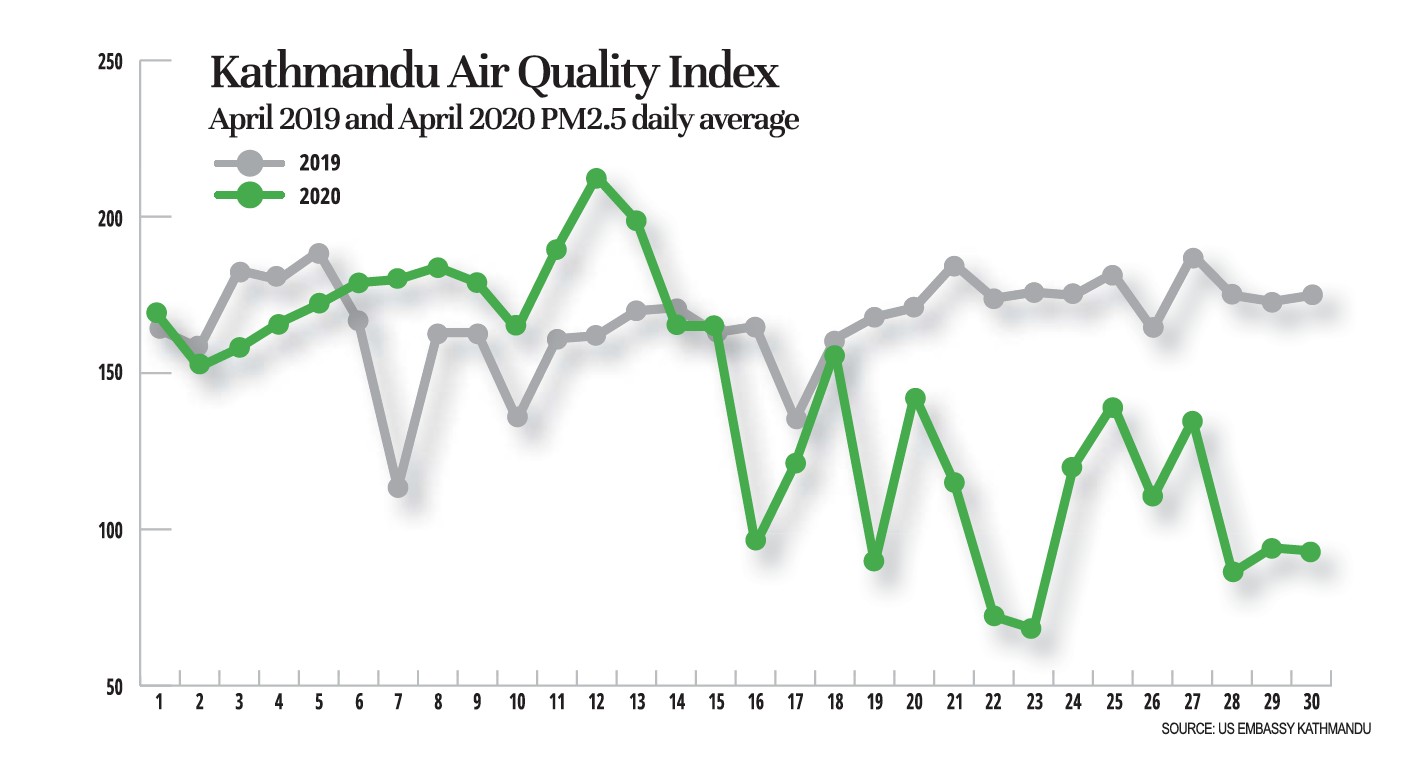
Air pollution data for Kathmandu and other cities in Nepal also indicate an average of 38% improvement in air quality because of restrictions in vehicular movement since the first lockdown went into effect on 24 March.
However, there was a sharp deterioration in air quality mid April this year in Kathmandu Valley despite vehicles being off the roads. This has been linked directly to several wildfires burning simultaneously in the districts around Kathmandu which caused an increase in outdoor air borne particles.
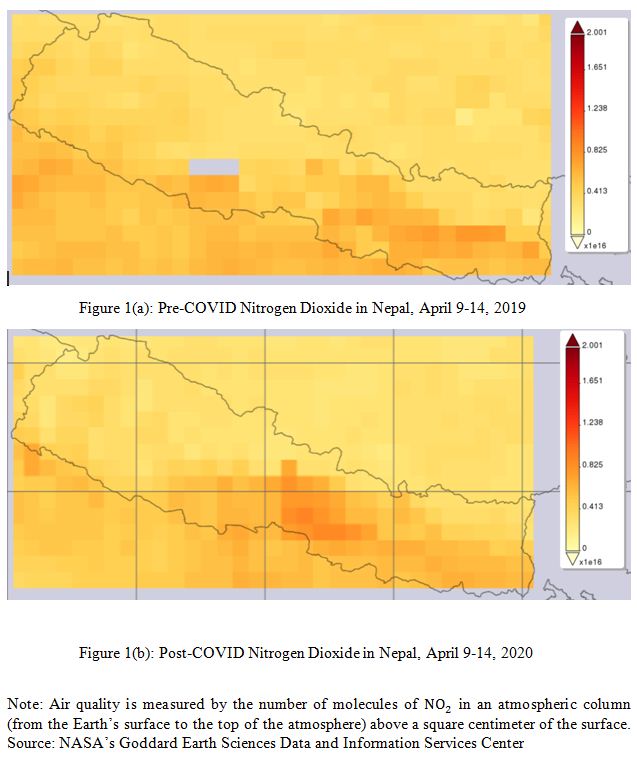
In fact, NASA satellite measurements show a significant increase in gases like carbon monoxide and nitrogen dioxide from the wildfires in that period compared to the previous year.
The air quality satellite image (see map) shows that the number of molecules of NO2 per cm2 was much higher in Kathmandu Valley in 9-14 April 2020 when compared to the same days in 2019.
But the fires in mid-April were an exception. The number of forest fires in Nepal, in fact, dropped drastically as the lockdown continued. A published study has found that restrictions on movement of people across districts in response to the pandemic likely caused a 5% decrease in the number of forest fire events and a 11% reduction in fire radiative power associated with the fires compared to the previous year.
These positive changes were more pronounced in districts with smaller areas of community-managed forests per capita. The difference across different areas of the country suggests that some districts are much better equipped in controlling fire incidence and its spread.
Districts including Arghakhanchi, Rupandehi, Sarlahi, Rautahat, Kapilvaustu, Bara, Parsa and Dailekh implemented stricter control on movement of people during the lockdown. Other than the absence of humans in the forests, high pre-monsoon rainfall this spring may have also dampened the number of fires.
Among developing countries, Nepal faces the recurring threat of forest fires that damage around 200,000 hectares every year. A majority of these fires are human-induced and occur during the dry season, mostly between March and May.
Between 2000 and 2019, the Moderate Resolution Imaging Spectroradiometer (MODIS) data shows that Nepal faced 47,000 unique wildfires averaging fire radiative power (FRP) of 29.88 megawatts.
These fires have been linked to deliberate burning by grazers and collectors of non-timber forest products, human negligence and accidents. Wildfires cause massive degradation and damage of physical infrastructure every year, affecting livelihoods of people all over Nepal.
Empirical estimates suggest that forest fires result in an annual economic loss of Rs5,000 per household, equivalent to 7.32% of the annual per capita GDP in Nepal.