

Nepal’s agreement in August to supply an initial 100 nurses to Britain with an option for several thousand more in future was followed by debate in both countries about the pros and cons of the deal.
Nursing workforce managers and researchers in Nepal, Britain and in international agencies have drawn attention to the fact that the nurses are being diverted from greater need back home to fulfil the UK's shortfall. But there is support for Britain's international recruitment of healthcare professionals from nursing colleges in Nepal and the global aspirations of nurses themselves.
Presently, the UK faces a considerable shortfall in the hiring and retention of student nurses. Scotland has not been able to meet its student nurse recruitment targets, with a gap this year of over 700 student candidates. This means Scotland alone will be short of 700 nurses in three years’ time, when the current intake of students graduates. Furthermore, the student dropout rate is currently around 25%.
Across Britain, by the time the current cohort graduates there will already not be enough nurses in the UK labour market even without the previous shortfall. And there are said to be vacancies for up to 50,000 health professionals in the NHS with the post-Brexit departure of East European staffers.
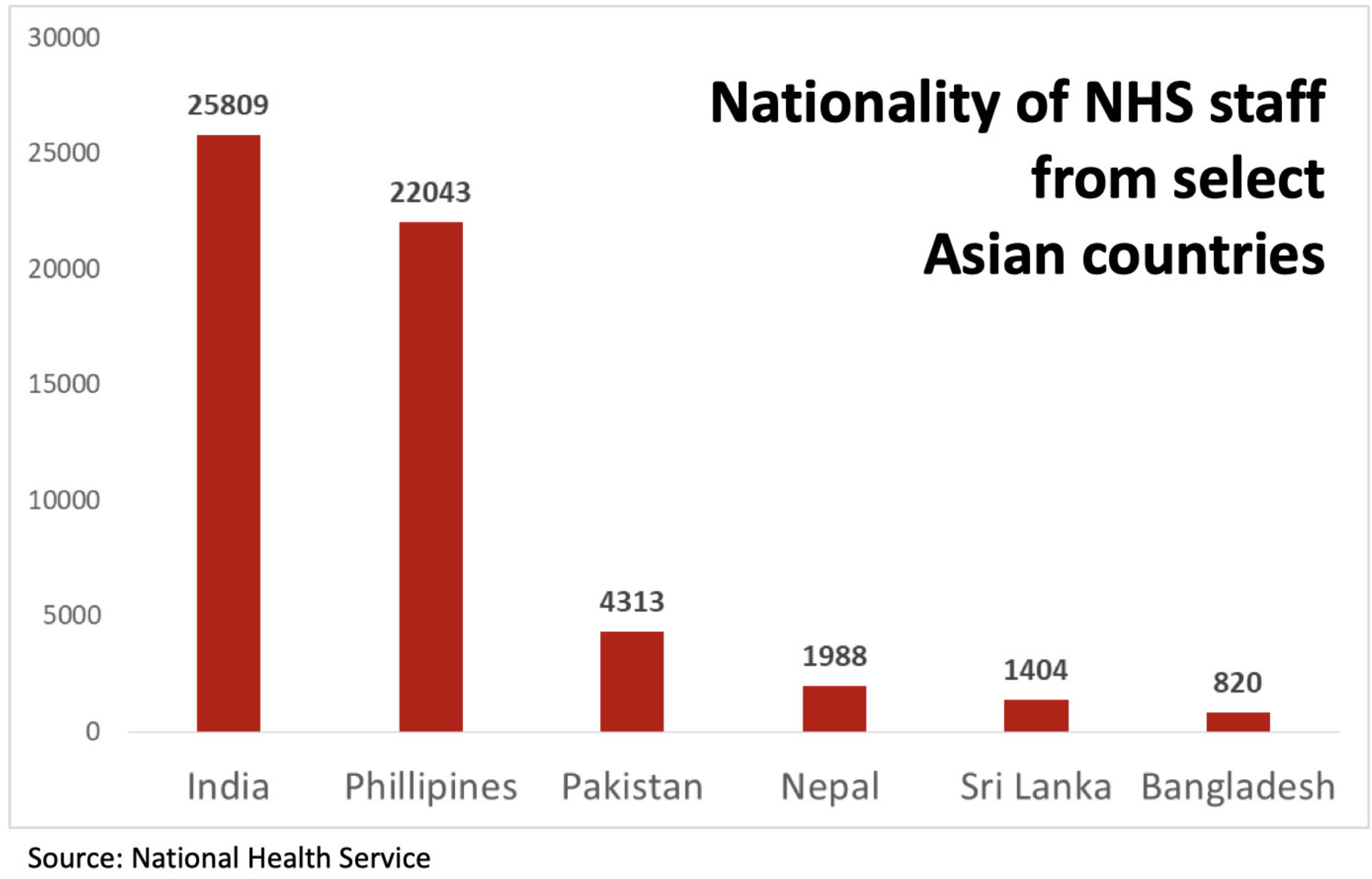
Britain therefore has very little choice but to recruit nurses from other countries. In the past nurses have been hired from English-speaking countries with weaker economies like the Philippines or India (see graph).
British nurse recruitment policy now displays little concern for source countries’ workforce situations, and of World Health Organization’s ethical recruitment guidelines which bars hiring medical workforce from ‘red list’ countries that do not have sufficient nurses and doctors for their own populations. But the staffing gap is so serious that countries like the UK, Japan, the United States, Canada, Israel and other European countries are competing to attract health professionals, disregarding the WHO guideline.
For Nepal, the situation is just the opposite. There is no shortage of nursing students considering a professional education. And as a result of increased nursing education capacity, there are more students successfully graduating than Nepal’s hospitals can employ. Unlike the UK, there is no major concern about student dropout rates in Nepal, and most nursing students complete their education and graduate.