In the wake of the Covid-19 pandemic, there is renewed attention around the world on 'unpaid care’ work and ‘care economy’. Still, a care economy is not considered a ‘productive’ sector and care work is seen as a ‘non-economic’ activity mainly performed by women.
Unpaid care work is therefore excluded from mainstream development, undermining the value of unpaid care services provided within the households.
The pandemic underscored the critical importance of care work – paid and unpaid. Care work did not and cannot stop even when everything came to a standstill, the value of skills involved in care work such as empathy, creativity, patience, and resilience are valuable, but usually taken for granted.
The World Economic Forum in fact highlights these skills as some of the most important competencies for future business success in an increasingly automated and digitised world.
Uncertainty in the labour market and the global economic recession has brought unprecedented uncertainty for women in countries like Nepal, with its gender gap in education, digital skills, and strong sociocultural biases.
The pandemic heightened care needs for elderly persons, and health care services required for preventive and curative services, and it made women more vulnerable to violence at home.
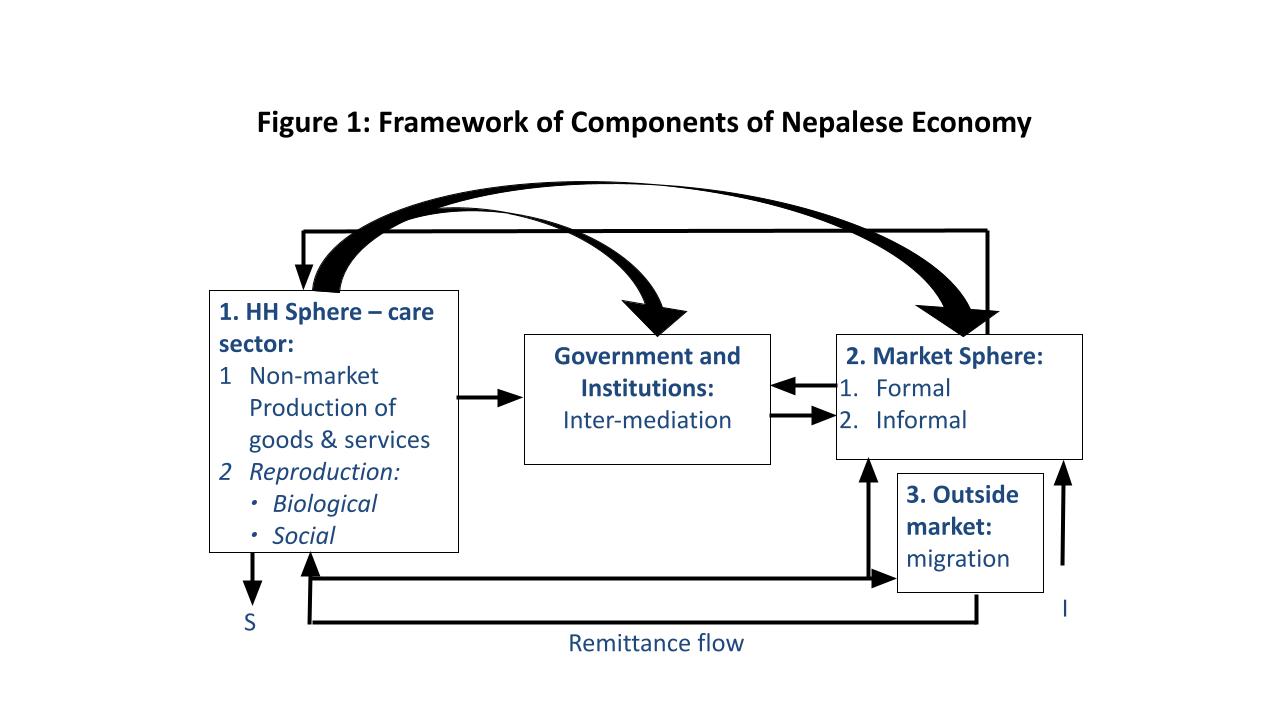
The household sphere consists of subsistence productive activities in which goods and services are produced mainly for household consumption, and reproductive activities for the next generation. Most of these activities are invariably performed by women and are unpaid.
Essentially, the ‘formal market economy’ cannot function without the foundation work provided by the ‘care economy’ with its social, emotional and physical investment within households.
Outside market activities in Nepal consist primarily of migration as a source of income for households. The modern industrial and commercial sector uses reproducible capital and services for profit. Migration provides a safety valve or an outlet for alternate sources of income that people embark upon at times of hardship, or for betterment depending on the pull and push factors.
We can estimate the size of the care sector in Nepal’s economy by calculating how much time people allocate for unpaid work within the household. Time use data shows that women participate to a high degree in the subsistence and household care sector spending on average 35.6 hours and 52.1 hours per week respectively.
Their contribution in subsistence work is 50.4% and household care is 72% compared to men. Women, on an average spend at least 7.5 hours per day on unpaid care work at home which is 2.5 times higher than men.
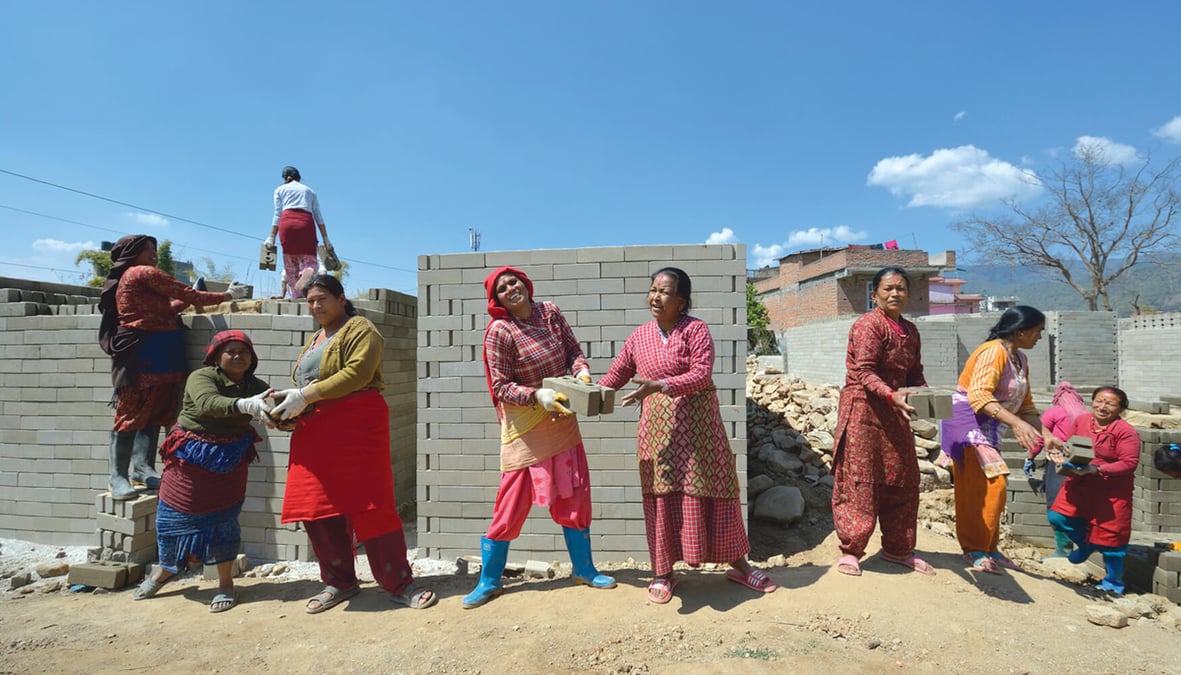
In addition, Nepali women are increasingly entering the labour market for wages/incomes. Women’s participation has jumped to 45.5 hours and 38.5 hrs. per week in formal and informal sectors respectively, contributing 47.3% and 42.2% share of the work respectively — almost at par with men.
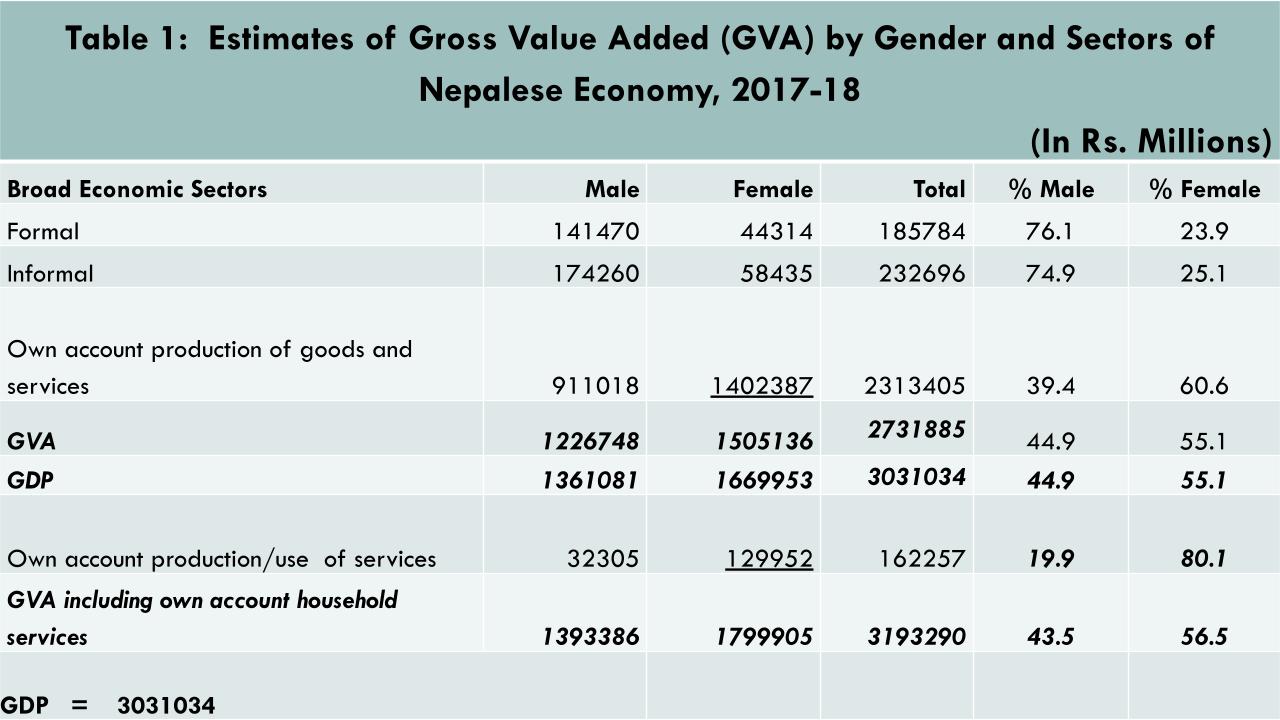
All activities undertaken in the market sphere within the formal and informal sectors, are considered ‘productive' modern industrial sectors that would lead to economic growth with profit and setting in competition in the market and contribute to the country’s GNP.
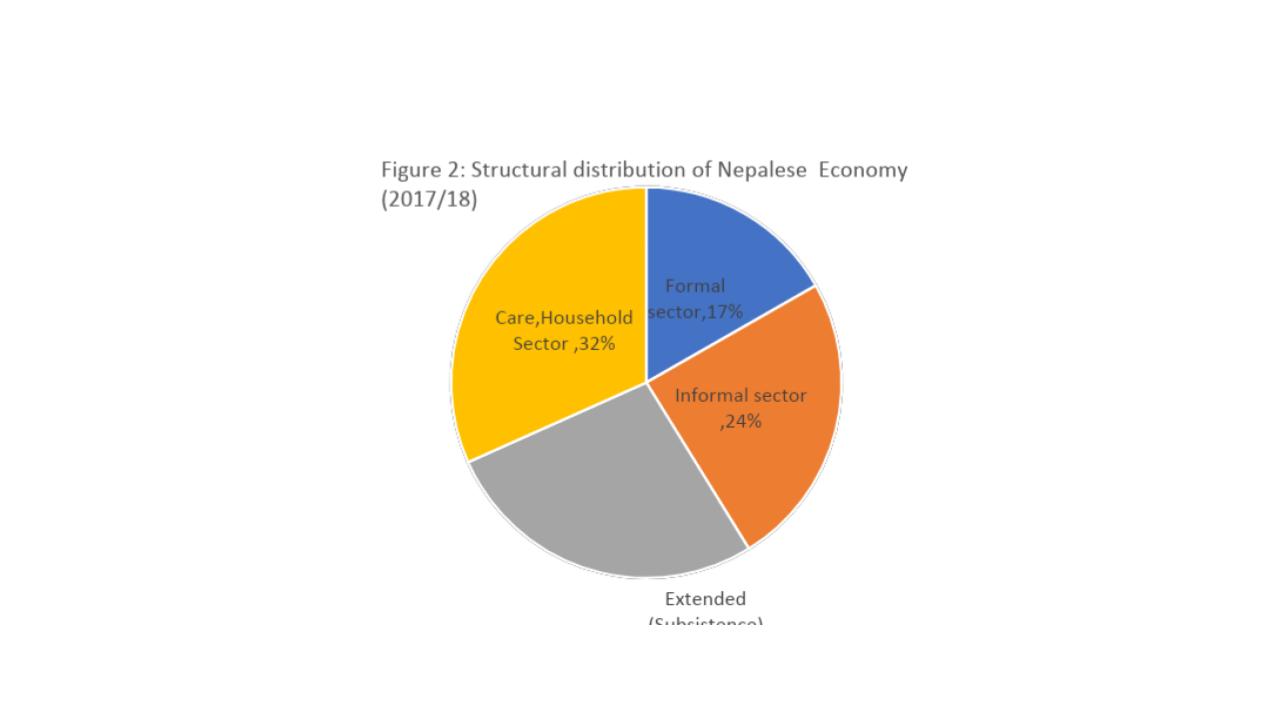
The formal sector constitutes 17% of the total economy that represents market transactions providing a very narrow view of the visible economy, which is the formal market sector.
In the informal economy goods and services are marketed, but are not formally registered and go undocumented and unaccounted by official statistics. It makes up 24% of Nepal’s economy and can include professions as diverse as drivers, rickshaw pullers, street vendors, petty businesses, micro and small enterprises, home-based workers.