
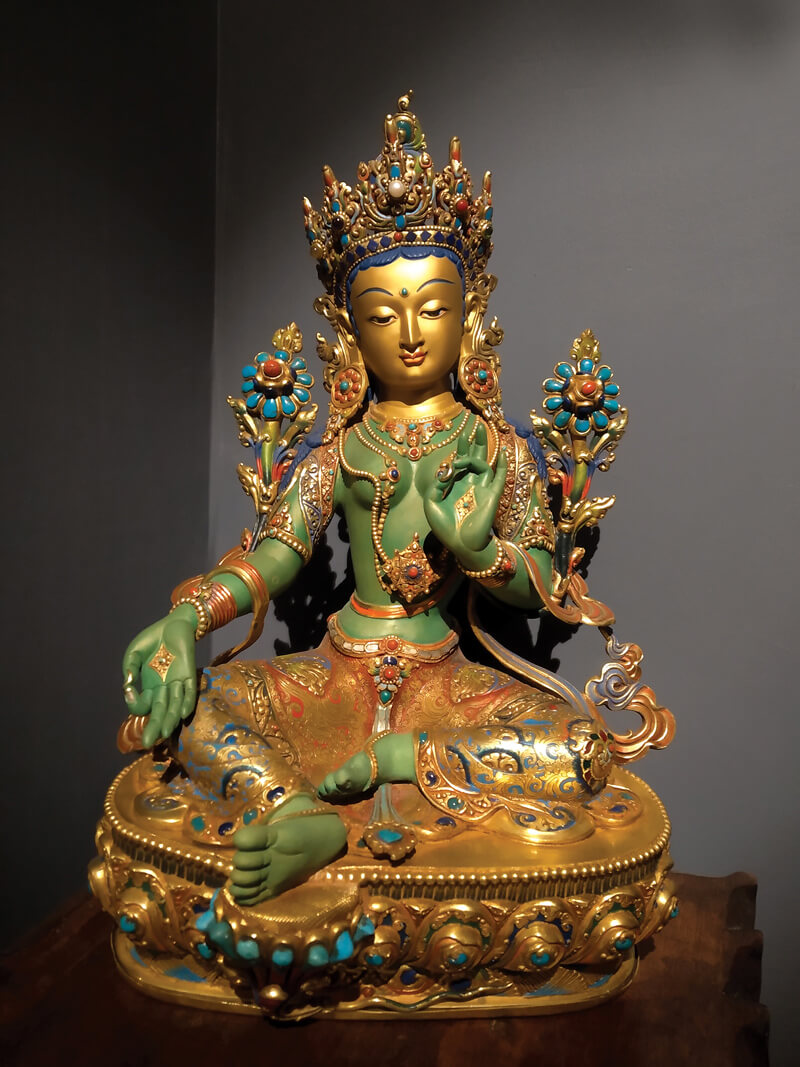
Bodhisattva gallery has been active in documenting and preserving Kathmandu Valley’s traditional art, and is now back with its first exhibition after the 2015 earthquake. Jewels of Newar Art contains stunning paintings in the Paubha style, and sculptures made from the lost wax method.
The exhibition features detailed portraits of Hindu and Buddhist deities including the Green Tara, White Tara, Manjushree, and Avalokiteswar. While most of them follow techniques for devotional paubha paintings, including using natural colours and painting deities according to classical specifications, we can also see many improvisations.
One such work depicts deities in a wall apparently damaged by the earthquake. Others break away from traditional formats of the principal deity in the centre, and show gods in new, contemporary compositions. The exhibition shows us not just how rich Newar art is, but also how it is evolving in the hands of contemporary painters whose motif is art and not religion.
Read also: The art of the gods, Tsering Dolker Gurung
For centuries Kathmandu has been famous for such ritual artwork, prized for aesthetic beauty and attention to detail. Everything about the deities, from their complexion to their poses, is replete with many layers of meanings: for example the Green Tara’s green complexion symbolises compassion. While these paintings and statues are valued by Kathmandu’s Newar community for worships, a layperson also finds lot to admire in these works.