
 ANUP PRAKASH |
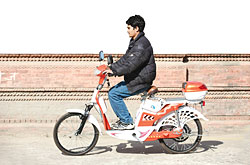
The battery-powered bicycle, also called e-bike, cuts a lonely and ungainly figure in Kathmandu streets where it is easily overtaken and often mocked. The bike could, however, revolutionise urban transportation in Nepal.
So far the e-bike has fallen short of its potential because its
price is inflated by duties and scarcity. Powered by a 48 volt, lead-acid or lithium battery and if charged for 8 hours, the bike can travel up to 50 km at a maximum speed of 40 kmph. They can also be pedaled manually.
The batteries don't emit greenhouse gases but the lead-acid variety is hard to dispose of without damaging the environment. At about 30 kg the bicycles have a heftier, alloy-aluminum frame than regular bicycles and scooter-like headlights, although some models are light enough to be folded into car trunks.
Sales of Chinese and Indian e-bikes have gotten off to a slow start since their arrival in Nepal in 2007, with only five companies selling 500 bikes in Kathmandu. That figure is miniscule when compared to the 65 million that dart through roads in China.
The buyers also represent a wealthier demographic in Nepal than they do elsewhere where the e-bike has caught on among middle-class professionals.
"Our main customers are women and environmentally-conscious people, many from international organisations", says Sanjay Shrestha of Shree Eco Vehicles.
At between Rs 30,000-40,000 they are far too expensive for commuters they could help most: people living in the Valley rim who commute to work in the city like electrician Pramod Tamang, 42. He lives in the hills beyond Budhanilkantha and was enthusiastic about the e-bike but dismayed by the price.
Management expert Ashok Pandey of National Electric Vehicle Industries says, "There is a big market for bikes in villages on the outskirts of Kathmandu and in the Tarai".