
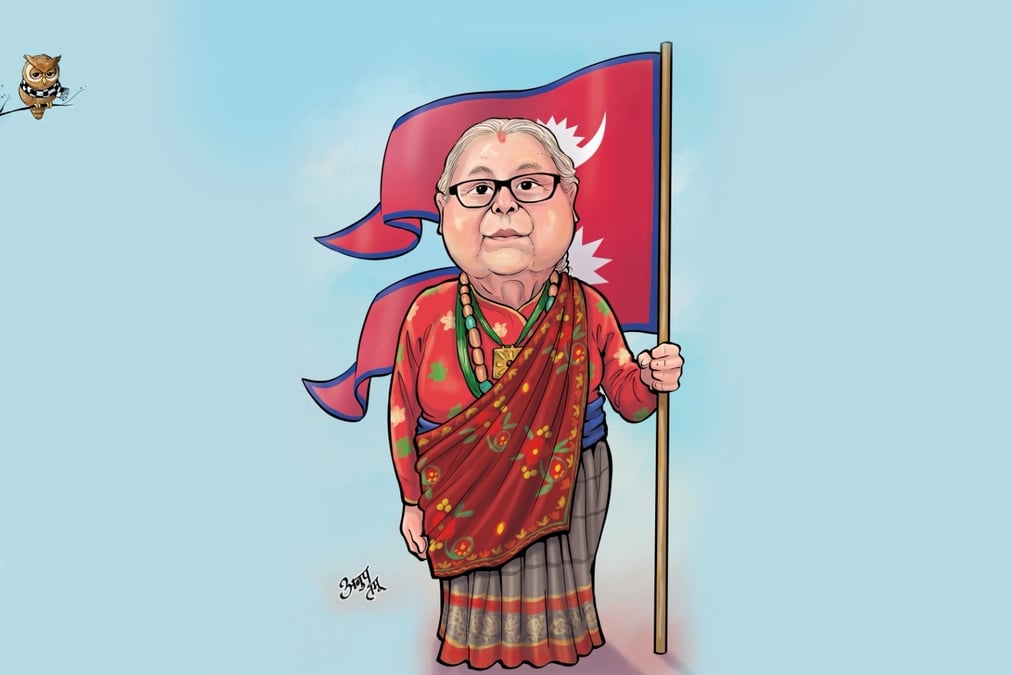
As Nepal mourned its dead in the September violence and public buildings smouldered, former Chief Justice Sushila Karki was installed as prime minister to pull the country back from the brink.
She gave herself six months to conduct elections, and has gone about achieving that goal with a single-minded sense of purpose. Supporters praise her poise and decisiveness, while others fault her for not pursuing justice for the death and destruction, and postponing the release of the inquiry commission yet again.
But that also highlights her steadfastness to hold free, fair and peaceful elections on 5 March, and not allow it be derailed by distractions. It has not been easy for the 73-year-old — she has had to balance radical calls for scrapping the Constitution while appeasing entrenched leaders of established parties.
Karki has displayed patience, determination, foresight, and, above all, a deep love for country. It has been a lonely struggle, no doubt.
The very youth who voted for her on Discord demanded her resignation, she had to cajole discredited leaders to take part in polls, and she was not dismayed when her chosen ministers abandoned the government to contest polls. And this is not to mention geopolitical demands that must be happening behind the scenes.
This being Nepal, there is endless speculation about who is ‘pulling the strings’. Yet her record both as chief justice and interim prime minister offer ample evidence of integrity and principled leadership.
Regardless of geopolitical interpretations of her intentions, Karki is a Nepali leader through and through who has lifted herself from the highest judicial office to the highest executive position, adhering to both mandates.
Organising national elections within five months was a formidable task, which many doubted — and are still doubting — can be accomplished. Karki has worked closely with the Election Commission, security forces, and mainstream political parties to ensure participation.
In doing so, she has set an example not only for Nepal but for South Asia. Bangladesh, which went through its own GenZ protest in 2024 and held elections on Thursday offers a study in contrast. The Awami League and its exiled prime minister who was deposed have been banned from front contesting, there is growing influence of the Jamaat-e-Islami-led alliance.
Her first address to the National Assembly on 2 February was characteristically candid. She laid out the facts sequentially and emphasised Nepal’s most urgent priority: holding elections on schedule and transferring authority to elected representatives. Timely election was the only constitutional path forward, she said.
She acknowledged that GenZ activists had pressured her to appoint certain individuals to her Cabinet. She had to personally persuade Kulman Ghising, Mahabir Pun, and Jagdish Kharel to join her Cabinet. Others she was advised to induct turned out to have controversial pasts, and she was forced to rescind the nominations. She admitted Pun resigned as education minister because he could not get legislative proposals passed.
Educated, professionally accomplished, known for her frugal lifestyle, Karki has distanced herself from the culture of excess often associated with power, and has turned down multiple invitations for foreign junkets.
Her meeting with editors at Baluwatar in December was a breath of fresh air for Nepal’s jaded journalists used to excessive displays of power and pomp. Her frankness about threats from the GenZ and pressures from disgraced party leaders drew gasps.
In the last five months, Karki has attempted to restore a sense of governance anchored in constitutional duty rather than partisan ambition. But Nepal’s problems have been decades in the making, and it would be unrealistic to expect an interim government to solve all of them at once.
Nepal now stands at a crucial juncture. Leadership alone cannot safeguard democracy, elections alone do not guarantee legitimacy. That must come from delivery, performance and accountability. Citizens casting informed votes on 5 March will determine whether Karki’s handover to leaders capable of placing national interest above party and personal agendas.
In a region where democratic transitions often falter, Nepal has another chance to demonstrate that home-grown movements, constitutional discipline, and principled leadership can coexist.
Whether this moment becomes a turning point depends not only on one leader, but on the collective resolve of the nation and polity.
Watch a timelapse video of how Anup Tamu drew this portrait of Sushila Karki,