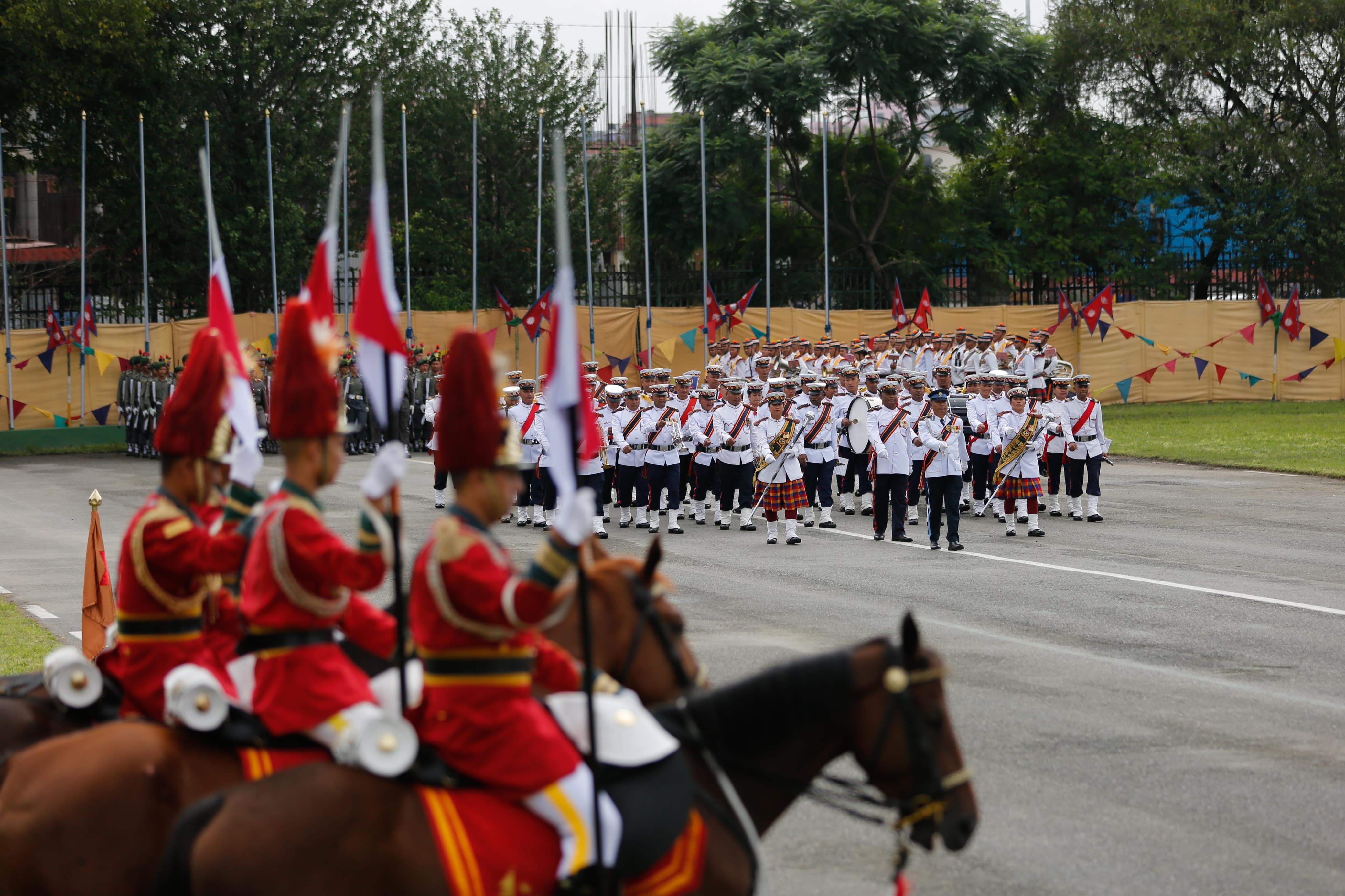
As fate would have it, Sushila Karki was nominated as caretaker prime minister just a week before she stood at Tundikhel to deliver her address to the annual Constitution Day parade on Friday.
This was a milestone not just because it came so soon after the two-day GenZ uprising that toppled the government, but also because it was the tenth anniversary of the 2015 Constitution.
That federal democratic, republican Constitution itself took seven years to draft, two elections to the Constituent Assembly and a ten-year Maoist-led conflict.


Although it was a document that envisaged inclusion, equity and development for the Nepali people, the three political parties that have been in power for most of the last ten years failed to deliver, deepening public disillusionment.
Prime Minister Sushila Karki’s impassioned speech spoke about the sacrifice of Nepal’s youth, and promised during her six-month tenure till elections to lay the foundations for a new Nepal.
The full speech:
Honourable President,
Honourable Vice President,
Honourable Chief Justice,
Honourable Speaker,
Honourable Chair of the National Assembly,
Distinguished Officials Present,
Heads and Representatives of Diplomatic Missions,
People's Representatives,
Civil Servants,
Journalists,
Dear Sisters and Brothers,
Today, we are celebrating Constitution Day and National Day with great enthusiasm, marking the day the Constitution of Nepal, drafted by representatives elected by the Nepali people in the Constituent Assembly, was promulgated.
On this proud occasion, as our federal democratic republican Constitution completes a decade, I extend my best wishes to all Nepali people on Constitution Day 2025.
The current Constitution of Nepal, forged through repeated People's Movements, struggles, sacrifices, and dedication of the Nepali people, is a guiding document that reflects the destiny, future, and aspirations of Nepal and its people.
The day our Constitution, with its fundamental characteristics of federalism, democracy, republicanism, inclusiveness, and social justice, was promulgated, is a day of pride for all Nepalis.
Constitution Day is not merely a celebration, it is also a day to evaluate our federal democratic republic. We must seriously review what we have achieved and what we have failed to follow on the path guided by the Constitution since its implementation over the last decade, what our shortcomings have been, and what future direction is needed.
The Constitution provides a foundation for the distribution of powers among the federal, provincial, and local levels, ensures swift and quality services for the public as well as empower local leadership. However, issues like equal access to service delivery, transparency, zero tolerance for corruption, optimal utilisation of resources and technology, and development management that ensures the cost-effectiveness and outcome of public services remain common challenges for all three levels of government.
To face these challenges, the roles of not just the government, but also the private sector, civil society, community and non-governmental organisations, the international community, and every citizen are indispensable.
The protests and movement led by GenZ youths on 8 and 9 September, are a reflection of the younger generation’s aspirations, the public’s rising awareness, and dissatisfaction with the corruption prevalent in the country.
We must acknowledge that this movement was also born out of the shortcomings in governance, prosperity, development, and the resulting dissatisfaction, unfulfilled expectations, which are contrary to the spirit of the Constitution.
I also view this movement as a measure of the health of our democratic system, because democracy is a system that listens to, engages with, and solves the problems of the people.
The GenZ movement is also a result of our failure to live up to our commitments to democratic values including the federal republican system of governance, civil liberties, fundamental rights, human rights, full press freedom, an independent and competent judiciary, rule of law, and good governance.
The dramatic development in information technology is also a factor. The issues raised by the young generation who are aware of citizen-friendly governance, open government, and virtual governance at the international level such as employment opportunities, quality of life, transparency in government actions, legal equality, the end of corruption, good governance, and development are, in reality, the common expectations and national agendas of all generations. This government is committed to embracing these agendas and working to meet public expectations.
I did not become Prime Minister out of greed for power, or any position. Unable to remain silent at a time of national crisis and as per the request of the youth who aspire for change, I became the Prime Minister of this interim government to manage the transition and to hand over responsibility to an elected government through a House of Representatives election within six months, as per the Constitution of Nepal.