
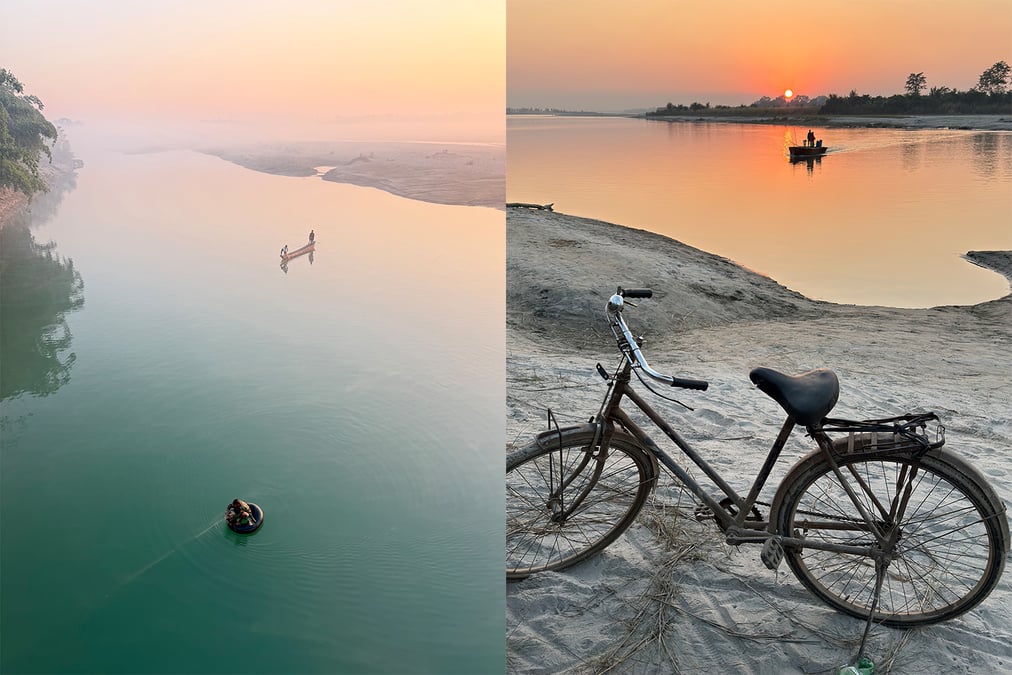
From its headwaters near Mansarovar on the Tibetan Plateau to its confluence with the Ganga in India, the Karnali remains one of the last great free-flowing rivers in the Himalaya.
At a time when most major Asian rivers have been dammed by concrete, the Karnali still surges, migrates, floods and recedes according to its own natural rhythms. This sustains an entire living system -- wildlife, communities and cultures — that cannot be replicated once a river is turned into a staircase of reservoirs.
The Karnali is a natural artery for western Nepal. It nourishes fertile floodplains, recharges aquifers, supports fisheries and connects remote communities.
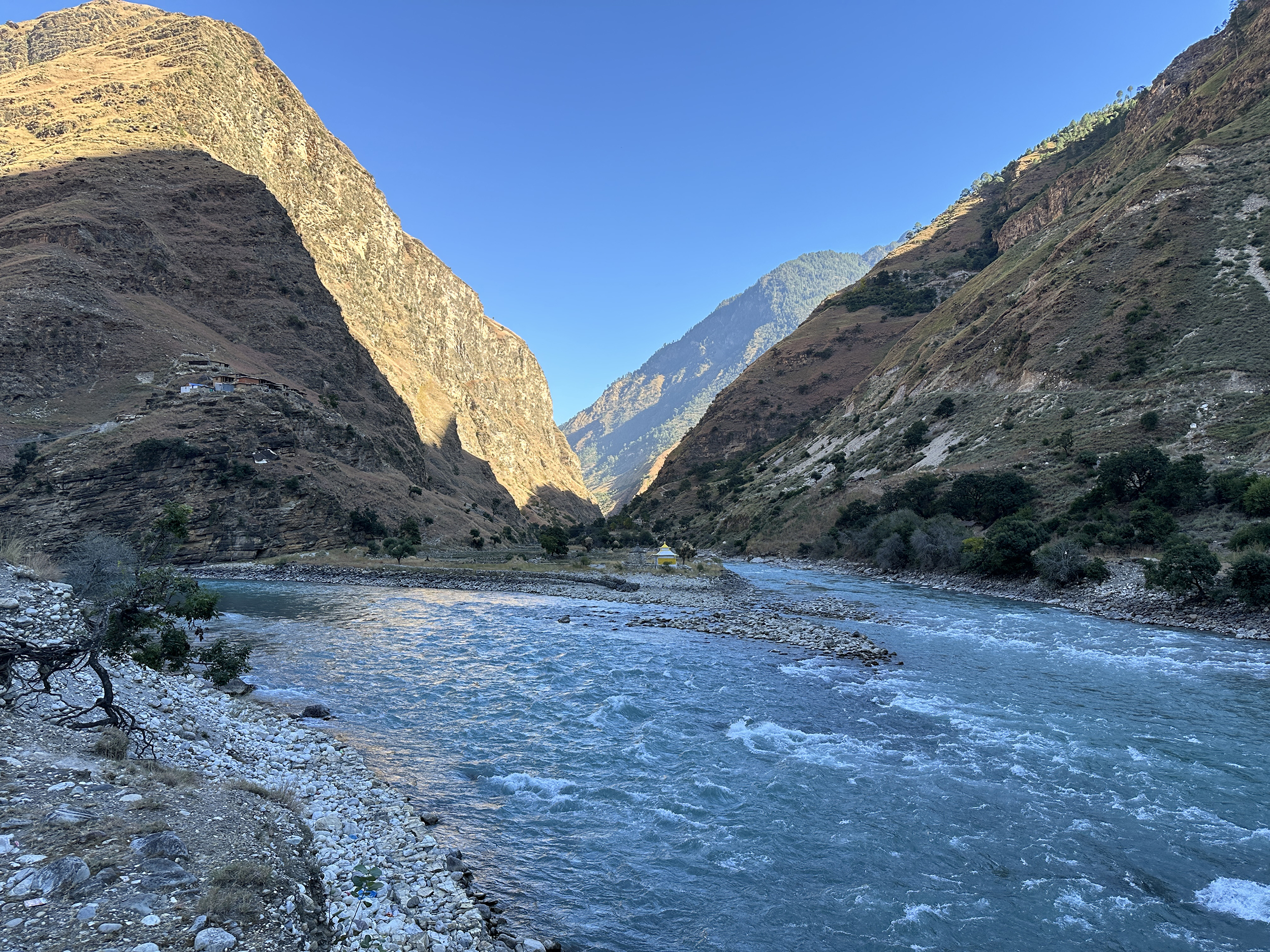
Bardia National Park and its rich biodiversity, including the tiger and fresh water dolphins, depend on the river and its seasonal interaction with the floodplain and wetlands. Riverine birds, crocodilians, endemic fish, all depend on the river. Millions of people in Nepal and India rely on the Karnali (called Ghaghara in India) for household use, irrigation and livelihoods.
This living river now faces a cascade of proposed hydropower projects. So far, the Upper Karnali (900MW) and the massive Karnali-Chisapani (10,800MW) have been purposed. Both have been mired in controversy and have been delayed. Construction of smaller projects like the Bheri-Babai Diversion are already underway.
The Upper Karnali is a Rs146 billion project first purposed in 2006. It started construction earlier this year with the Indian conglomerate GMR leading the task. Even so it faces a setback as Bangladesh cancelled the power purchase deal of 500MW.
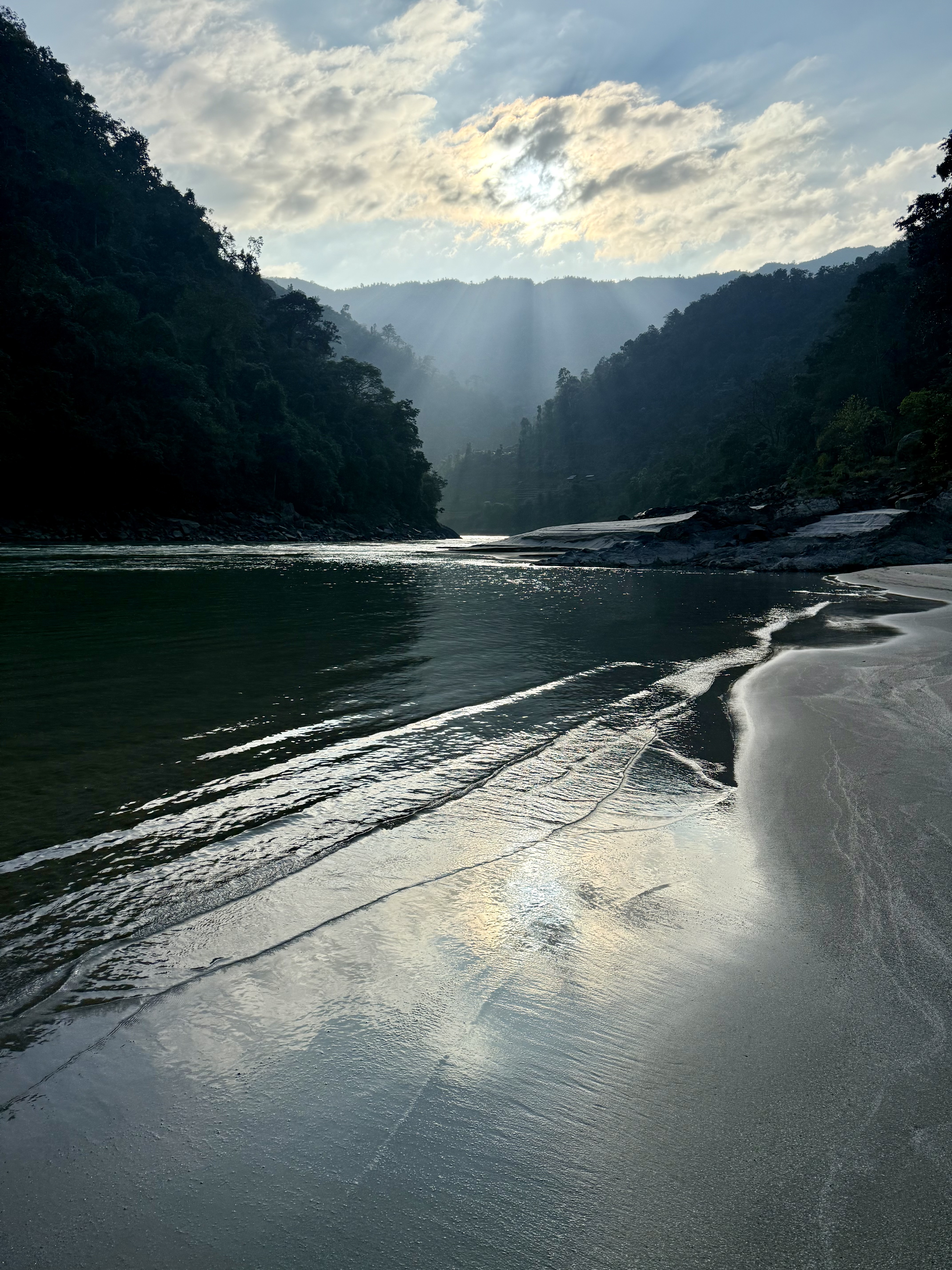
The project is located on the stupendous Karnali Bend where the water can be pushed through a 2.5km tunnel over a drop of 130m, creating a huge generation capacity. But Nepal’s move towards big dams comes at a time when scientists warn of more extreme weather events like floods and landslides in the already fragile Himalayan landscape.
Nepal now needs investment in storage projects as most hydropower plants are of the run-of-river type, which means power generation drops in the dry season. But a piecemeal dam-by-dam approach risks destroying a unique resource for benefits that could be achieved elsewhere with far less ecological cost.
Once a free-flowing river is fragmented, its sediment delivery is choked, fish migrations are cut off, floodplains dry out and local cultures that revolve around seasonal flows begin to unravel. These changes are effectively permanent.
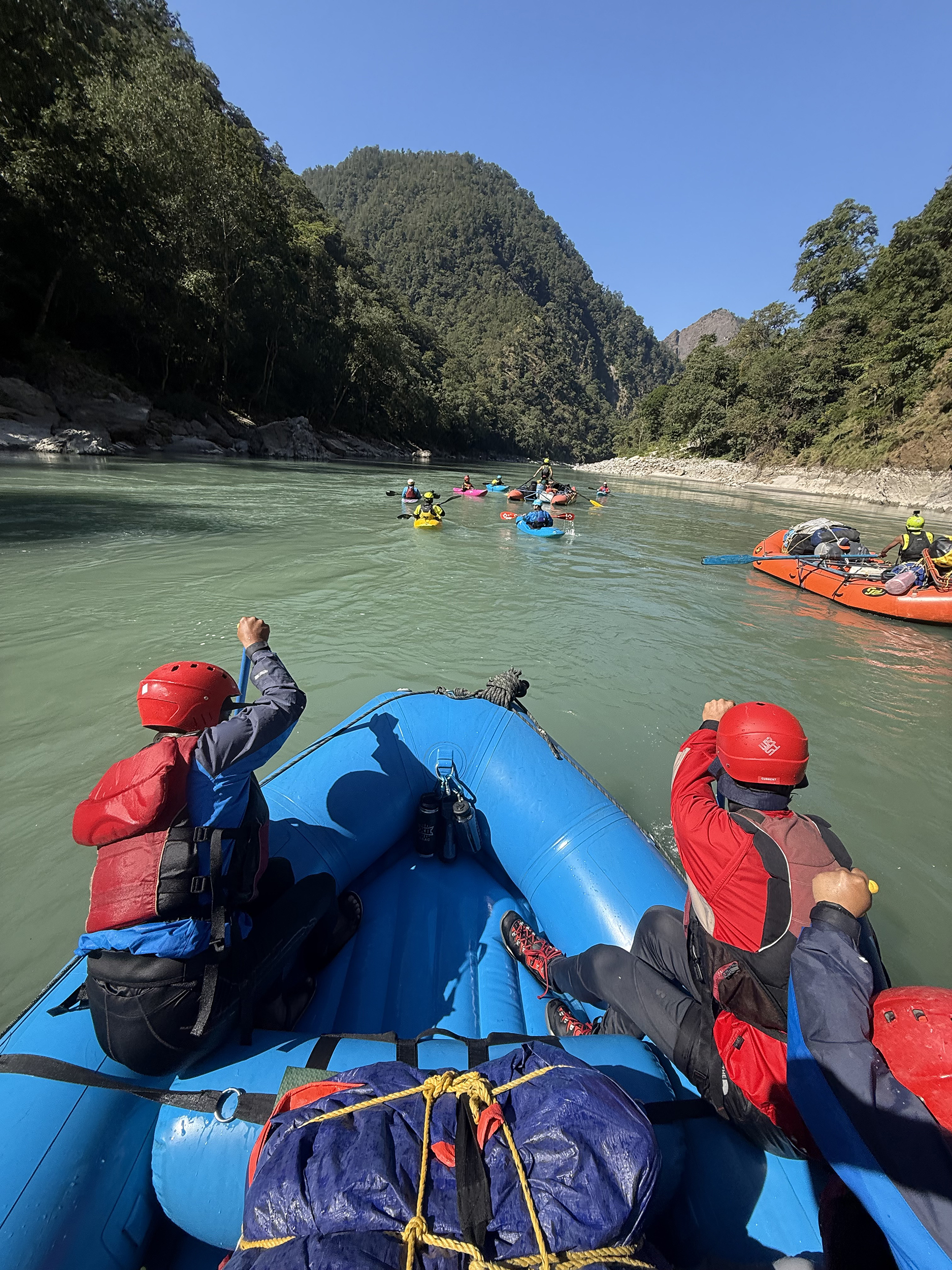
“The Karnali is the last and most pristine Himalayan River left, most others are already exploited. It should be protected as a wild, scenic, free flowing river as a gift to future generations,” says activist Megh Ale, who wants the river to be developed as an eco-tourism corridor on the pilgrim trail to Mt Kailash and Mansarovar.
“We have many big tributaries to the Karnali,” Ale adds. “We can keep the main stream of the river as free flowing, and develop hydro projects on the tributaries. More than 6,000MW can be produced without touching the main river stem.”
Nepal has abundant alternatives to hydropower: solar energy has been hardly tapped, and integrating them with pump storage systems are cheap, quick to build and are low impact. Smarter siting and design, modern transmission links and regional power trading can deliver reliable energy without sacrificing the country’s last pristine river.
Preserving the Karnali would also pay dividends in climate resilience: free-flowing rivers buffer extreme floods and droughts, carry sediment that builds deltas and replenishes nutrients on farmland, and provide insurance against glacial and monsoon variability.
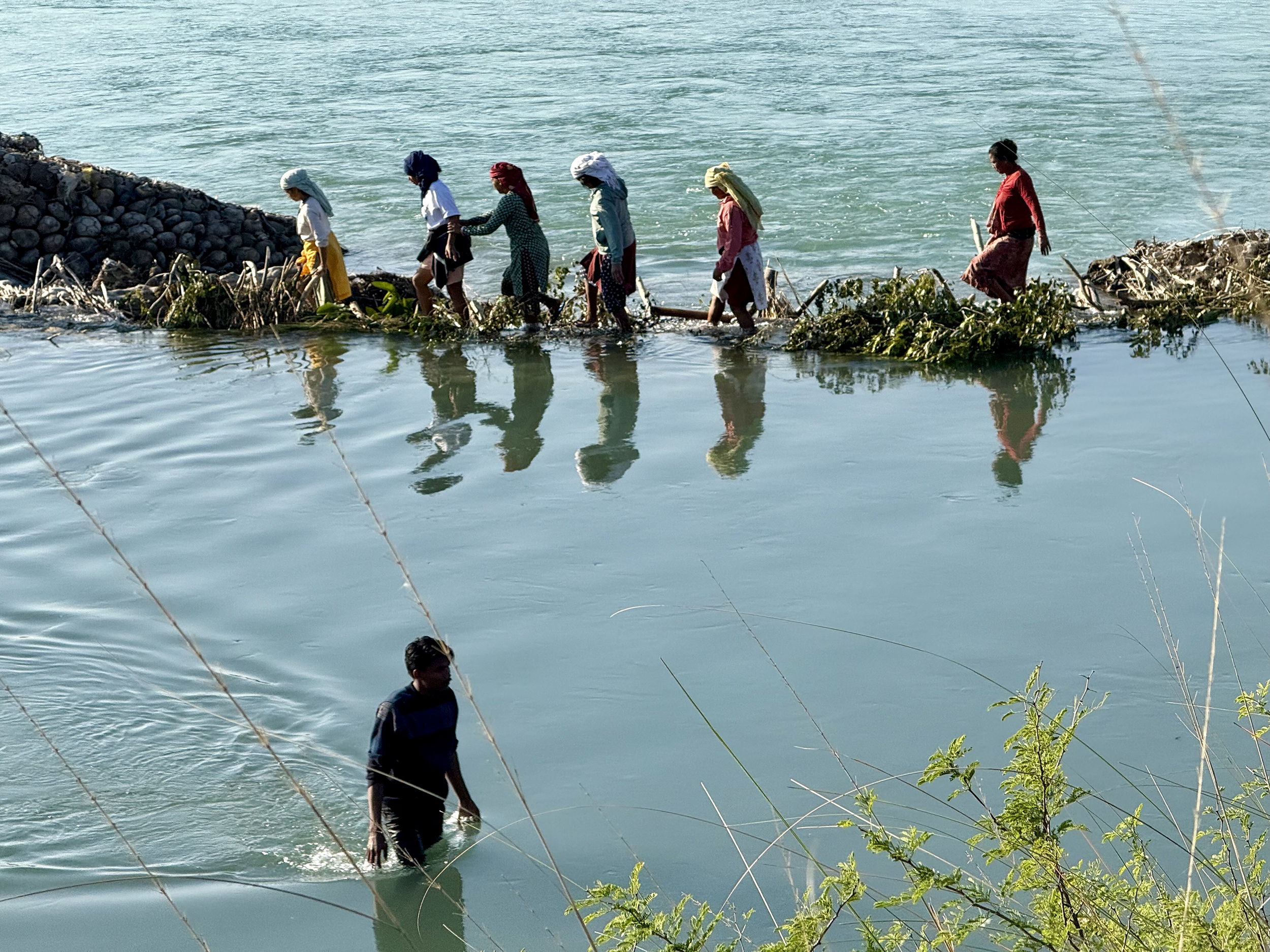
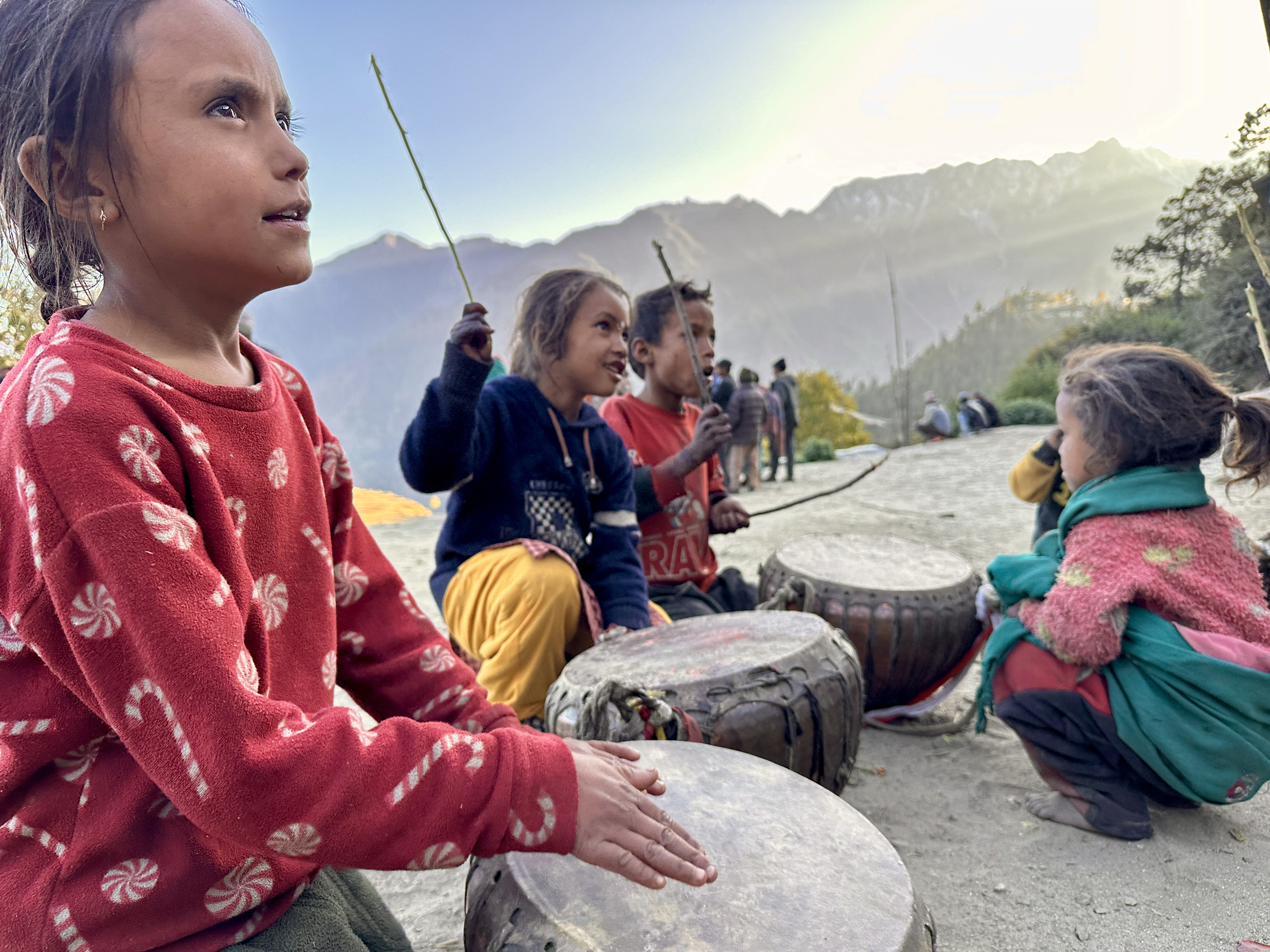
The Karnali is also a cultural and economic asset in its own right. As a rare, undammed Himalayan river, it underpins nature-based tourism, scientific research, and a way of life for Indigenous and local communities.
Kalashtham Tharu, 32, is an elephant mahout in Bardia, and says the Karnali is an important source of water for animals and farming. Diversion for irrigation near Chisapani has meant that a channel going into Bardia National Park has gone dry, affecting biodiversity and nearby farms.
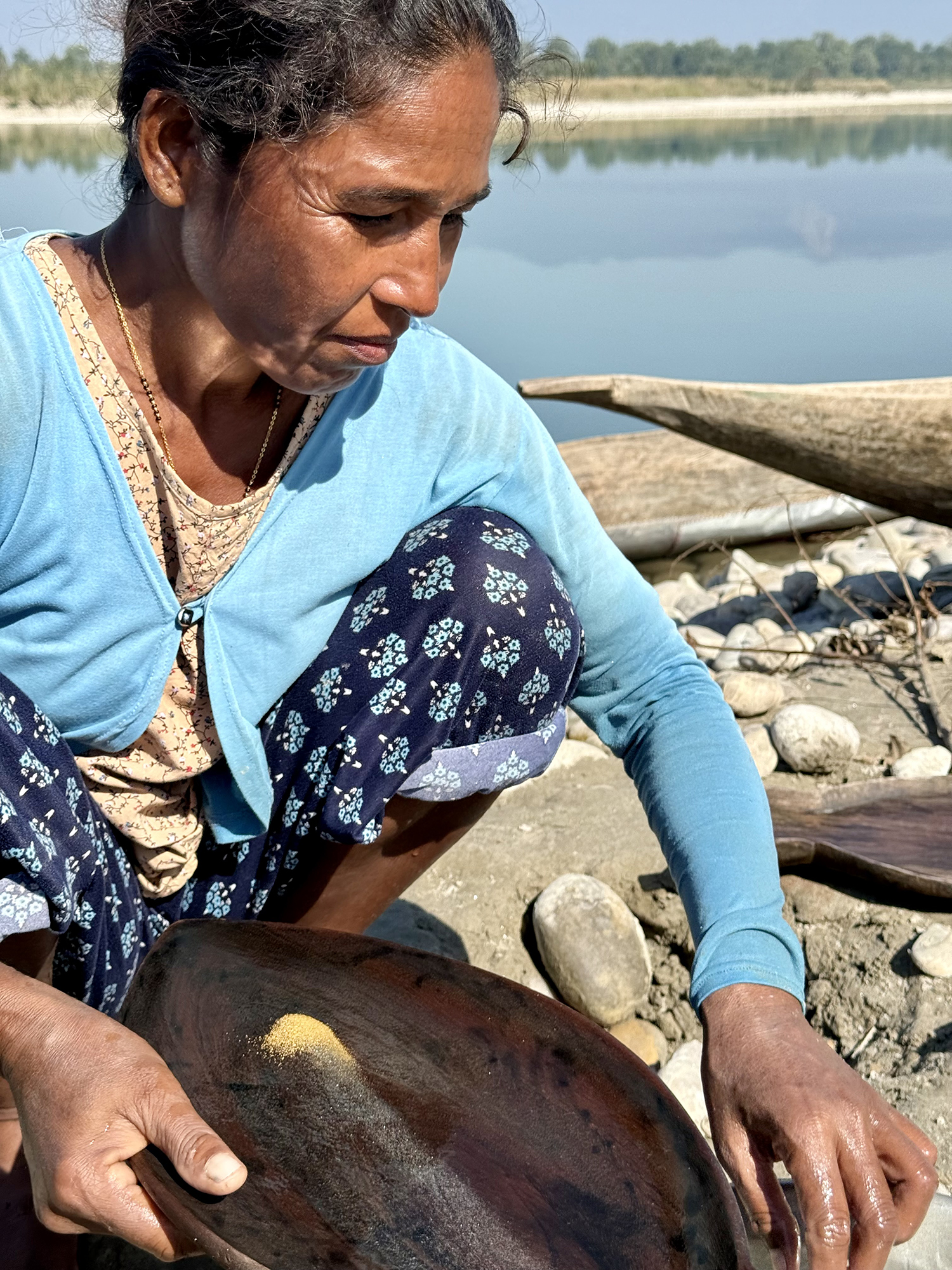
Similarly, the Sonahar community in Bardia relies on the river to pan for gold, their sole source of income. Anita, 40, says there is much less water in the Karnali this year. On an average, she makes Rs200,000 from middlemen for the gold she pans during non-monsoon months.
WILD RIVERS
Around the world, countries are beginning to recognise the value of keeping a few great rivers wild. Protecting the Karnali would place Nepal at the forefront of that movement and strengthen efforts to seek international recognition for the river’s outstanding natural heritage.
Any decision should be grounded in a transparent, basin-wide assessment that weighs the full social, ecological and economic costs—not just the megawatts on a project spreadsheet. That means evaluating alternatives, safeguarding critical habitats and migration routes, and recognising the rights and knowledge of the people who live along the river. It also means asking a simple question: If Nepal can meet its energy goals without damming the Karnali’s main stem, why wouldn’t it?
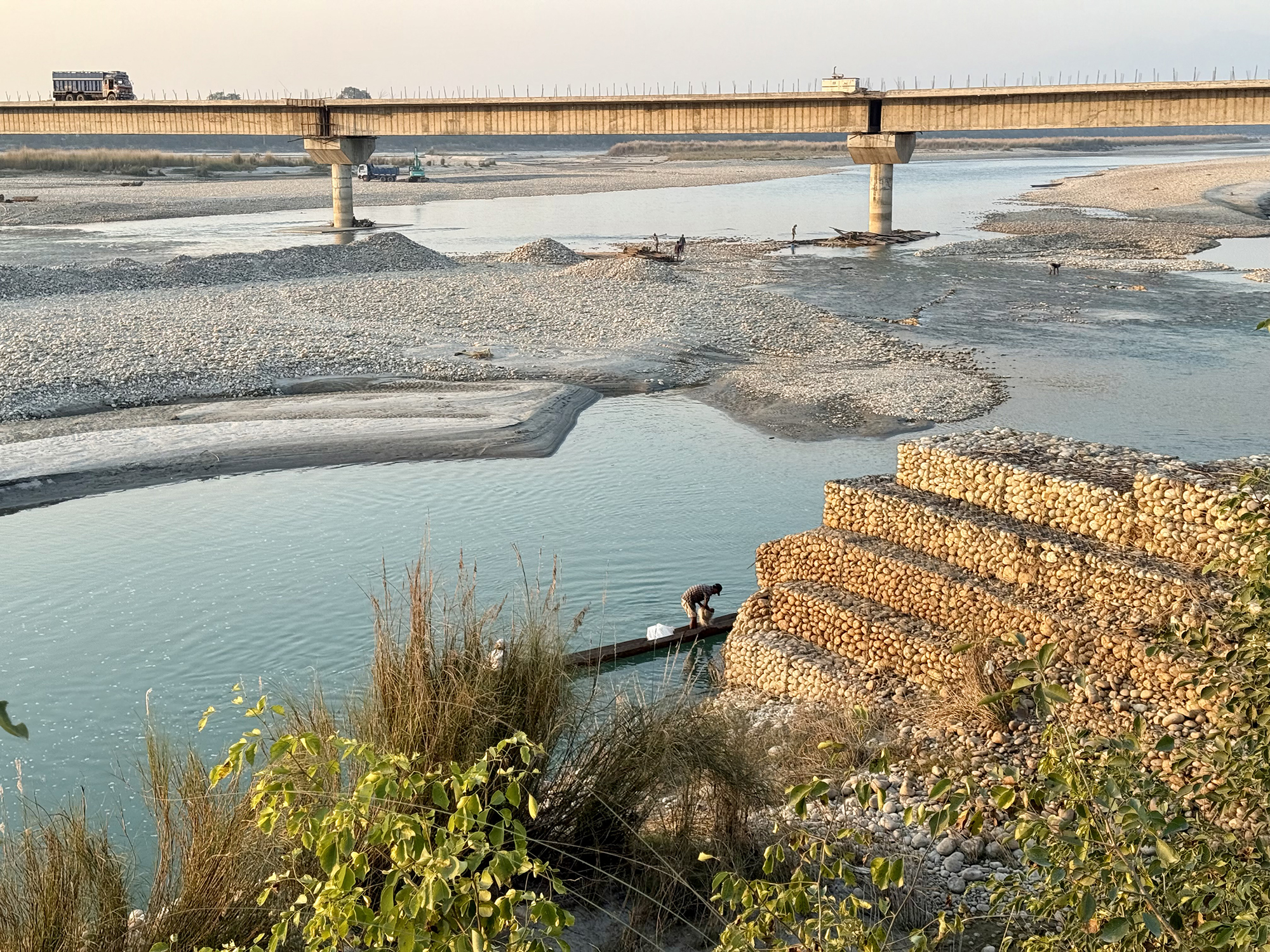
Advocates have petitioned Nepal’s Supreme Court to protect the Karnali, with a hearing scheduled in Kathmandu on 22 December. International lenders and investors should take note: Financing high-impact dams on the Karnali would run counter to emerging global standards on biodiversity, climate resilience and free-flowing river protection. Funding clean energy in Nepal should not require sacrificing the country’s most pristine river.
For three decades, I have documented the Karnali from its source in Tibet to its entry into India, capturing the river’s seasons and the lives it sustains. The images I have captured and the voices of people who depend on the river, tell a simple truth: a free-flowing Karnali is irreplaceable. Once the concrete is poured, there is no going back.
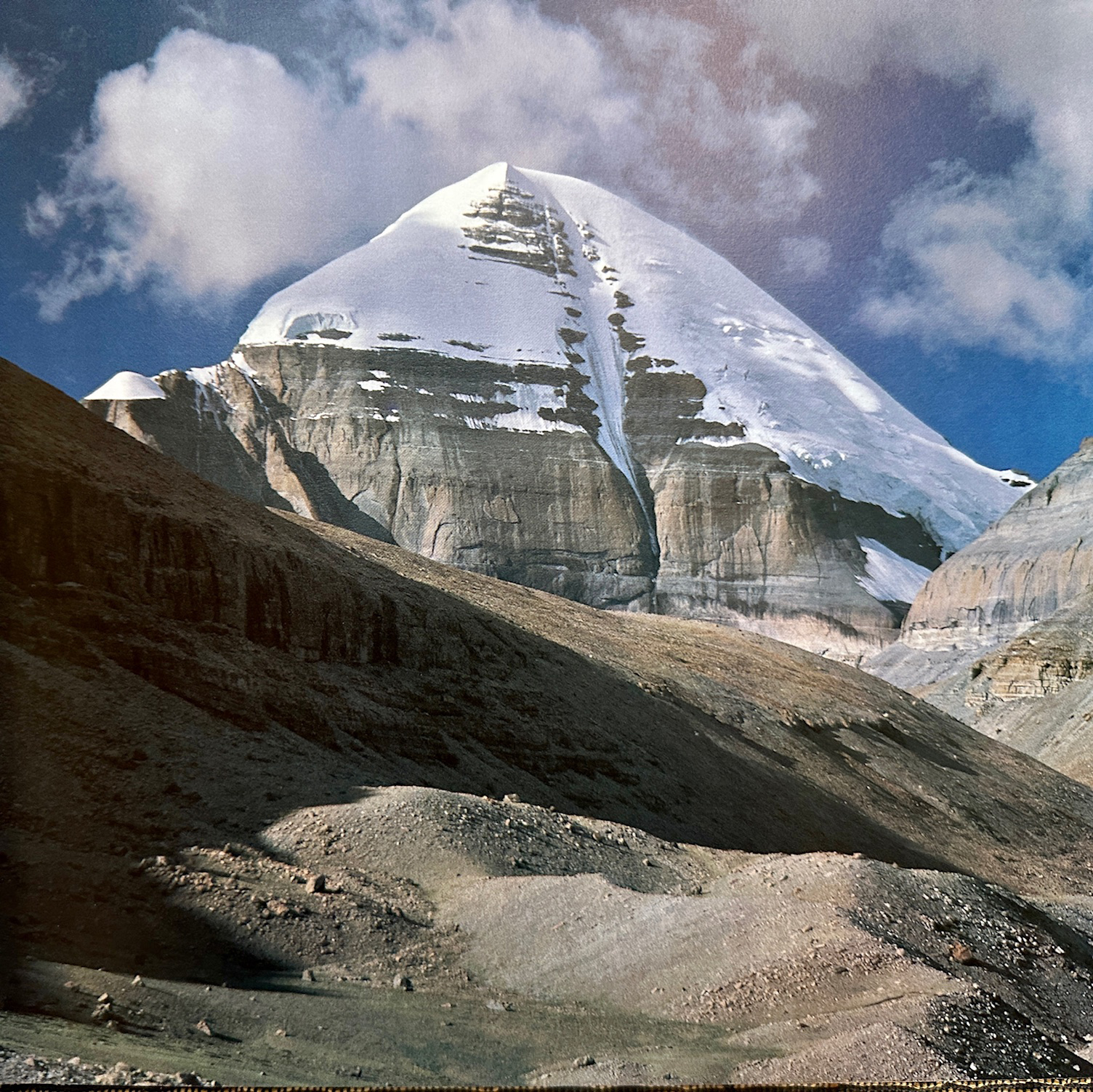
Nepal has many options for generating power. It has only one Karnali. Keeping this river wild would be a gift to the living Earth and to future generations — a legacy measured not in megawatts, but in life.
Says Megh Ale: “We are very rich in natural resources but manage them very poorly. We want instant solutions but do not have a long-term vision. We are not against development but there needs to be a good balance with nature.”