Sabita Budhathoki of Bhaktapur went online to look for Tihar gifts. Dinesh Thakuri of Balaju did not set foot in a physical shop this festival season, doing all his shopping online.
As elsewhere in the world, post-Covid commerce in Nepal has moved online and physical stores are being replaced by the digital marketplace, and cash by e-wallets.
Fonepay, Nepal's largest mobile payment network, saw transactions worth Rs10 billion in a single day on October 17 during the Dasain shopping season, with payments by customers for goods and services raking up Rs1.8 billion.
Nepal’s largest online shopping platform Daraz, which was acquired by Chinese conglomerate Alibaba Group five years ago, alone sees transactions of Rs20 million every day.
“The rate of the growth of digital transactions has certainly been encouraging,” says Guru Paudel of Nepal Rastra Bank's Payment Systems Department.
The expansion of mobile networks, the development of internet infrastructure, and a significant number of young Nepalis opting to conduct digital transactions has meant that e-commerce has spread rapidly across Nepal.
Read also: Nepal’s budding e-commerce ecosystem, Sikuma Rai

In addition, the pandemic brought about changes to how people buy goods and services, giving Nepal’s burgeoning online marketplace as well as cashless digital transaction services a boost.
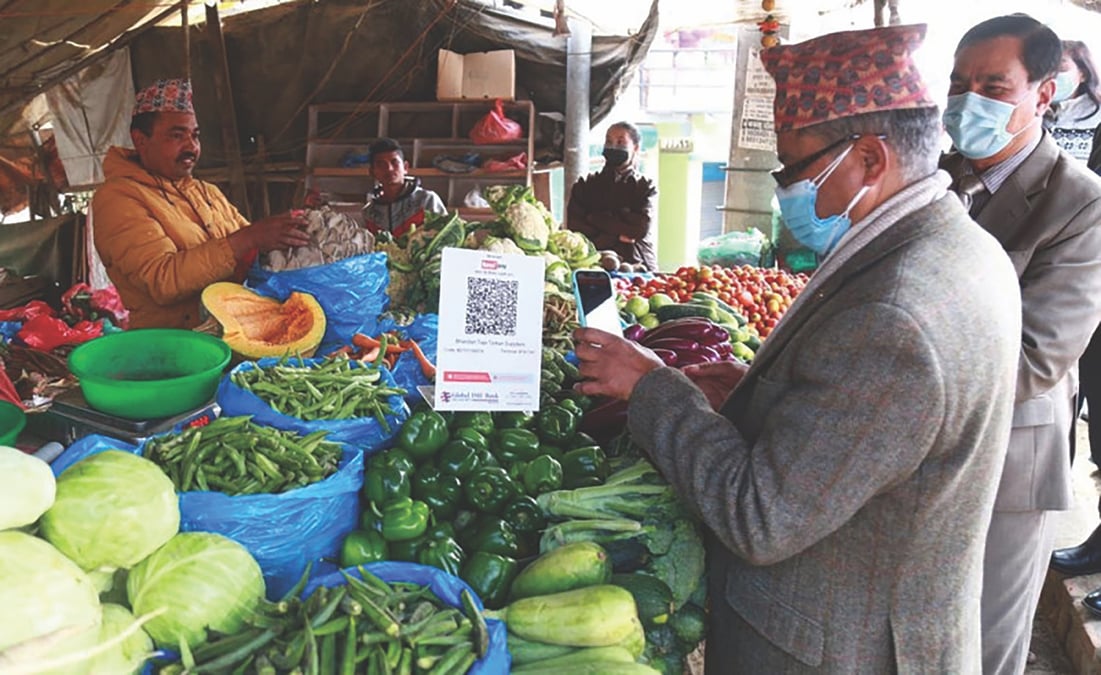
There is now no need to carry cash to pay for groceries, clothes, appliances airline tickets or at petrol stations. Standing in long queues to pay phone or electricity bills is a thing of the past.
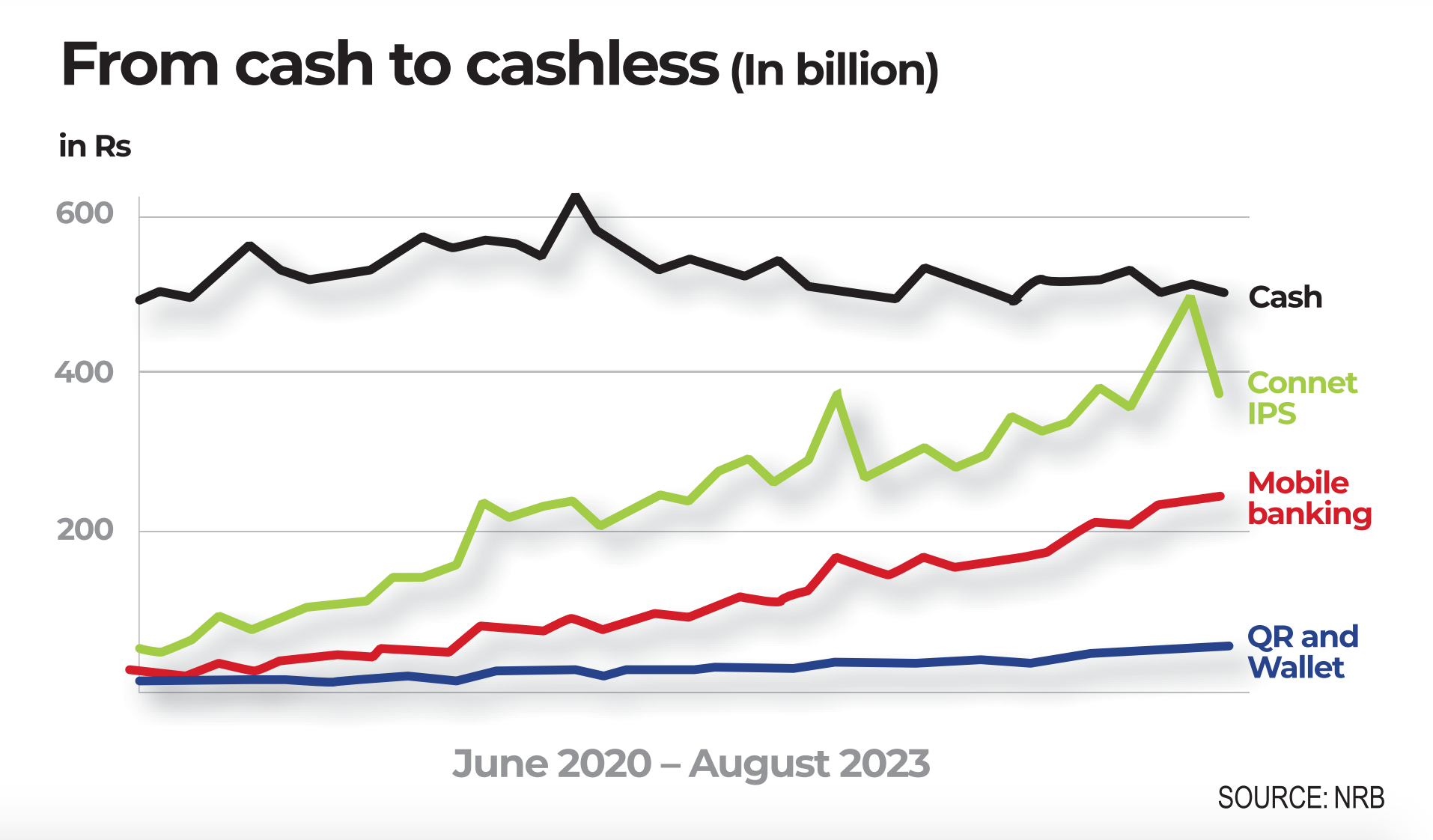
The amount of cash circulating within the country went from Rs450 billion at the beginning of the pandemic in 2020, increasing as the infection rates peaked, and reached Rs625 billion by October 2021. After that it began a steep decline.
As of September 2023, Rs496 billion worth of banknotes are in circulation across Nepal, excluding cash in banks and financial institutions.
The first month of the lockdown saw transactions worth Rs5.64 billion conducted through mobile banking. In the next four months, digital transactions increased threefold to Rs18.84 billion. At present an average of Rs8 billion worth of good and services are paid for online every day.
Read also: Nepal’s e-conomy rapidly goes digital, Saniaa Sah
Prakash Kumar Shrestha of the Economic Research Department of Nepal Rastra Bank says changing business practices and consumption patterns have contributed to the decrease in the circulation of cash.
“Cash has become non-essential and cashless transactions the norm due to the increase in digital transaction services,” adds Shrestha.
11 November (called Singles Day, or 11/11) is an annual unofficial holiday and online shopping fair in China. Over 24 hours, Chinese online marketplace Alibaba alone sees cashless purchases worth up to $84 billion every year—twice the size of Nepal's economy. Meanwhile, India surpassed China to become the country with the highest number of digital payments in 2022.
Daraz in Nepal is also preparing to mark 11/11 with attractive offers. Central bank data shows clear growth in digital transaction services like Connect IPS that links banks and is used to conduct larger business to services like eSewa and Khalti that are used for everyday transactions.
Transactions via Connect IPS increased from Rs2 billion daily to Rs12 billion from September 2020 to September 2023. Meanwhile, payments via mobile banking reached Rs242 billion in September 2023, more than a tenfold increase compared to Rs20.3 billion in September 2020. A total of 34.5 million transactions are conducted through mobile banking every month.