
Sushila Mahatara and her sisters grew up in the wilderness of Bardia in the plains of western Nepal where their father was an elephant mahout.
Eldest of seven sisters, Sushila had to start earning at an early age to support the family. She started out working in a local lodge, but soon answered the call of the wild to volunteer for a community anti-wildlife poaching unit at Bardia National Park.
This was in the early 2000s, and the Maoist insurgency was at its peak. The Army was busy fighting the insurgents and wildlife traffickers exploited the lack of jungle patrols to kill tigers and rhinos for their valuable parts.
Sushila and her two sisters Manju and Ranju trained as nature guide at the national park, but it was not easy to be accepted. She told Nepali Times: “Before me, there were no women wildlife guides in the area. Even after completing my training, people at every step questioned whether I, as a woman could handle the jungle and become an efficient wildlife guide.”
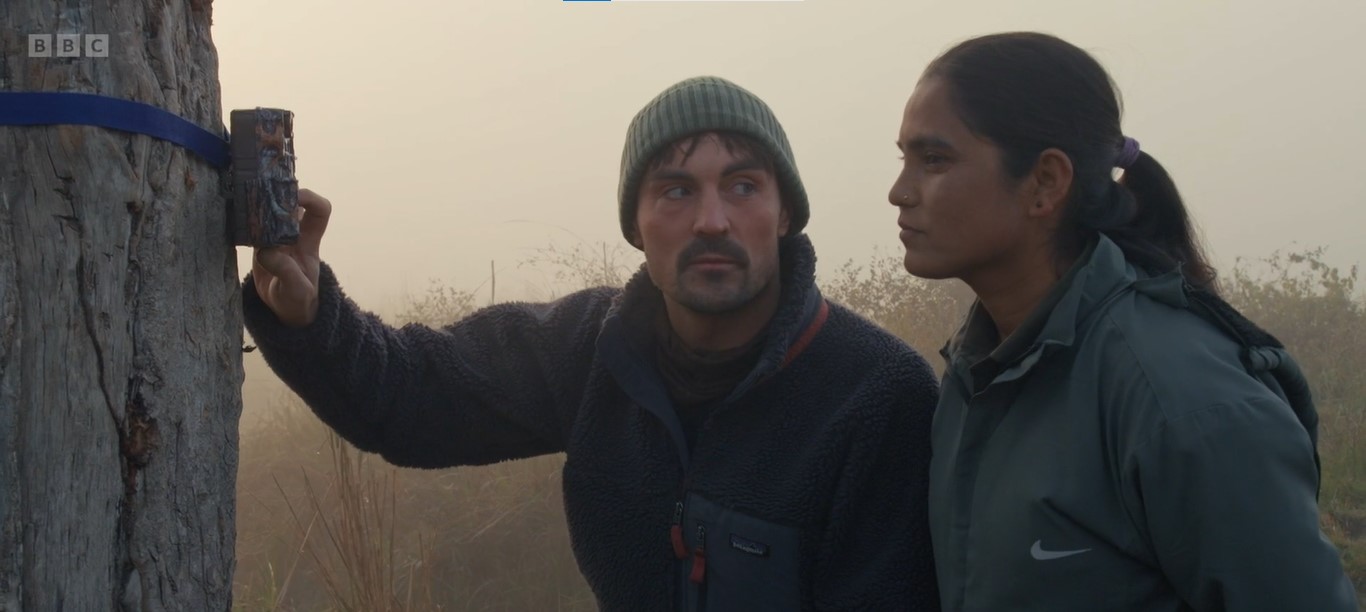
Sushila and Manju play an important role in tracking tigers for the acclaimed new BBC documentary Tiger Island which was shot in Bardia over two seasons last year. Wildlife experts used drones, terrain vehicles and night vision cameras to track tigresses in the wild and uncovered behaviour that is rewriting knowledge of the big cats.
“Working on the documentary with the BBC has given us an incredible opportunity to learn about how new technology can help study wildlife behaviour from a completely different perspective,” says Sushila. “Along with a great learning opportunity, it gave us a chance to get a glimpse inside the night life of tigers and the behaviour of male cats.”
Tiger Island has put international spotlight on Nepal’s dramatic success in tiger conservation, but also the problem it has created with overcrowding in the country’s national parks and the increase in human wildlife contact. Nepal had only 121 tigers in 2010, but the number has now crossed 400.
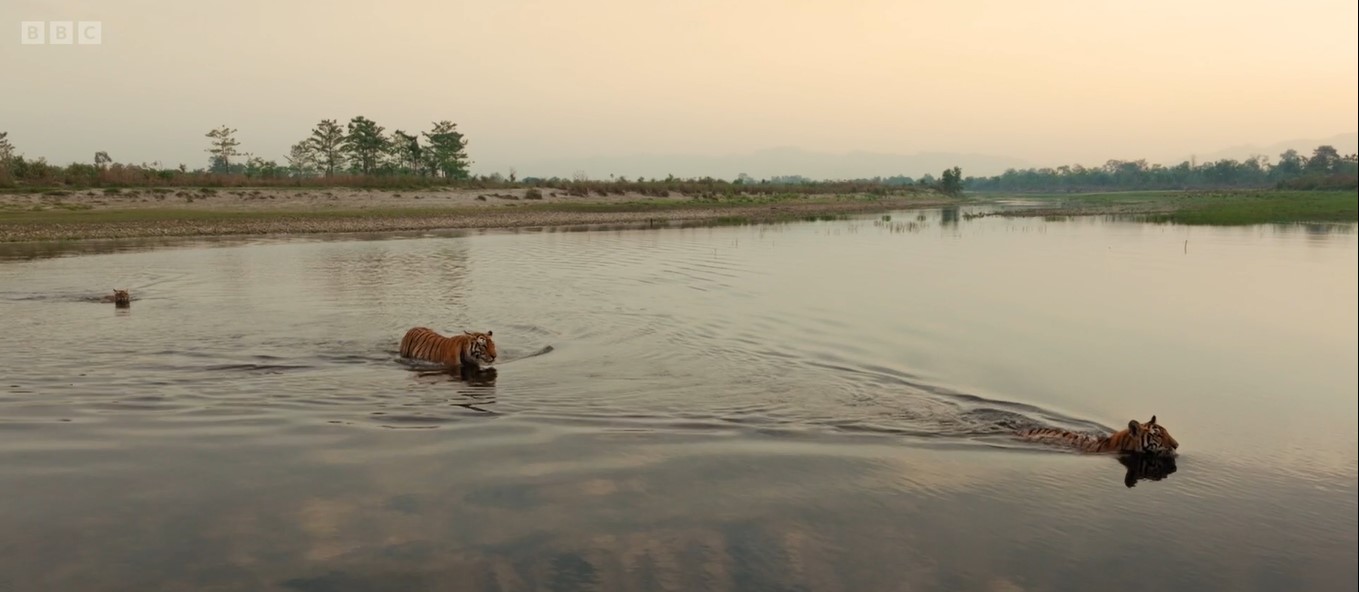
Bardia is a hotspot for tigers in Nepal where the population has rebounded along the many riverine islands of the Karnali alluvial fan. The documentary spans two episodes and is filmed through Bardia National Park and surrounding buffer zones.
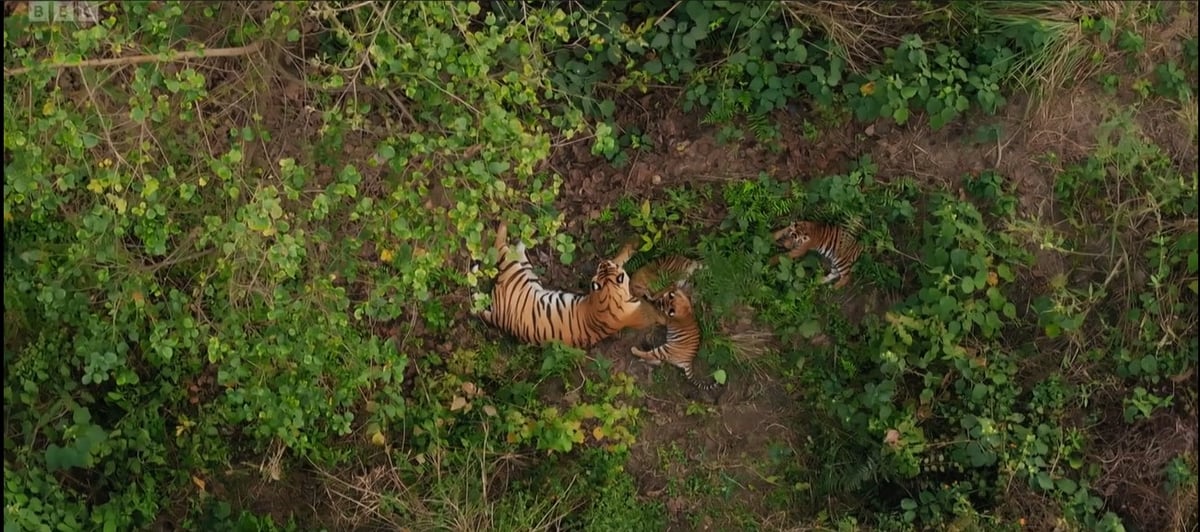
In the first episode, viewers are introduced to the tiger territories of Goma and her daughter Mala. Goma is nurturing two cubs and Mala three, another tigress named Jugini has two cubs in an adjoining territory.
This documentary captures unexpected behaviour of these tiger families and the role of males that has surprised wildlife scientists, researchers and experts — overturning accepted belief about the habits of tigers in the wild.
Goma, for example, is found in drone footage to be sharing parenting duties with Jugini. Tigresses babysitting each other’s offspring was unheard of before. Another firmly held belief of tiger ecologists was that male tigers were solitary animals and abandoned their offspring — the film proves that they can be good dads, too.
“Tigers are loners and usually do not share parenting duties. Male lions say in family packs, and help raise cubs if the mother dies,” says Sushila. “But the film has overturned that view."
The second episode of Tiger Island takes us on a nocturnal tour of Bardia where tigers are on the prowl. Night vision drones and thermal cameras offer never before seen movement of the big cats at night — including one footage that shows a cub and her mother working as a team to hunt deer.
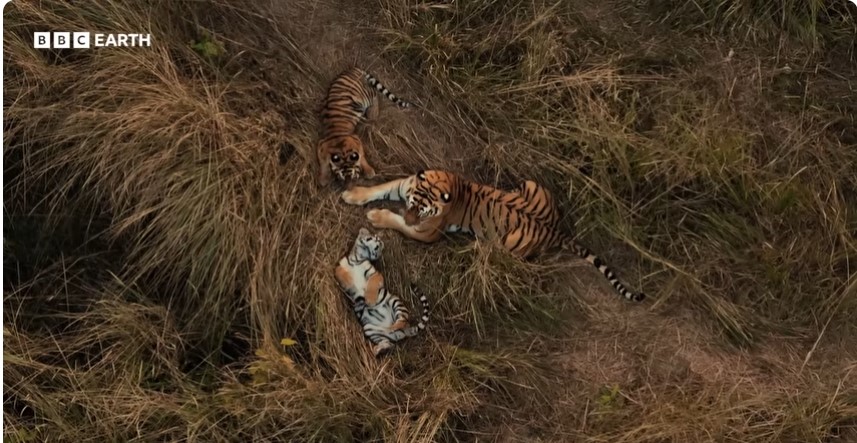
Thermal cameras capture the alpha male Badheil tracking Goma and her cubs. The ecologists expect him to be after the cubs to kill them, because that is what male tigers do to establish territorial hegemony. But what a surprise to see Goma greeting Badheil, and the cubs playing with him. Turns out Badheil is the father of the cubs.
Nurturing cubs until they are adolescent is the duty of mothers. The role of males is to mate, and to remove other male rivals from their territory. Male tigers roam across multiple female territories to mate with them.
While all this is still true, seeing Bandeil bond with the cubs and Goma being carefree after leaving them to Bandeil’s care is a rare sight that has left tiger ecologists and guides in awe.
Says Shovna Upadhayay, a wildlife photographer and writer, "There is so much we are yet to learn about tiger behaviour. We are just scratching the surface at present."
However, head of wildlife programs at WWF Nepal Shashank Poudel says studies from India followed through a long period of time in 1982-83 showed similar tiger behaviour. "In Nepal, we were not able to record such behaviour due to lack of access to modern equipment and technology, as a result of which the behaviour did not reach the public eye. So the behaviour itself cannot be called new, but a new observation or record," he adds.
The guides and the team are themselves filmed as they film the tigers, recording their shock as they peer into the drone monitors, night vision images or reviewing wildlife tracking cameras. The documentary has some of the most unique film sequences and perspectives ever seen in wildlife films.
“The reason tigers seem to be cooperating more than usual is because of the change in their habitat,” says Dhan Bahadur Tamang of Nepal Tiger Trust. “A female babysits another female’s cubs while one of them is hunting so as to protect them from a dangerous male.”
With climate change and warming weather, tigers have been migrating to cooler, higher altitudes. Tigers have been seen at elevations of 3,300 meters in Dadeldhura and Ilam. Increasing population and scarce water sources pose another threat. Tiger densities usually compose 1 female per 15-20 sq km while a single male patrols 70 sq km of territory.
Explains Tamang: “Many factors including availability of suitable habitat, climate, prey and water source play an important role for tigers to move or stay in any territory.”
Having worked in the wildlife guide now for ten years, Sushila Mahatara has amassed a lot of experience and has observed some of the changes in tiger behaviour but being a part of the filming team has revealed even more secrets.
She tells us: “If more people know about tigers in Nepal through the documentary, they will visit Nepal, giving a boost to eco-tourism which in turn will help fund conservation efforts. The message is that tigers can co-exist with humans and are not just dangerous predators.”
Tiger Island
BBC Studios, 2026
Directed by Patrick Evans and Lindsey Parietti
114 minutes (two episodes)