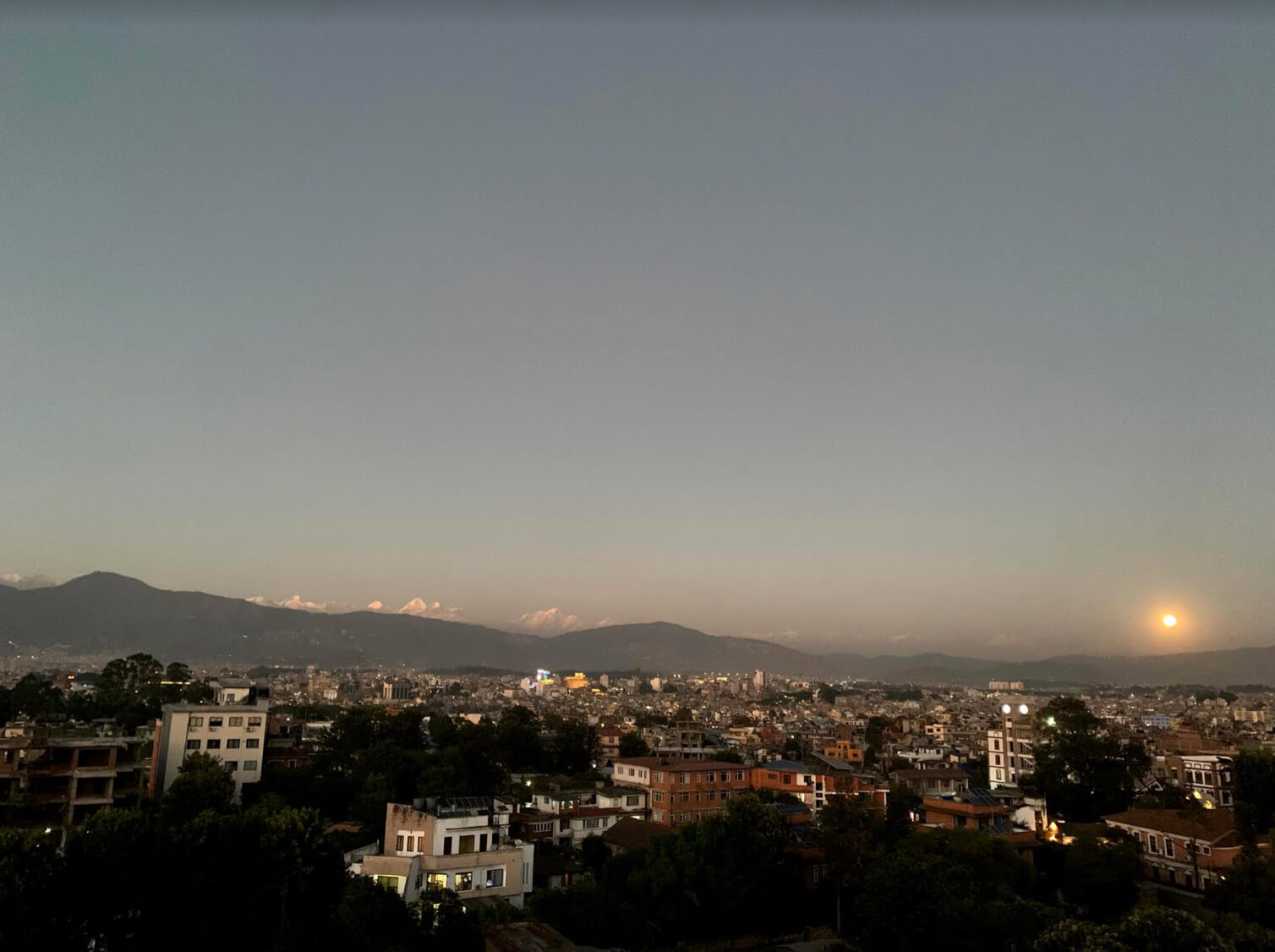
The lichened terrace wall chaffs the back of my legs and jasmine scent floods the night air as I wait for the blue moon to rise. The gradated rosy glow of sunset has etched the forest trees a black silhouette against the sky fading along the Kathmandu Valley rim. A chorus of crickets shrills in the bushes, and my bare feet can just detect the lost glow of afternoon sun in the terracotta tiles.
Blocked by the bulk of Shivapuri looming behind the house, the dappled golden orb was slow to reveal herself above the horizon, sailing stately into the navy night sky. The rare spectacle of a spooky full moon on Halloween 31 October visible all around the globe has not occurred since 1944, 76 years ago deep in the last dark days of World War II. The next one will not be until 2039. I shivered, even though it was not a cold evening.
It’s complicated, but a so-called blue moon is when a year has 13 full moons instead of the usual 12, the name given to the third full moon in a season that has four moons (normally a quarter year has three full moons). However more recent usage refers to when two full moons fall within the same month, as happened the other night very exceptionally on Halloween.
But one thing is sure - the moon never looks blue and the event is not particularly unusual. A normal lunar cycle is 29.53 days, so two full moons are squeezed into one month about every two or three years, or seven times in 19 years to be exact. Although the origin of the name is hazy, I like the fanciful speculation that the term is derived from archaic English belewe or belaewe meaning ‘to betray’ because the extra moon "betrays the usual perception of one full moon per month."
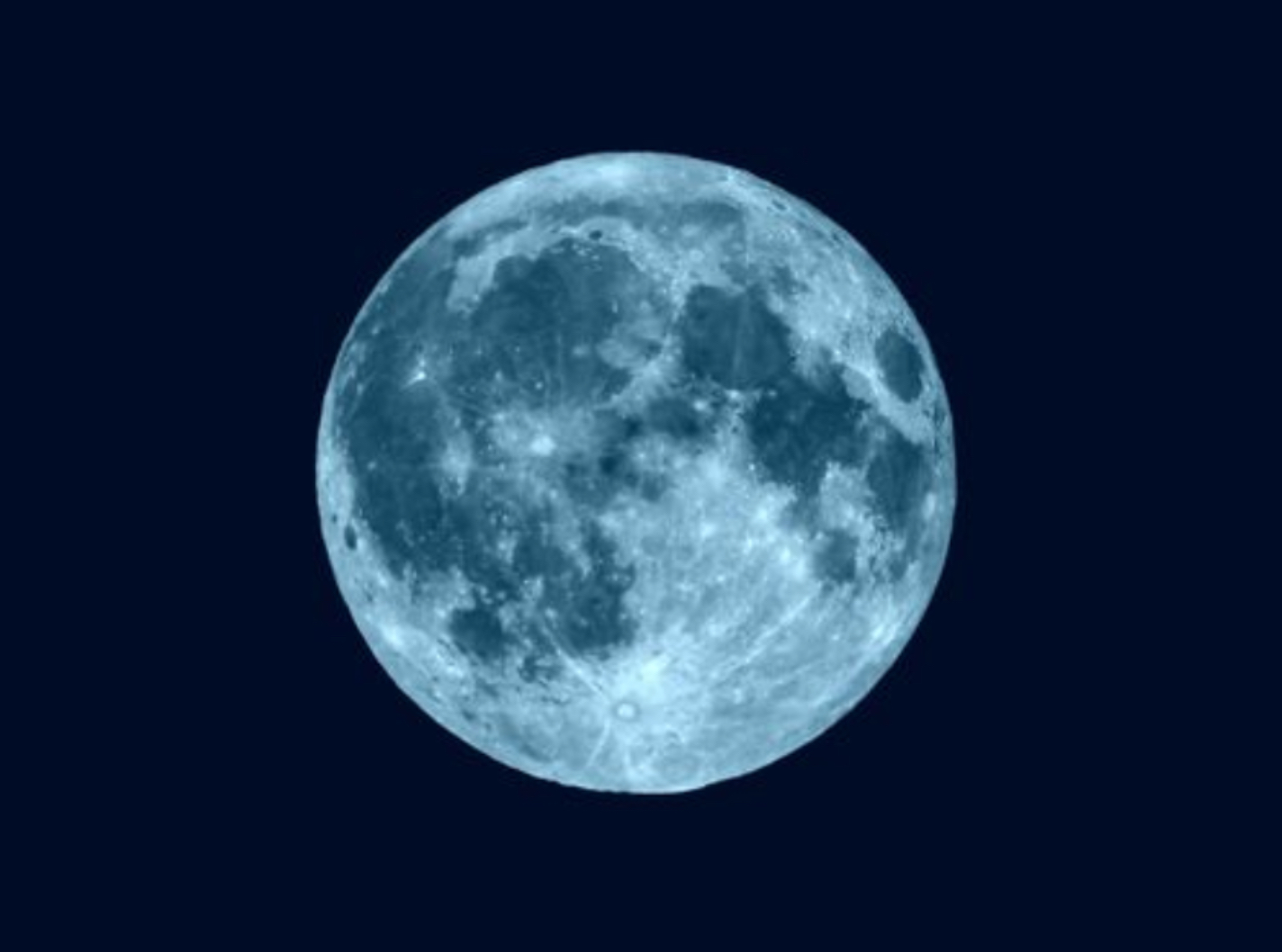
So why ‘once in a blue moon’ to denote something that almost never happens, extremely seldom, absurd or an indefinitely long time? Under extraordinary and rare atmospheric conditions the moon has been known to appear blue, and indeed sunsets turn green and the sky red, due to dust and smoke particles caused by prolonged droughts and the volcanic explosions of Krakatoa, Mount St Helen, and Pinatubo.
In the West we have become dislocated from the celestial cycles, preferring our high days and holiday dates fixed and predictable on the annual calendar. Moons get a bad rap, unreliably made of green cheese and linked with lunacy, and blue moon crooners allude to sadness and loneliness in their songs. Easter is one of the few annual moveable feasts in the liturgical year, preceded by Lent and Holy Week and finishing with Pentacost, fifty days later. This week we mark Poppy or Remembrance Day in memory of all those lost in conflict, fixed at the eleventh hour of the eleventh day of the eleventh month, the moment that the Armistice was signed in 1918.