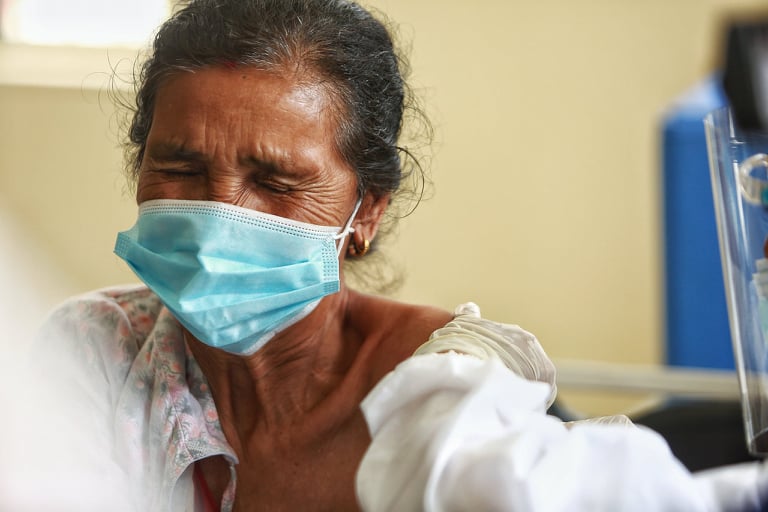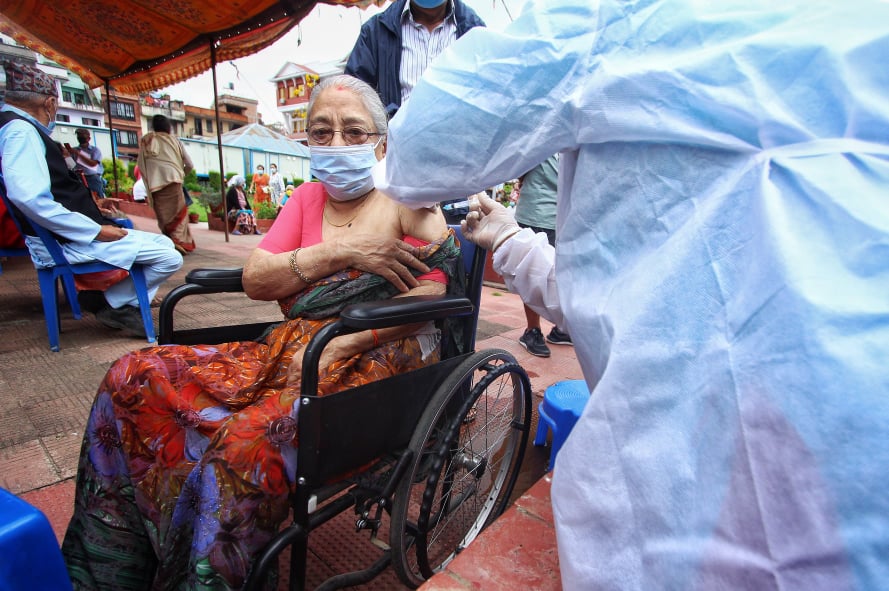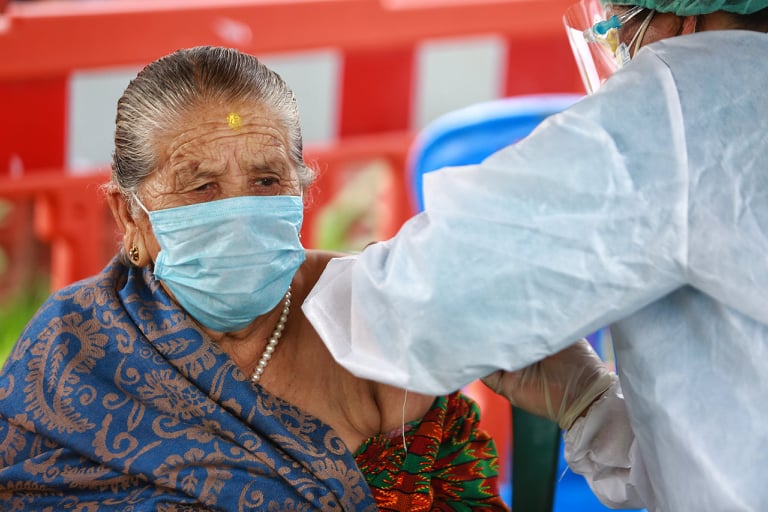
Global inequities in the distribution of the Covid-19 vaccine have revealed themselves during the past six months. Based on the most up-to-date data today, more than half of the population in Bahrain, the United States and the United Kingdom have been fully vaccinated.
In Nepal, this number is 2.6%. During times of public health crises, a convergence of social and economic inequalities sharpen disparities in access to health, food, and financial security. Moreover, in countries like Nepal with a pronounced urban-rural and regional divide in infrastructure, education, and health access, these divisions intersect with wealth and social inequities during a pandemic creating tremendous stress on an already tenuous local health system.
This results in worse health outcomes for underserved populations. With low vaccine coverage against the Covid-19 virus in Nepal, and the slow trickle of vaccines into the country it is imperative to question how vaccines will equitably be distributed across the country.
Biological risk factors like age tend to be used to assess risk of infection of any virus. But what about social disadvantage or inequities? Can such identification of population strata that have a high risk for transmissions will help inform the formation of the next tier?
Typically, when planning for vaccine rollout, the most common approach is identifying risk factors that are highly correlated with the virus and, thus, most vulnerable to infection risk. With Covid-19, risk factors that have informed prioritisation of target groups have been those highly correlated with mortality (age) and those that can aid in preventing mortality (healthcare workers).
Thus, age and being a health worker have almost universally informed Tier 1 (or first recipients) of the vaccine. But what about the next Tier? From an epidemiological perspective, vaccination efforts aim to reach the highest or tipping point of coverage that allows some level of herd immunity or reduction of transmission.
So, an obvious question is who is most at risk of transmitting the virus, and when positive for the virus, what non-biological factors put groups at a higher risk of having the worse health outcomes?
Historical learnings from Nepal have taught us systemic inequities persist along the lines of wealth, region, and caste to ensure and protect access to adequate and quality health care. There have been impressive gains in public health in recent decades: maternal mortality has dropped 73% since 1990, young child mortality has decreased from 47 to 30 deaths per 1,000 live births since 2010 and routine childhood immunisation coverage has increased 21% since 2001.
But inequities persist in health and nutrition outcomes. For example, households with lower wealth, no maternal education, and residence in Province 2 have significantly lower immunisation rates amongst infants.
Further, Dalit and Tarai caste groups (including Muslims) have a lower likelihood to have their children fully immunised compared to Brahmins and Chhetris. Similarly, socioeconomic disparities have been noted in stunting reduction, with the poorest experiencing a lower rate of decline than those who were wealthier.
Taken together during this unprecedented time of a global pandemic, the question is why is it essential to achieve equitable distribution of the vaccines prioritising not just medically vulnerable, but also historically socially excluded groups? Which are these groups? And how do we address the issue?
WHY?
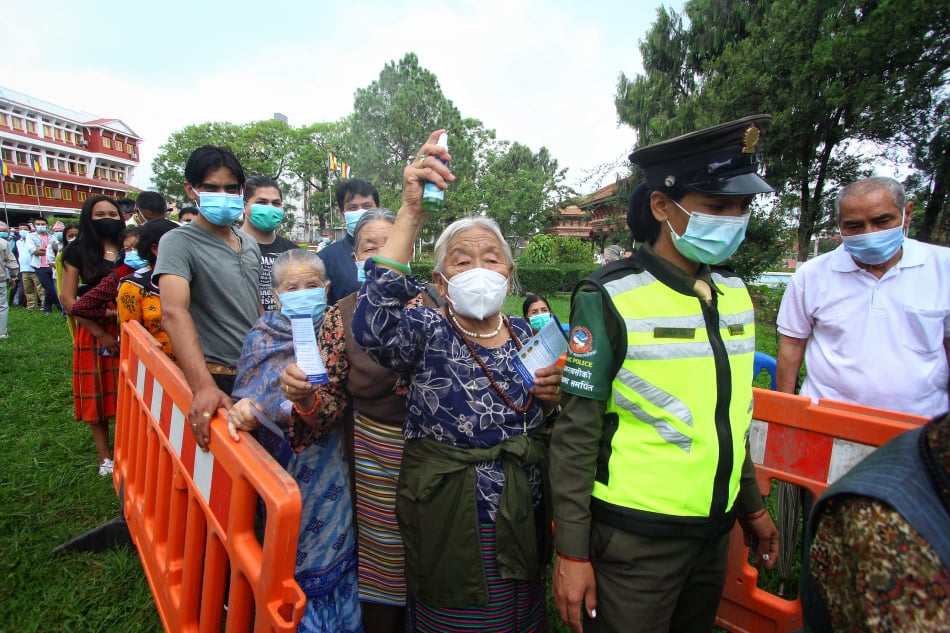
As of 6 July 6 nearly 1,500 people were testing positive daily for Covid-19 and a total of 9,261 deaths have occurred since May 2020. These numbers are most likely grossly underestimated, given a lack of mass testing. Only 11% of the population have been tested to-date and with 85% of the population residing in rural areas, access to testing centers can be challenging.
In a country with a dominant youth population - nearly 41% is between the age of 16-40 years of age, having age alone decide vaccine prioritisation tiers seems ill-informed. Further, reports of differential age cut-offs between Kathmandu, and those residing outside the capital municipality could well be short-sighted and discriminatory.
Another issue in pandemic management has been a lack of widespread contact tracing to identify transmission patterns. While recognising significant efforts underway by the Ministry of Health and Population to implement community contact tracing and border health checkpoints, this challenge remains non-trivial given the sizeable proportion of in-migration of migrant workers since March 2020 who are returning to inconsistent testing and quarantine protocols.
This inflow of workers means further potential economic slowdowns, given that 25% of Nepal's GDP is reliant on remittances. But here, let us start with the why. Why should the focus of the vaccination campaign rollout for Tier 2 focus on underserved populations?
The WHO states there are three C's that inform higher transmissibility of Covid-19: Crowded places, Close-contact settings, Confined and enclosed spaces. In many areas across Nepal, as with many countries worldwide, economically constrained households and their residents tend to locate in densely clustered areas where conditions are ripe for the spread of the virus.
These tight dwelling quarters in Nepal are even more pronounced among slum dwellers. Social isolation is but a privilege enjoyed by those of higher socioeconomic status. Close living spaces mean higher transmission rates among these communities.
In Spain, the US, and elsewhere, there have been stark disparities in the impacts of Covid-19 related deaths, cases, and hospitalisations among low-income groups compared to the general population.
As mentioned, the intersection of social exclusion has fueled health disparities in Nepal despite successes. Ultimately, there are health, social and economic consequences at stake if we fail to take an equitable approach to vaccine allocation. Socially excluded and underserved minority groups include Dalits, Muslims, Tamangs, and Tharus.
As with economic inequities, we see evidence globally with Covid-19 hitting hardest ethnic and racial minorities. Lower socio-economic groups are typically employed in jobs that make up the backbone of the country's economy, providing essential services such as growing and selling food, waste management, and public transportation.
If we do not prioritise these communities, we will not only have no chance of controlling the pandemic but also no chance of allowing our economy to survive.
WHO?
Who do we need to prioritise beyond those age 65 and above, and healthcare professionals? The groups most vulnerable include frontline workers: food production and food service workers drivers, custodial staff, security personnel, transportation workers, caretakers of people who are immunocompromised residing at home, adults living in a shared living facility such as prisons, nursing homes, or close-quarter communities such as the sukumbasi communities.