
International Mountain Day on 11 December should inspire celebration, not cynicism. It follows a small but rare diplomatic win: the agreement at COP30 in Belém to hold a dedicated global dialogue on mountains in 2026, and to include mountain-specific indicators in the new climate adaptation framework.
A welcome shift, certainly. But the old narrative lingers — mountains are fragile, disaster-prone, eternally vulnerable. But the uncomfortable truth is that safe and environment-friendly development in the mountains is simply too expensive than anyone wants to admit.
To build a kilometre of two-lane highway in the Tarai costs Rs200 million. That same kilometre on a Himalayan slope with retaining walls, drainage, bioengineering, and landslide protection costs more than Rs1 billion. Add tunnels, viaducts or highways designed for minimum 80km/h speeds and that figure can easily triple.
This pattern repeats across all sectors. A 50MW run-of-river hydropower plant that costs $80 million in low-ling valleys costs four times more in the mountains. The headrace tunnels have to be longer, desanding basins must trap the silt, the access roads cost more than the entire project. And there is no way to prevent the scheme from being washed away by a glacial collapse flood.
Nepal's annual road budget is only Rs150 billion. It is scattered thinly across 753 municipalities, most of them perched on steep, unstable slopes. When resources are inadequate and political cycles are short, the incentives for corruption are predictable — shaving a mountain flank at 70 degrees instead of 45, taking a shortcut on drainage canals, skimping on asphalt thickness, or skipping the Gabion.
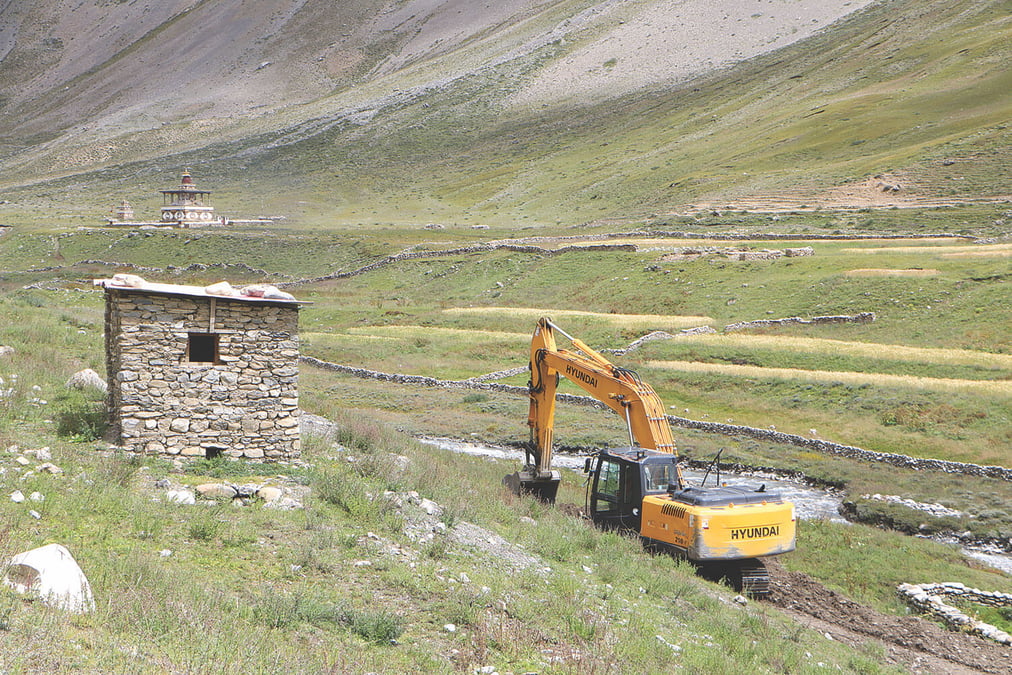
In high Nepal, the bulldozer is the engineer. We hang on the prayer that the monsoon will be merciful. July arrives, and reality returns. Mountains fall on roads, flash floods wash away swathes of expensive highways.
The entrance to the Siddhababa Tunnel in Palpa collapses yet again. The Nagdhunga Tunnel faces another landslide delay. The Melamchi headworks go under — again. Each failure costs more to repair than proper engineering would have cost when that infrastructure was built.
We are not just paying once. We the taxpayers are signing up for a subscription to disaster. The real fragility of Nepal’s mountains is of governance, not geology.
This is what the international climate conversation habitually misses. Mountain communities are repeatedly told to ‘respect nature’ and avoid linear infrastructure, often by the same countries proudly announcing new expressways and airports in their own countries.