
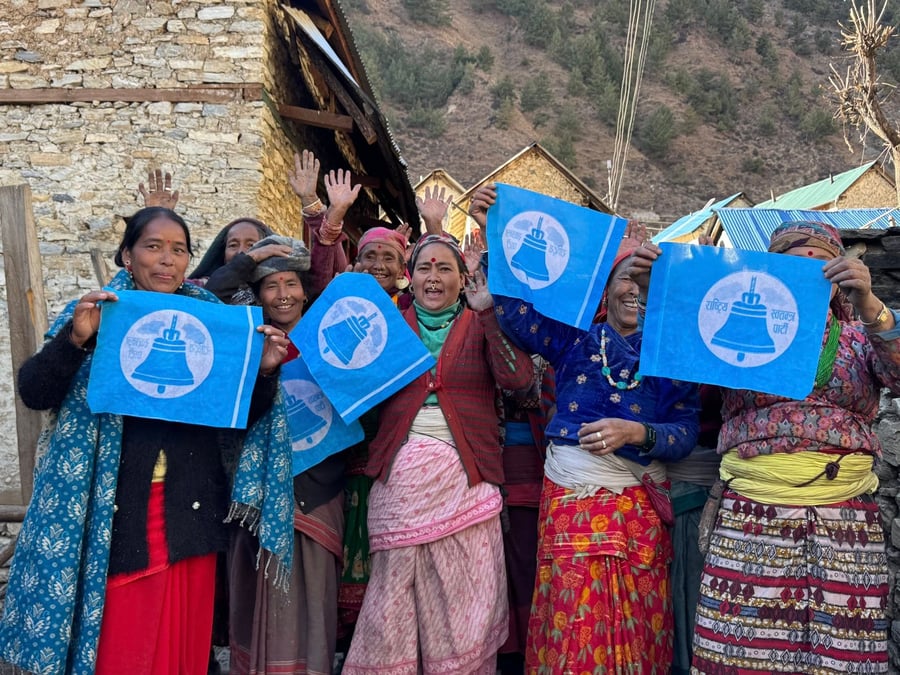
Nepal’s 5 March election may represent one of the most significant political shifts since the country adopted its republican constitution in 2015. What began as a youth-led protest last year has grown into a strong electoral mandate.
The Rastriya Swatantra Party (RSP), led by Kathmandu’s former mayor Balendra ‘Balen’ Shah, appears set for a major victory, reshaping the political landscape and challenging the long-standing dominance of traditional parties.
The scale of this change is truly remarkable. Early vote counts show the RSP winning or leading in most regions, outpacing well-established political figures and ending the dominance of parties like the Nepali Congress and the Communist factions.
Based on current trends, the RSP appears on track to secure an outright majority within Nepal’s 275-seat lower house of Parliament. It might also achieve a two-thirds majority once the results of the proportional representation segment of Nepal’s mixed electoral system are finalised. This development contradicts a common assumption among most analysts – including this one – that Nepal’s complex electoral system would make unstable coalition governments likely.
A COMPLICATED PHASE
For many Nepalis, especially the youth, this election means more than just a regular democratic process. It signifies a rejection of the old political order. Still, the RSP’s electoral success does not mean all of Nepal’s political problems are solved. In fact, it marks the beginning of a more complicated phase.
The rise of the RSP highlights widespread dissatisfaction with Nepal’s political leadership. Years of instability, corruption, economic stagnation, and high unemployment have eroded public trust in traditional parties.
The turning point came with youth protests in September 2025, driven by frustration with government policies and social discontent. These protests led to Prime Minister Khadga Prasad Sharma Oli’s resignation and early elections.
In this atmosphere, the RSP positioned itself as a change-maker. Its anti-corruption rhetoric, active social media presence, and connection with young voters resonated with the public mood.
What is happening now is a major political upheaval. Established parties, used to sharing power, now face a very different political landscape. However, turning electoral support into effective governance will be a major challenge, far more difficult than winning votes.
The first big hurdle for any RSP-led government will be managing governance itself. While the party’s rise is fueled by hopes of reform, turning those hopes into real policies will require strong administration, discipline, and teamwork, traits that new political parties often struggle to develop.
Nepal’s bureaucratic system is complex and often resistant to change. Overhauling government institutions, improving public services, and fighting corruption will need continuous reforms, not just words.
Public expectations are sky-high. Ironically, this might be the biggest challenge for the RSP. If reforms stall or internal conflicts arise, public disillusionment could grow quickly.
Nepal’s economy faces serious issues. Many citizens work abroad, sending remittances that support the economy but also highlight the lack of local opportunities. Youth unemployment, underemployment, and slow economic growth are ongoing problems.
An RSP-led government must develop a credible economic plan focused on job creation, attracting investment, and infrastructure. Without visible progress, the initial enthusiasm for change could fade fast.
Meanwhile, Nepal’s young population is a vital resource. If the new government harnesses this talent by encouraging entrepreneurship, using technology, and investing in education, it can turn societal frustration into economic development.
Nepal’s strategic position between India and China adds extra complexity. The country has traditionally kept a delicate balance in its relations with both neighbors, along with other international partners. The new government might face pressure to shift this balance, with both India and China closely watching foreign policy moves. The challenge is to protect Nepal’s sovereignty while gaining the economic aid needed for growth.
UNIQUE OPPORTUNITY
Despite these challenges, the 5 March election offers a unique opportunity. Nepal’s democracy, often complicated, has once again shown its resilience and ability to renew itself. Voters have peacefully replaced the old political elite with a new generation of leaders, an achievement worth celebrating.
If the RSP can move beyond protest politics and develop a comprehensive governance plan, Nepal could enter a new era of growth and renewal. A government dedicated to integrity, opportunity, and reform could rebuild public trust in democracy.
However, history warns us that revolutions often create expectations that exceed institutional capacity. For Nepal, the real work begins now.
Sanjay Upadhya is the author and analyst based in the United States. Originally posted here.