
Nepal’s new political wave has been described in many ways: a generational shift, a technocratic shift, a shift in ideas, and a shift in political behaviour. Young leaders now sit in Parliament, many with international education and policy experience.
But amid this excitement, a quieter truth risks getting lost: this political transformation is also the ascent of people who, until recently, were the grassroots themselves.
For the first time, many of the people now sitting in government are not distant elites. They are people I have marched with, argued with, worked with, and been inspired by for more than a decade.
They are people who once stood ankle‑deep in floodwaters, not in front of press conferences. As optimism rises around the new government, we must not forget that the climate crisis has not slowed down.
The monsoon is at our doorstep again. And if the disasters from previous years taught us anything, it is that climate impacts do not wait for political transitions. And our mountains and rivers do not care who sits in Singha Darbar.
What is different this time is who holds power.
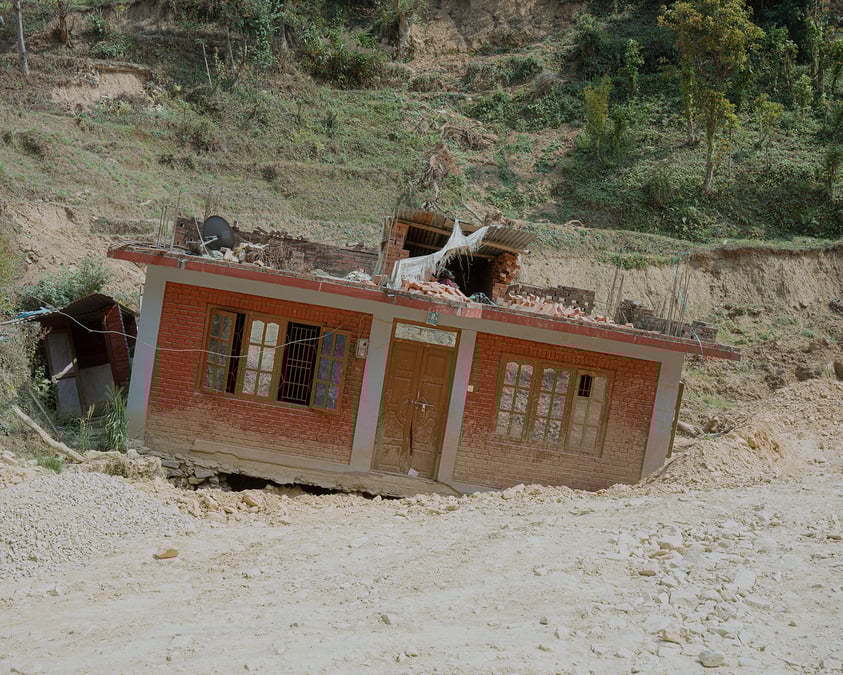
During the September 2024 floods in Kathmandu, the first responders were not the state or development machinery. It was ordinary young people. A loosely formed WhatsApp network coordinated everything from dispatching mountain bikers to landslide‑stranded areas, to pooling relief supplies, to delivering materials to army bases for airlifting. These were citizens acting out of necessity, not mandate.
Many from that very network are now part of the government. As I have argued before in Nepali Times, top‑down climate responses in Nepal have always been too little, too late, and too disconnected from lived experience. The only proven path is bottom‑up, community-led adaptation where those who face the risks daily shape the solutions.
International research backs this: community-based adaptation has been central to success stories from Bangladesh’s cyclone shelters to Vietnam’s mangrove restoration to the Philippines’ barangay disaster committees. The world has repeatedly learned that resilience grows from the ground up, not the top down.
RARE MOMENT
Nepal now has a rare political moment where people with lived experience of crisis sit in positions of authority. The real test is whether this lived experience becomes policy and immediate action.
The expectation should not be that these new leaders deliver because of their degrees. It should be because they remember where they come from and use their privilege to strengthen and fund local institutions, networks and people who kept this country functioning long before governments did.
The monsoon that starts in June will test the government’s commitment to governing from the bottom up. Will these new leaders govern the way they once volunteered — listening first, acting fast, improvising where needed, and involving those closest to the danger? Or will the weight of the state push them back toward the familiar comfort of top‑down plans and consultant reports?
The challenges are complex. Climate change is driving displacement, deepening poverty, and exacerbating gendered vulnerabilities. Climate adaptation, therefore, needs cross-sectoral solutions that understand how these issues intersect.
Long-term transformation is essential. Our major cities like Kathmandu desperately need a future where rivers are protected instead of mined, where an urban forest cools our heat‑trapping city, and where mobility focuses on sustainability, not just shiny EVs. Our mountain villages and terai lowlands deserve a community resilient to climate impacts, with livelihoods protected.
These require years of work. But immediate, life-saving measures cannot wait.
Will the government finally rein in the sand mining and quarrying upstream of the Rosi and Nakkhu Khola? Will someone sit down with the communities on the riverbanks and listen to the early warning signs they’ve learned through pain? Will climate adaptation be prioritised amidst political noise and competing crises?
Or will we find ourselves, yet again, mourning damage that could have been prevented? I have been inspired by many of the individuals now in government — they questioned old hierarchies, challenged worn‑out norms, and believed that things could be done differently.
But while the faces in Parliament have changed, the bureaucracy has not. Development organisations and civil society groups have not. And those systems are slow: too slow for the speed at which our climate is changing.
So something has to give. And that shift must begin with remembering where this political movement came from: the grassroots. Those now in power must not forget the urgency they once carried in their bones. They cannot forget the feeling of wading into murky floodwater, holding a bag of rice over their heads.
And it is our responsibility — mine as a writer, yours as a reader, and ours as citizens — to remind them. The real spark for climate action comes from personal stories of loss, fear, survival, and solidarity. And suddenly, those stories are no longer outside the halls of government. They are inside.
The question is no longer whether our leaders understand the stakes. They do. They lived it. The real question, as the skies grow heavier again, is this: What will we do with this moment?
Rastra Raj Bhandari is a co-founder and fellow at the Himalayan Water Project, where he leads the research on climate finance opportunities for the Himalaya. He contributes regularly to Nepali Times on climate change.