
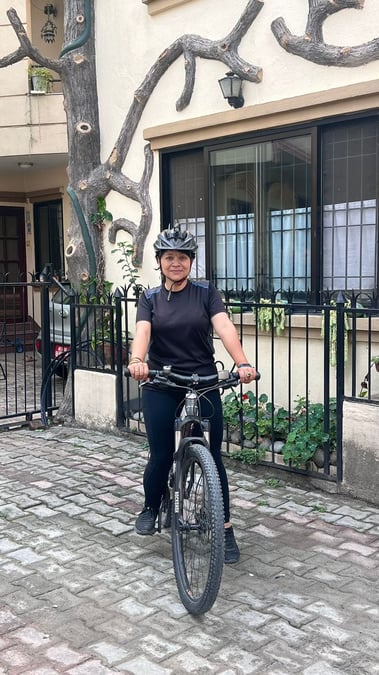
Cycling brings fond memories. Learning to take that first ride with my mother in the small alley next to home. Re-learning with my husband in the streets of Europe.
Both came as a necessity. The first because I had failed several attempts at balancing, and it was a matter of self-pride. The second because cycling was the primary mode of affordable commute for a student overseas.
Read also: No city for cyclists, Sewa Bhattarai
I often connect cycling with life, a balance you need to learn, and once learnt can never unlearn. What a beautiful form of experience that already is.
In Kathmandu, I cycle to work each day. Family, friends and acquaintances compliment me for being so conscious of my carbon footprint. But my cycling was due to forced necessity, I just do not have the fortitude to drive in the city’s chaotic traffic.
I switched to cycling during the 2015 blockade. Between daily chores at the office and home with two little girls, the struggle to join the long queues at the petrol station had tired me out.
One evening, my husband brought home a beautiful bicycle. I was a bit angry about buying such an expensive bike. But eight years on I am so thankful because the bicycle continues to run solid and is my best buddy on the road.
Read also: Netherlands to Nepal by bicycle, Ashish Dhakal
Thin traffic during the blockade gave me confidence, and although hard at first, muscle memory eventually kicked in. When the blockade was lifted after six months and fuel was plentiful again, traffic clogged the streets again.
Honking always troubled me, and I wished I could put a banner with bold letters on my bag: Don’t Honk. My wish was answered in 2016 when traffic police declared unnecessary honking a punishable offence.
A lot of people still warn me about the dangers of being on a bicycle on Kathmandu’s roads. That is true, they are not the safest place to be. I have had a few scrapes with bruises and aches, but that does not deter me. Cycling has become a part of my life.