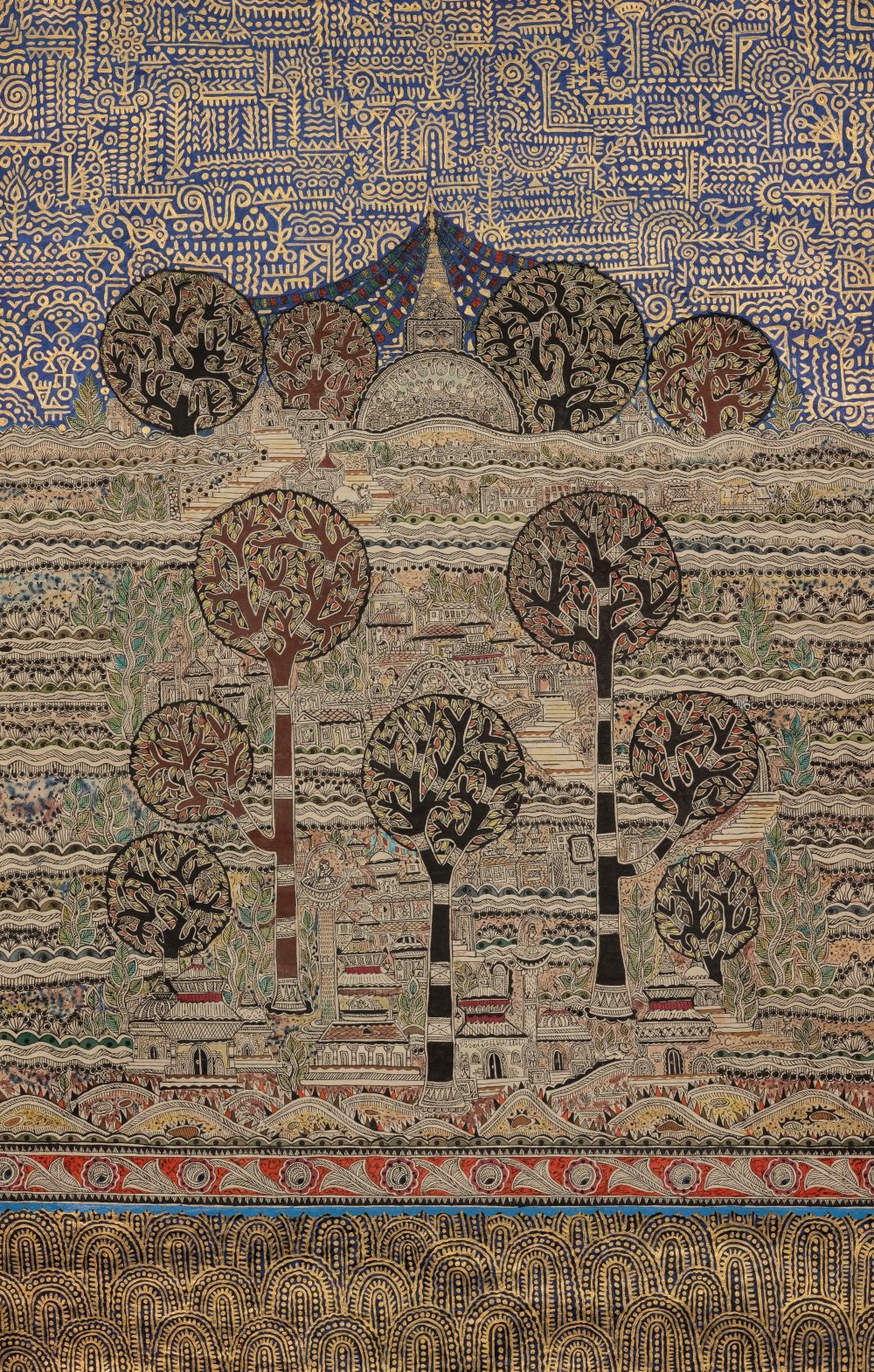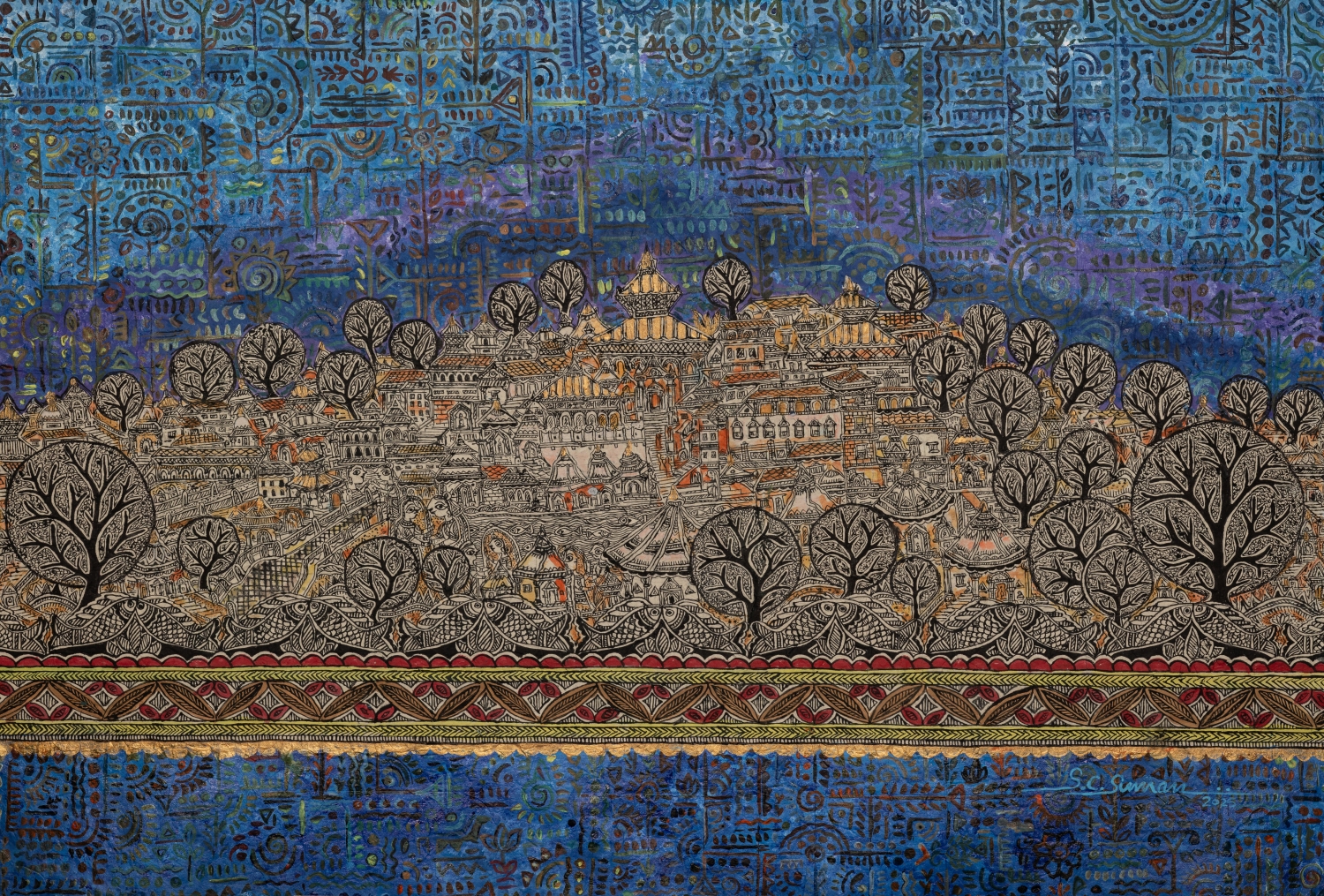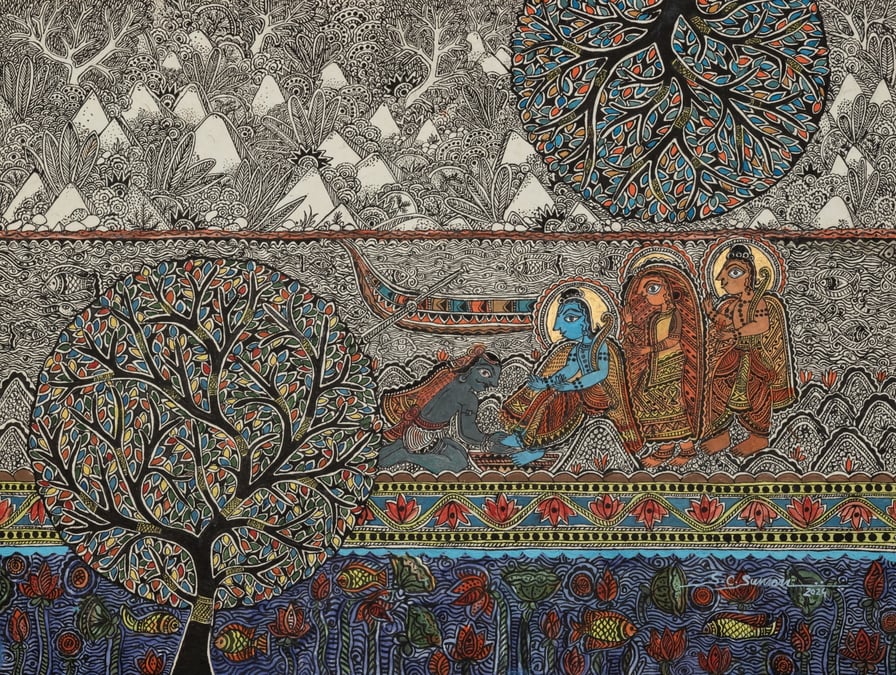
Mithila art has represented Nepal’s indigenous culture, passing down through generations in the Madhes. Now, noted artist S C Suman explores this tradition with a bit of modern touch that gives it added relevance.
Each of his paintings at the ‘Mithila Cosmos VII: Journey of a Pilgrim’ exhibition at Siddhartha Art Gallery exudes culture, colours and feminism, but with added improvisations that make it contemporary.
“Mithila is an art form that is mostly used by women. Women have been the ones who preserve culture and pass it to other people and upcoming generations. The art form is what it is today because of women,” explains Suman.
Inaugurating the exhibition on oMonday, art historian Julia Llyod Williams spoke fondly of Nepal and Mithila art, relating how she once bought a Mithila painting she liked without knowing its historical and cultural importance to the Mithila civilisation.
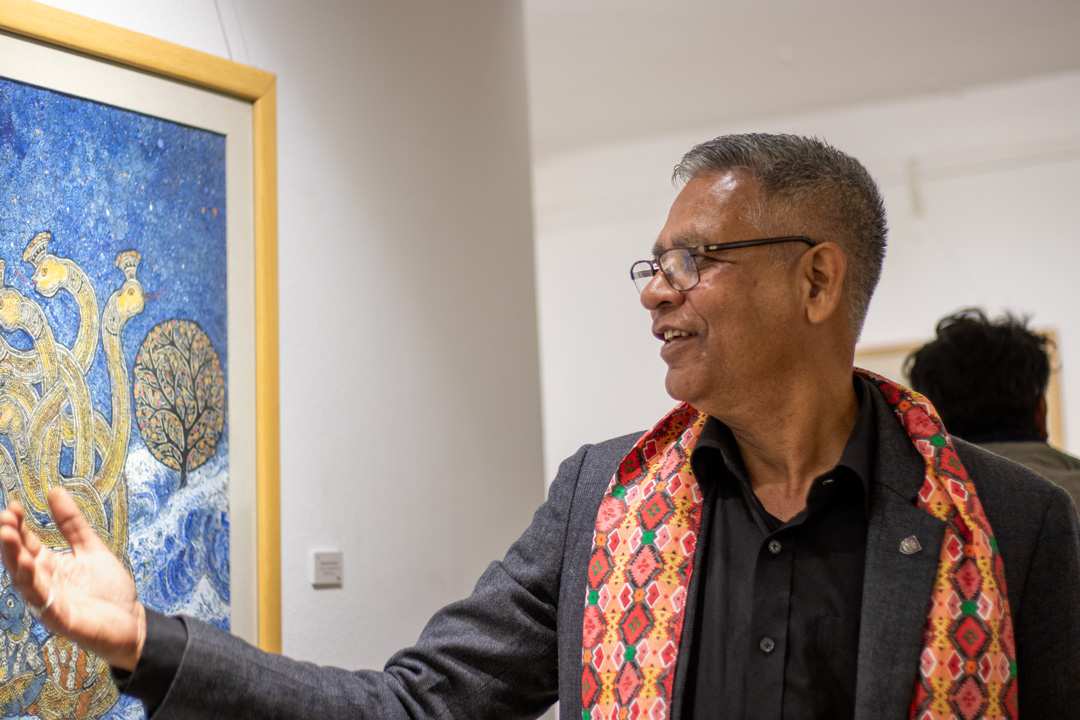
Suman is a self-taught artist, textile designer and a radio host from Biratnagar, and one of the country’s most celebrated artists, with national and international honours. He has held 14 solo exhibitions and numerous group shows in Nepal and all over the world.
“With Mithila Cosmos, Suman brings his artistic evolution into a deeper, more traditional realm, where pilgrimage is shaped not only by movement but by cultural memory and sacred stories,” says Sangeeta Thapa of Siddhartha Art Gallery.
The seventh edition of the exhibition explores and displays reflections of pilgrimage, sharing the artist’s physical and spiritual experience with viewers. The first of this series was exhibited in 2007.
“I am confident that this edition will also win visitors’ hearts. In the past, different dimensions of Mithila art were presented through this series. This time around as well, I have tried to give viewers a new perspective,” says Suman.
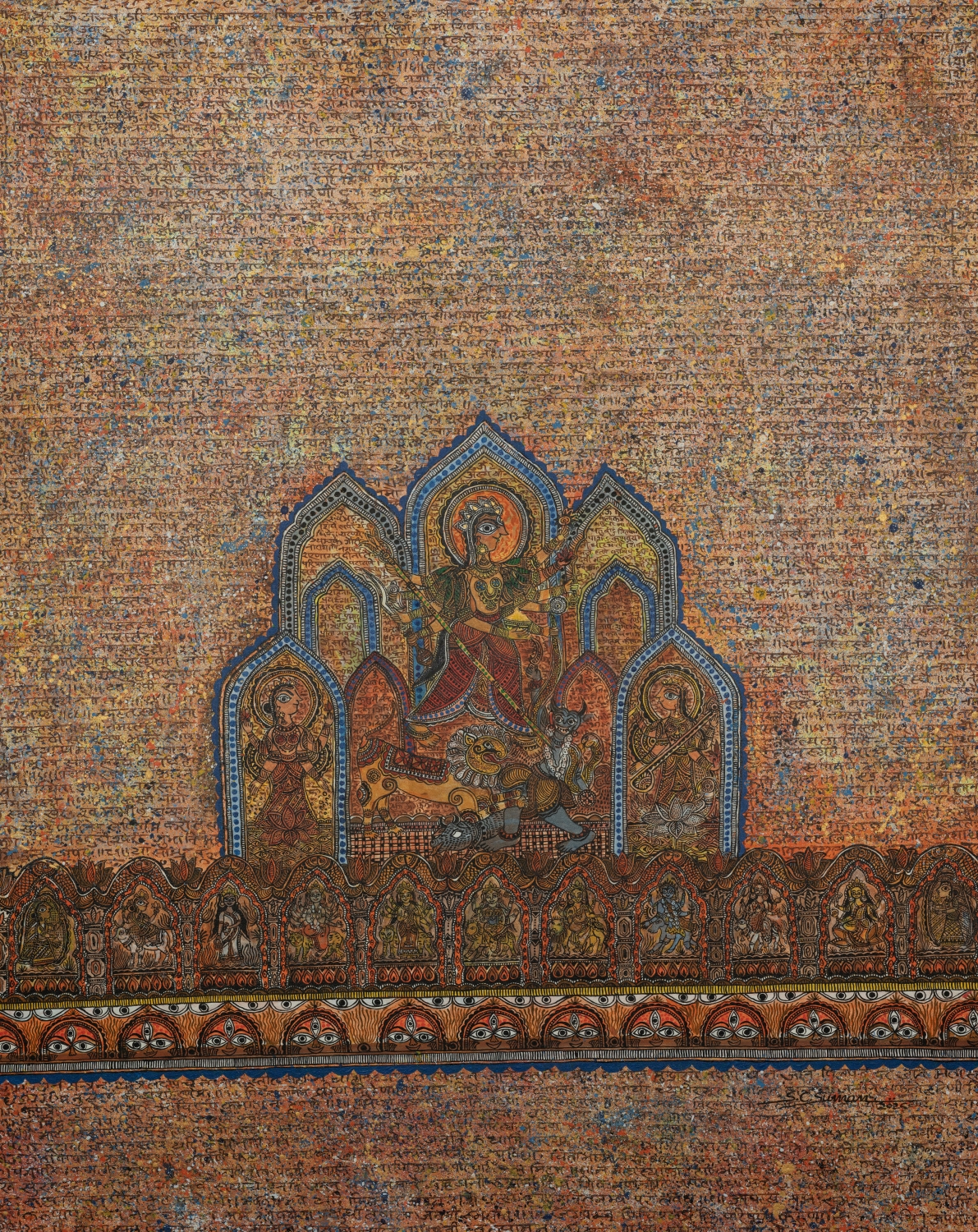
The exhibition is displayed on two floors of the gallery and includes paintings of Swayambhu, Pashupati, Lord Ganesh, Krishna, Ram Sita Bibabah among other renderings. Explains Suman: “The Pashupatin painting depicts the evolution of the temple, and since I live near Swayambhu, the mantra chanted there gives me energy, inspiring me to paint the shrine.”