
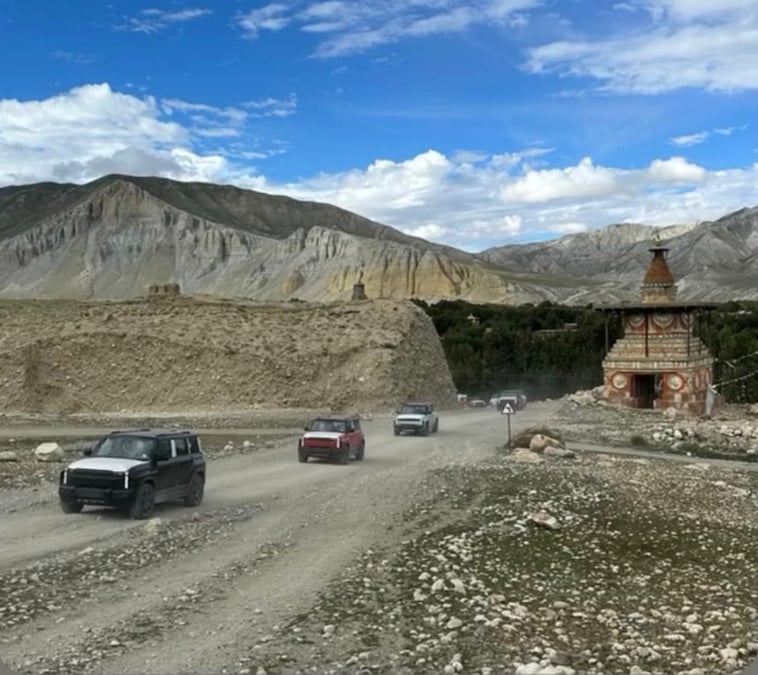
The Rasuwagadi checkpoint that was damaged in last year’s flood had just resumed being the main entry point for EV imports from China when it was hit by the massive debris flow on 26 August.
There is no count of the cars and vans that got washed off the road from the border down the Pasang Lhamu Highway that day.
Before the disaster struck, Kathmandu saw two back-to-back auto shows, the NAIMA and NADA fairs. They showcased an unprecedented number of electric vehicles across the two-, three-, four-wheeler and commercial segments.
If there was one unofficial slogan to emerge from the auto shows, it was: get more cars, pay less. In fact, there has never been a better time to buy a car in Nepal, or switch from an older model to a new one. Even now, with a range of alternatives at each and every price point, customers can easily get overwhelmed by what exactly to pick.
Things have evolved since my column in this space a year ago, which reported that Nepal’s EV market was peaking. It is still peaking, but what is peaking now is a price war.
The headlines in China among its many EV manufacturers have now buffeted the Nepal market with aggressive pricing and offers for the customer base here.
Some examples of EVs that really disrupted the current market price mechanisms were: the Nammi Box, Nammi Vigo and the Deepal Nevo Q05. The hatch-back sized Nammi Box saw a Rs100,000 price reduction from its previous entry point of Rs3.099 million, whereas the Nammi Vigo compact SUV dropped to an eye-catching Rs3.799 million with the removal of some minor features such as a panoramic moonroof.
The Deepal Nevo Q05, on the other hand, might be marginally smaller than its bigger brother, the S05, but launched with an introductory offer of Rs4.699 million.
Soon enough, bigger players also announced price reductions and feature updates, such as BYD dropping the price of the highly sought after Atto 2 model from Rs4.899 million to Rs4.595 million, with the caveat that it has a smaller battery pack.
Similarly, the new Cherry QQ3, a crossover hatchback, launched at yet another aggressive introductory price of Rs3.099 million found itself undercutting another recently launched similar sized vehicle, the Proton Emas5, by just a couple of hundred rupees.
The mid-size SUV segment also saw price reductions such as with the Jaecoo J5 that was being offered at Rs4.799 million with a smaller battery configuration. The J5 was first launched at last year's NAIMA Expo at Rs6.099 million. Similarly, Leapmotor decreased the price of its recently launched B03X from Rs4.699 million to Rs4.499 million, keeping up the competition.
Larger premium vehicles EVs were not exempt from this wave. BYD launched an updated Sealion 7 with a bigger 150 kW motor (previously capped at 99 kW due to tax brackets) at Rs9.3 million and the Leapmotor C10 now sells for Rs7.599 million.
The price war meant that customers could quickly move up in segment size, features and range if they were willing to shell out a couple of extra lakhs as the hefty price tag between segments blurred.
But all this battle for the buyer also poses one great question: what about after-sales? The recent death of a driver in Bharatpur after his EV caught fire has put a spotlight on maintenance and safety.
EV’s, unlike traditional ICEs, cannot be serviced and maintained just anywhere. The cost of keeping and maintaining inventory of spare parts and of skilled workers is high. The question is, will importers keep their promise or falter down the line?
After the floods, deliveries to customers who booked their vehicles at the auto shows have faced delays because the vehicles have been rerouted through the longer Korala checkpoint in Mustang.
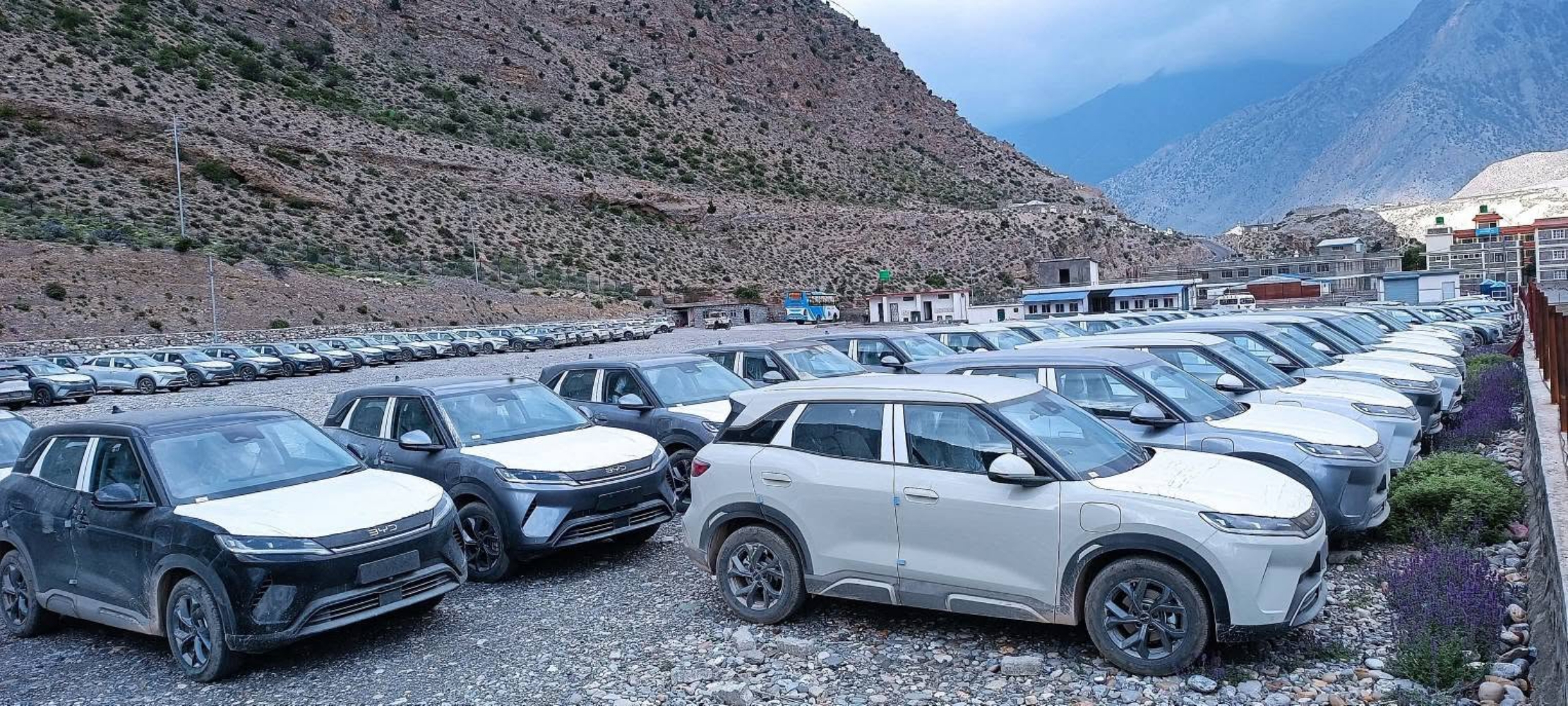
This border point remains relatively underdeveloped and its ability to absorb a sudden diversion of containers and commercial traffic is uncertain. Even so, nearly 700 Chinese EVs have entered Nepal through Korala since 26 August.
Even the EVs coming in from Korala and the vehicles imported from the Indian border are affected by the two-week landslide breach on the Prithvi Highway.
For importers, such uncertainties are likely to translate into longer transit times, more complicated logistics, and ultimately higher costs against the backdrop of price wars. How much of that burden will eventually hit consumers remains unclear.
With key trade routes still vulnerable to late-monsoon highway disruptions, the risks to both supply and pricing are becoming increasingly difficult to ignore.
Arnav Upadhyay reviews automobiles and promotes road safety under the handle Casually Annoyed Driver on Youtube, Tiktok and IG, and this monthly column Drive Line in Nepali Times.