
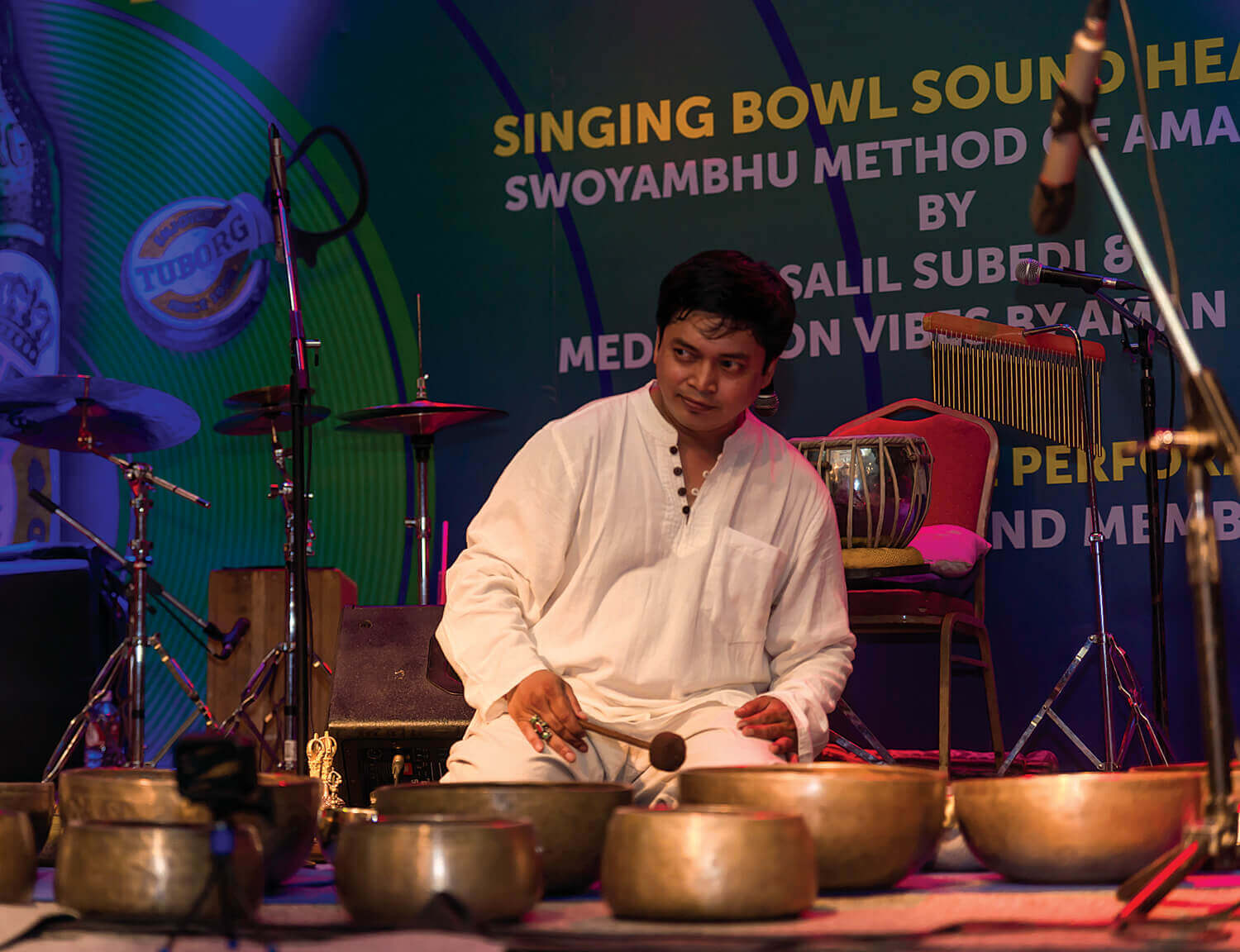
A recent performance and book/CD launch helped to demystify the singing bowls that are today probably best known as objects for sale in tourist areas.
Several metal bowls lined up on the stage were reminiscent of jal tarang, which produces music from ceramic bowls filled with water. However, the music that performer Aman Shahi created from the bowls was distinctly different. A tinkling sound reverberated when he hit the bowls, while a deep vibration ran through the crowd when he stroked them in a circular motion.
Shahi performed at the launch of his CD, Meditation vibes, and a book by Salil Subedi, Singing Bowl Sound Healing: The Swoyambhu Method of Aman Shahi, in Kathmandu on Friday. The event also included a discussion that demystified a very new musical instrument.
Although singing bowls seem to be popular with tourists as musical instruments, there are few historical records of them being used to make music. Many sellers claim that the bowl is a Tibetan healing instrument that also aids meditation, but its actual origins are shrouded in history.
Today the bowls are used across Nepal for cooking, eating, and making offerings at monasteries. During the hippie influx of the ’70s, they were sold as souvenirs, and many claimed a Tibetan provenance for them to enhance their mystique. It is widely believed that one of these sellers, Jit Bahadu Shahi, coined the name singing bowl.
Though the bowls may be associated with Kathmandu’s Tantric mystique and Tibetan origins, Tibetan communities dissociate themselves from singing bowls. However, Nepali musicians have been quietly experimenting with them, formulating ways to use singing bowls in music as well as meditation. That is where the book comes in, exploring the bowl's history and practices in Nepal.