

That time of the month
Activists, artists, journalists share diverse menstrual experiences and interventions from across NepalMenstrual stigma remains a lived reality in Nepal, where taboos and violence are still justified in the name of tradition. What is framed as cultural practice is often unsafe, excludes women and deprives them of dignity.
Women are forced to face everyday restrictions, to isolate themselves, limit them from access to health information, sanitation, and timely care. Although with education, the practice is less prevalent, it is still entrenched in rural and marginalised communities.
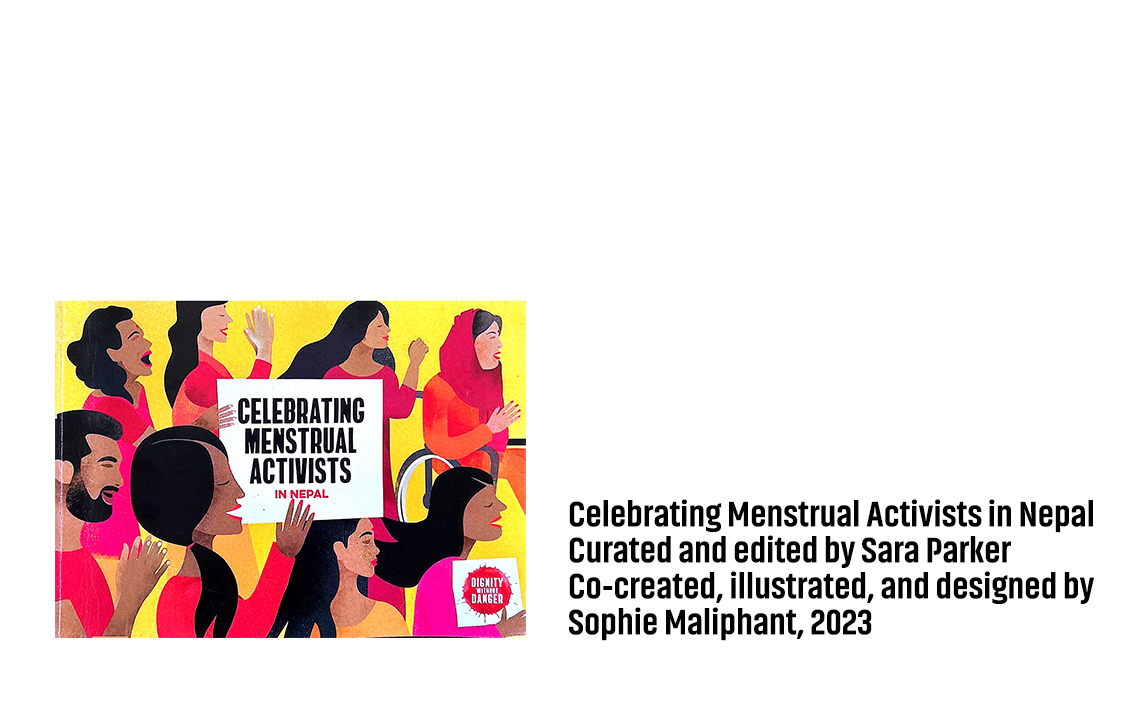
Which is why the book Celebrating Menstrual Activists in Nepal is an important reflective documentation of such experiences, practical interventions, lessons and possibilities, with grassroots activism against menstrual banishment from across Nepal.
The dominant international narrative of menstruation in Nepal is often reduced to images of women confined in cowsheds on the internet. While the practice of chhaupadi is real and brutal, focusing just on this singular issue erases the diversity of menstrual experiences and activism all over Nepal.
“Simply searching ‘menstruation’ in Nepal shows a starkly stereotypical narrative as compared to other countries, where activism, products, and choice dominate the imagery,” says the book’s curator Sara Parker:
Parker and Laxmi Dhital interviewed activists from different walks of life, purpose, and responsibilities, all of whom are central to translating legislation into change at the grassroots, some through their focus on practical access and sustainability, others foregrounding gender norms and structural power.
LOCAL SOLUTIONS
Anupa Shrestha addresses fundamental menstrual health issues such as hygiene, irregular menstruation, menopause, and family planning, but her primary focus is on producing reusable menstrual pads. Anupa spent over two months researching reusable pad production online before locating a trainer in Kathmandu.
She then organised her first training session with 15 women. The pads, made from cotton cloth and other absorbent materials, are designed to last at least one year, making them both cost-effective and environmentally sustainable, and has reached over 1,000 people. School-based training is particularly effective.
Beni Rani Ghale’s Freedom Period Pads and Claire Lin’s Love Lovely Pads also integrate sustainability, livelihoods, and bodily education, employing local women and reducing menstrual waste.
Gyan Maharjan, widely known as ‘Pad Man’, argues that menstrual stigma is rooted in patriarchy and cannot be dismantled without men’s involvement. He envisions a society where fathers can openly explain menstruation to their daughters without shame, and where adolescent girls are equipped with accurate information rather than fear.
Maharjan founded X-pose Nepal to address sexual harassment and now employs local women to create reusable and disposable menstrual products.
Youth activist Ashwin Karki believes in involving young people in awareness campaigns for behavioural change to ensure that the next generation experiences less discrimination. Babu Kaji Shrestha of Global Action Nepal (GAN), views education as essential for long-term change with improved teaching practices around reproductive and sexual health education.
The book expands menstruation beyond hygiene, linking it to nutrition, mental health, and dignity. Bonita Sharma talks about diet, mental health, hygiene, and bodily changes, addressing cramps, hormonal fluctuations, weakness, and variations in bleeding and discharge.
Pema Lhaki, a member of the Nepal Fertility Care Centre (NFCC) adapts campaigns to specific communities. She questions the term ‘dignified menstruation’, arguing that activists should focus on normalising menstruation rather than moralising it.
In western Nepal, Durga Giri works directly with communities, politicians, teachers, and police to challenge chhaupadi practices, remaining optimistic that sustained engagement at the grassroots level can shift entrenched mindsets.
Artist Ashmina Ranjitkar uses visual and political art to confront menstrual shame, saying it is life-affirming rather than impure. Journalists and advocates such as Ganga Khadka demonstrate how activism can influence national policy, most notably through the provision of free menstrual pads in schools.
Despite threats, violence, and exclusion, Radha Paudel, founder of the Global South Coalition for Dignified Menstruation, frames menstrual discrimination as a human right violation rooted in the myth of impurity that sustains gender-based violence and inequality.
The book shuns simplification and offers a layered, grounded account of why the fight to normalise menstruation must continue. It is a creative outcome of Dignity Without Danger (DWD), a British Academy–GCRF–funded research project.
Illustrated by Sophie Maliphant, the book invites readers to engage, to reflect on their learnings and become a part of this movement by sharing the impact of reading these stories with #CelebratingMenstrualActivists, #MenstrualActivistStories and @DignityWithoutDanger.
The funds raised from the book will be used to support further menstrual education initiatives by Global Action Nepal.