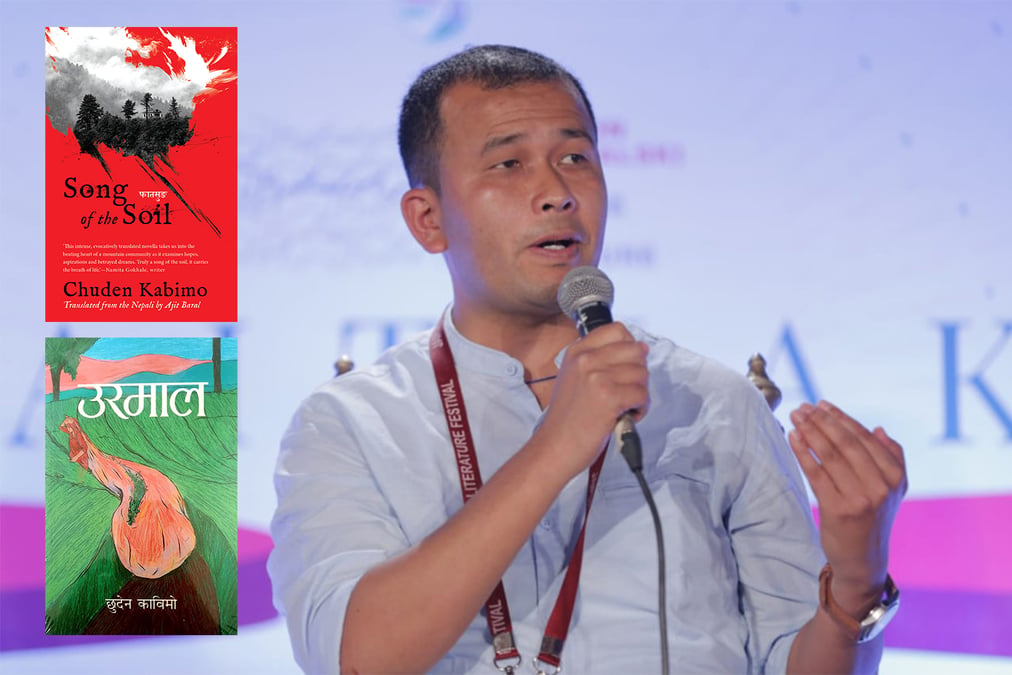
Chuden Kabimo is in Kathmandu to receive this year’s Madan Puraskar prize for his novel, उरमाल that is set among the tea plantations and their workers in northeast India’s Dooar plains.
The award ceremony was postponed due to Nepal's violent GenZ protests, and his trip had to overcome highways and bridges destroyed by this week’s heavy rains in the Darjeeling hills and across the border in Nepal.
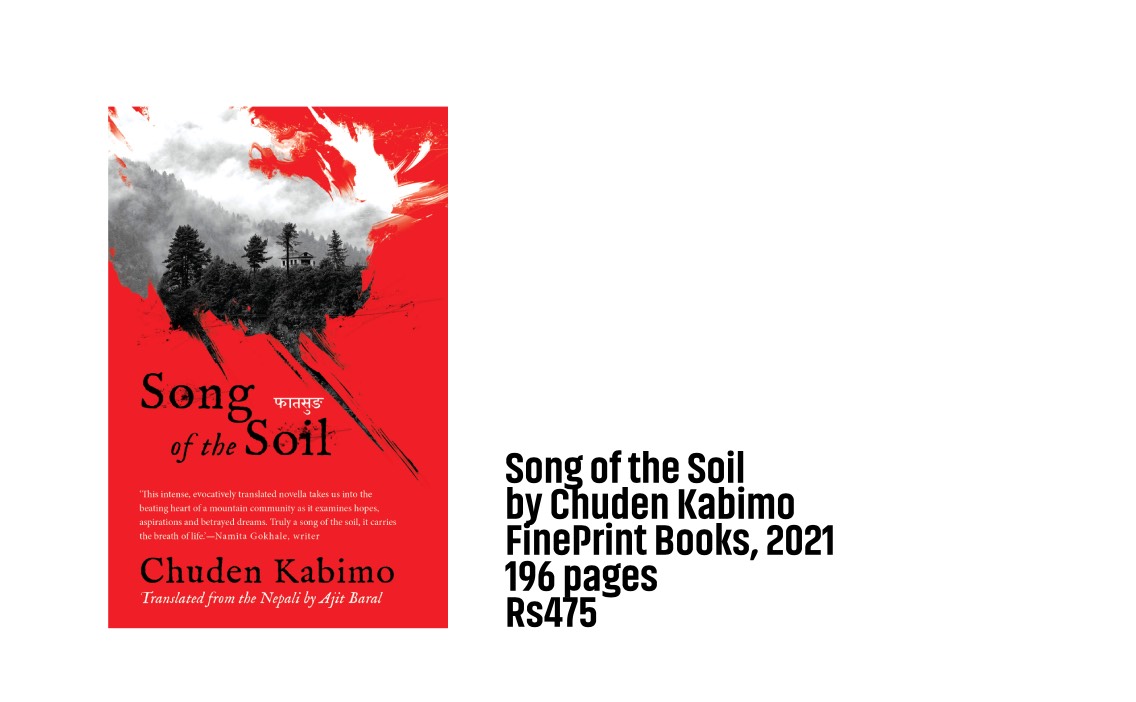
Kabimo’s previous work, फातसुङ was the story of the Gorkhaland Movement in Darjeeling 30 years ago told through fictionlised characters and their friendships, their love for the land, and revolution. Song of the Soil is its English translation by Ajit Baral published in 2021, and there are also Hindi and Bengali translations.
The Gorkhaland Movement sought to create a separate state for Nepali-speaking Indians of West Bengal. There is plenty of violence, arson, and young death in the book, and a poignant contemplation on the 8-9 September Gen Z protests in Nepal.
The plot is structured as a story, inside of a story, inside of a story, and starts off as the narrator gets the bad news that his childhood friend Ripden was killed in a landslide. He heads back to the site, Malbung, where he was born.
He reminisces about his days in school with the rebellious Ripden, who encouraged the narrator to skip school and led him on adventures instead. He remembers villagers who sold their farms for alcohol, and dedicated teachers who helped them dream of better lives.
Ripden lives with his uncle. His mother died when he was four, and his father disappeared in the Movement. One day he hears that his father is in fact dead as well, and decides to run away to a village called Lolay. There the pair meet Nasim, who is involved in the Gorkhaland Movement as a child soldier.
Chuden Kabimo is of the Lepcha community, a people fiercely proud of their identity, homeland, history, and myths. He weaves together the stories of the characters, detailing their motivation to rebel. ‘I may give up my life, I may give up my soul. But Gorkhaland, I will have anyhow,’ says one leader of the Movement.
It is the story of all revolutions where young idealistic people join with the best of intentions, but things betray their initial hopes. The spirit of the revolution can get everyone to protest, even those who do not want to be so involved, but they get killed anyway. Much like what happened outside Parliament last month in Kathmandu.
Others think of personal success through the movement, and dream of a day where even the pigs can eat rice and every house has a swimming pool. Others keep themselves going through with alcohol and remembering past, present, or potential lovers.
Ajit Baral’s translation has short, crisp sentences that make the 200 pages move along at a fast clip. The sparse language allows the writer to recede to the background as the story unfolds by itself.
Kabimo condenses love stories into a chapter or sometimes just a few paragraphs. This works because the story of the revolution must be at the centre, and all else is tangential. Characters are sometimes introduced only to be killed off quickly.
Like in all revolutions, there are factions and they are fighting among themselves, against Communists, or against the police. Readers not familiar with Gorkhaland may find it difficult to keep track, but this also parallels the real confusion of a society in turmoil.
Kabimo also tends to start his chapters with statements like ‘history is written by those who stumble in life’ which sounds better in Nepali, and something is lost in translation.
Read with the recent Nepal protests in mind, there is almost a sense of relief that the fires that spread here burnt themselves out so quickly. But in Song of the Soil, the revolution is never-ending with villages and families living in terror and deprivation.
It seems that the longer insurrections last, the more people die, and groups become divided making it easier to subvert the original goal of a revolution.