
 |
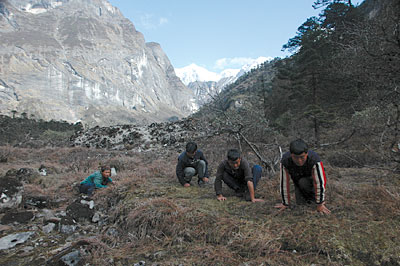
In Gargyangkot, Jumla, Hari Thapa and his entire family spend four months from April onwards foraging for medicinal herbs in the jungle. This is the livelihood of most families in the huge far-western zone of Karnali, for medicinal herbs are the primary resource of this region.
But Karnali's herbs are only benefiting unscrupulous traders and the corrupt officials who facilitate their business at the expense of locals. Far from locals having a prerogative over the use of their own resources, they are compelled to offer valuable herbs to government officials even to obtain the quotas of rice and salt they are entitled to. Local businesses are not far behind, and will not hesitate to accept such herbs at dirt-cheap prices in exchange for the daily necessities cash-strapped locals cannot afford.
Licenses to collect medicinal herbs such as yarchagumba and jatamasi are distributed all at once by district forest officials and, curiously, do not specify when and where and how much medicinal herbs may be collected. After paying a fee between Rs 2 to Rs 20 per kilo, the traders obtain licenses and marshal locals to collect the herbs they require. At the airport, they contrive to pay only a third of the required customs charges. According to an airport official, "There is no accounting for those rare herbs smuggled out under other names."
The profits are astounding. If a licensed trader obtains a kilo of jatamasi from collectors for Rs 100, this is already worth Rs 175-200 in Jumla itself. Even before the jatamasi reaches Indian markets it is worth Rs 350-400, and the residue following oil extraction for herbal remedies fetches Rs 80-100 (for incense). Effectively, traders pay off collectors by selling off the residue and walk away with a 300 per cent profit. Hari Thapa says, "It's like we're simply being paid by the hour rather than for the herbs that we collect."