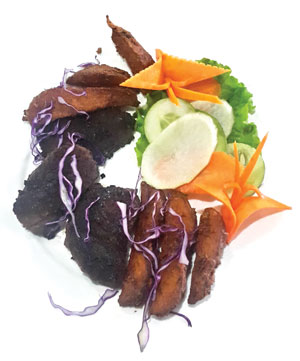
Safa Chaurasi Byanjan touts itself as being a truly authentic Nepali restaurant, so imagine my surprise when the lewdly blown up posters displayed show pasta and French fries and burgers galore. But then again what is truly Nepali cuisine?
On asking one of the owners to explain this dichotomy between name and fare he told me that Chaurasi Byanjan refers to 84 varieties of food prepared according to exacting traditional methods and dependent upon recipes passed down generations. The restaurant opened seeking to preserve these fast disappearing methods of cooking and to remind customers of our rich culinary heritage. In principle extremely laudatory, but in practice impossible to sustain. To survive they caved in to the crushing pressure to provide momos and thukpas and pizzas – fare that is available in practically every other restaurant in Kathmandu.
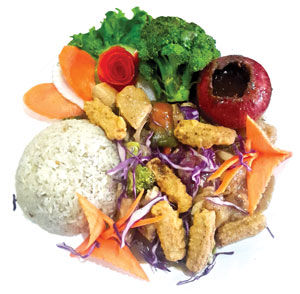
So why visit this particular restaurant? Because, the aforementioned owner informs me, the vegetables are organically farmed at their own farm in Lamatar, the meat available is all halal and butchered in their own abattoir, their fish is fresh and the rice is sourced directly from farmers in the Tarai. They also serve ostrich meat. Additionally, in their attempt to provide fresh locally sourced food, they work with small farmers and provide them a place to vendor their produce-fresh honey, yacons, indigenous varieties of rice and such.
The restaurant is in New Baneshwor and is ‘truly’ Nepali in one sense at least - the complete lack of any aesthetic sensibilities to speak of. The main restaurant is housed inside a large shed-like structure that could be emptied to host banquets and receptions. The organic coffee station is housed in a bamboo structure painted green, and the whole area is altogether higgledy-piggeldy, ramshackle at best. There is parking enough for about 10 cars but the land isn’t leveled. For a restaurant that isn’t even a year old, the aura is that of resignation at best, defeat at worst.