Text: Anurag Acharya and Ajaz Ashraf
Infographics: Ayesha Shakya
The largest democracy in the world is going to parliamentary polls for the 16th time since independence from Britain in 1947. The month long voting will be closely watched not just in India but in its neighbourhood perhaps like never before because the outcome will decide future of India, and impact on South Asia and beyond.
The retirement of Prime Minister Manmohan Singh, coming of age of the young Gandhi scion Rahul who leads the Congress, and the dramatic rise of Aam Aadmi Party (AAP) out of an anti-corruption citizens' movement make this election interesting.
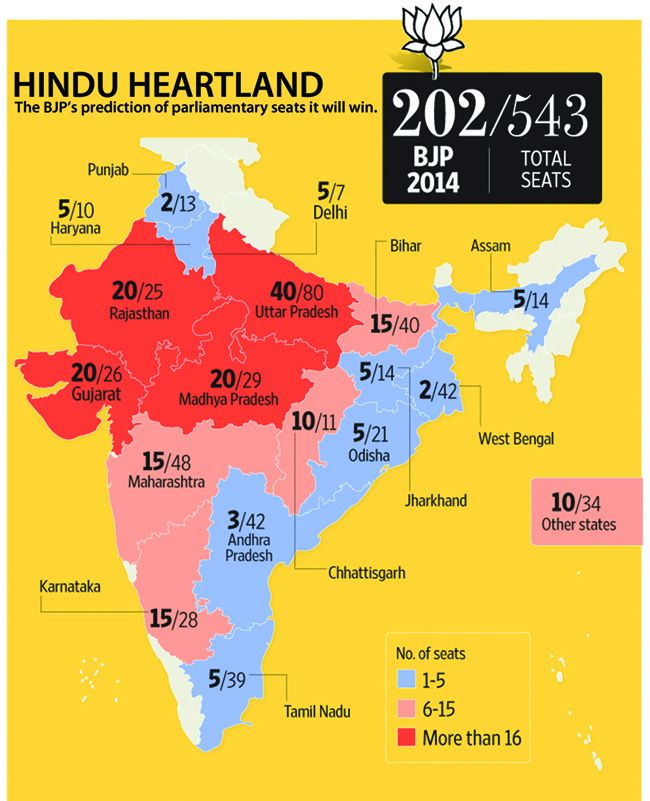
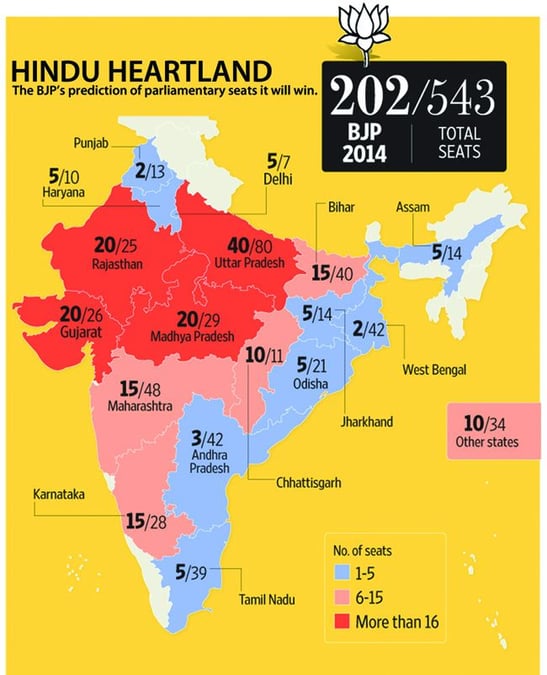
According to The NDTV Forecast, based on a survey conducted by Hansa Research Group, the BJP-led NDA are clear favourites expected to win the maximum number of seats, followed by the Congress-led UDA. Aam Aadmi Party (AAP) are expected to win only 4 seats.
But the real dramatic part is the emergence of Narendra Modi, Gujarat’s Chief Minister and the leader of India’s Hindu right Bharatiya Janata Party (BJP), leading his party into the election that has pushed up the electoral barometer. NaMo, as he is known to his Hindu admirers, has led every public opinion survey.