
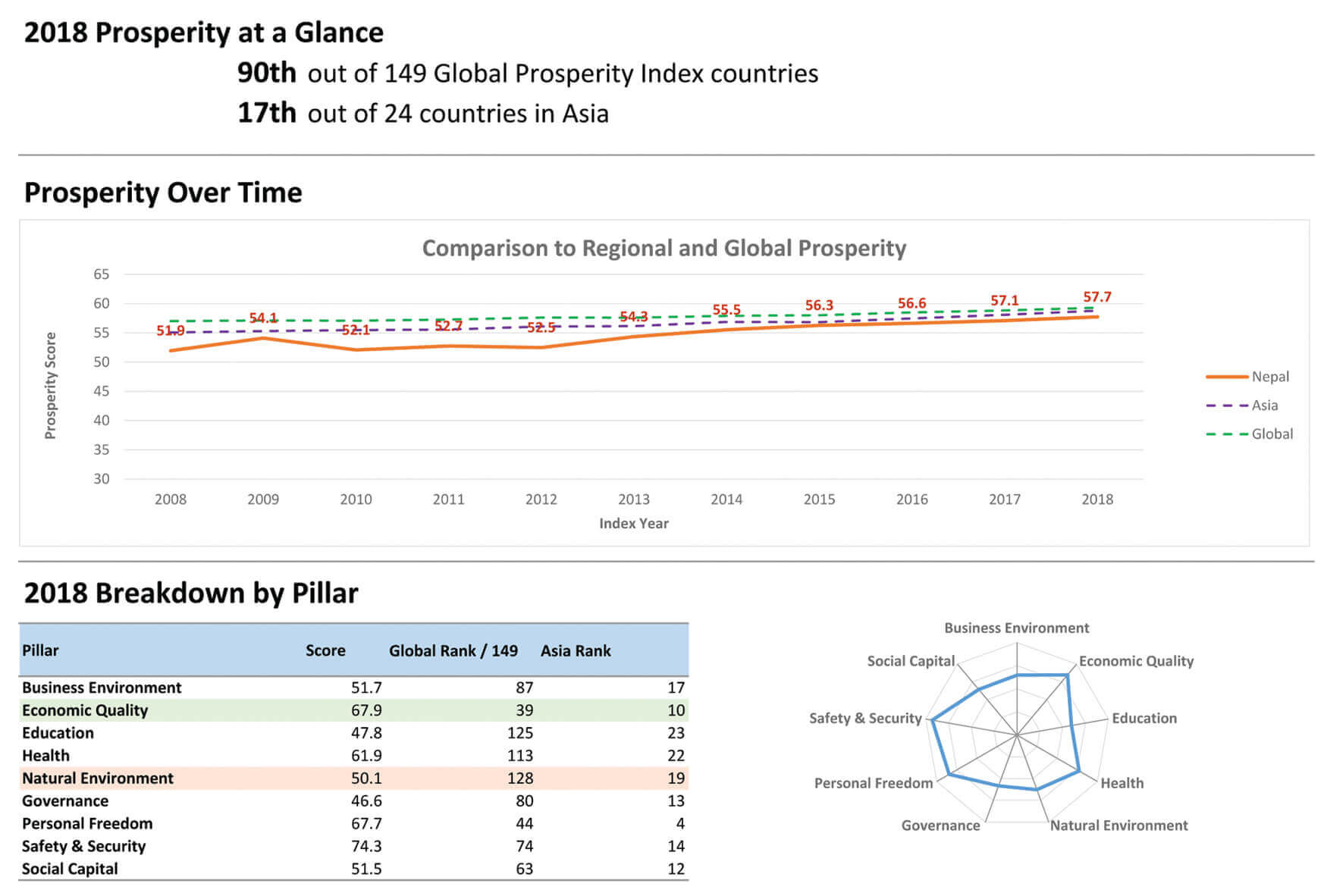
Nepal is one of the top 20 countries in the world with fastest rising prosperity over the last 10 years, a trend to be celebrated by Nepal’s leaders and citizens.
Nepal is among middle and low-income Asia-Pacific countries like Indonesia and India which have shown the sharpest improvement in their levels of prosperity in the past decade.
The Legatum Prosperity Index tracks prosperity in 149 countries, and its report released last week has good news: global prosperity is at its highest level ever. More countries are becoming prosperous, and more people are living more prosperous lives.
The Index also shows that rising wellbeing is linked to rising levels of prosperity. This might sound obvious, but there is a less clear relationship between wealth levels and wellbeing, where rising wealth does not necessarily translate into greater happiness.
Prosperity entails much more than wealth, it reaches beyond the financial into the institutional, the judicial, and the wellbeing of the people of a nation – it is about creating an environment where each citizen can reach full potential. A nation is prosperous when it has an open economy, inclusive society, strong institutions and empowered people who are healthy, educated and safe. This leads to higher levels of wellbeing.
Our analysis of what the top 20 rising countries have in common shows they all score highly for Safety and Security, one of the nine pillars used to measure prosperity and the key building block for prosperity. Ending war and conflict has proved to be the single most significant contribution to unlocking the prosperity of most rising countries, enabling widespread improvements across all the other pillars of prosperity.
Nepal is a good example: having ended a decade long war in 2006 after a peace agreement was signed between Prime Minister Girija Prasad Koirala and Maoist leader Pushpa Kamal Dahal allowing the rebels to join a transitional government.
This was an achievement of leadership at a time when war, terrorism and deprivation are rising significantly around the world. The fact that 15 of the 20 rising countries have improved in this pillar illustrates that insecurity from conflict and oppression can and must be overcome, before more broad-based prosperity can be achieved.