
|
|
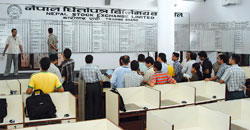
For Nepalis, there seems to be very little difference between the parliament and the stock exchange: in both we make noise and get a result. The Beed is yet to understand the connection between the stock market and the advent of loktantra or Nepal becoming a republic.
The Nepal Rastra Bank made an announcement as hastily as any political party last week, and then investors went and stalled the transactions at the stock exchange just like the political players stall parliament. And then, when the market reopened after a week, prices plummeted.
Beed predicted just such a bear run in his last column after the bull hit the wall, and it seems to have started. Suspended trading of certain stocks has become as regular as suspended proceedings in parliament.
The problems at the Nepal Stock Exchange are twofold. The first is that it is basically an extension of the casino, with people speculating rather than investing wisely. The other is that the volume of stocks is too low.
Globally, the development of stock markets has only worked well when guided by institutional investors rather than individuals. In Nepal we have individual investors, led by some rogue insiders, who have turned it into a punters' den. The stock exchange has been relegated to a racecourse, with betting dependent on the alcohol content in one's blood rather than rational thinking by one's brain.
The Nepal Rastra Bank, as this Beed has been harping on about for years, should not run things in knee-jerk fashion. In 1994, just such behaviour by the bank killed the stock market for more than a decade, and it seems not to have learnt from the mistake. The regulation of markets and the financial sector has to be an ongoing exercise, not just a reaction to the latest problem.