
Hundreds of thousands of families displaced by the earthquake are trying to survive from day-to-day, finding shelter from the heat and rain. Most of those who live in temporary shelters are women, and they also have the additional worry of keeping families fed, babies healthy as well as looking after their own security.
Women interviewed in shelters in some of the 14 districts affected by the quake say one of their main concerns is the lack of privacy and safety. Ranjana Majhi is 17, and has to wait for nightfall to change her sanitary napkin, duck behind a tree or slip into a nearby forest. The 25 April earthquake not only destroyed all 30 houses in Majhi Gaun 80km northeast of Kathmandu, but almost all their outhouses.
“It is difficult when we have our periods especially when we have to use cloth instead of sanitary pads,” says Ranjana Majhi. “We are not allowed to use the remaining toilets because they are unsafe, so we have to go into the forest at night to change.”
Niru Majhi’s two-month-old daughter has not been well ever since the earthquake, and she is trying her best to take care of her under a tent. “The floor is cold and there are bugs and dirt,” she says.
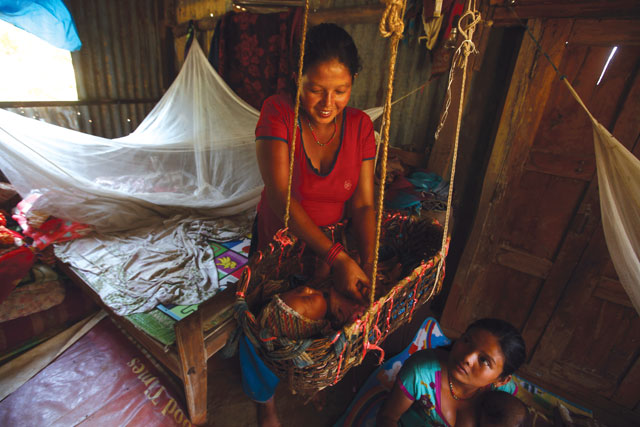
Photo: Gopen Rai
A few houses away is Amrita Majhi (pictured, above) who is unable to breastfeed her new-born baby boy. “They say there is baby food in the city, but we haven’t got any here,” says Amrita who went hungry for four days after the quake.
The five other new mothers in the village also do not have access to proper nutritious food. Asali Majhi is three months pregnant and is constantly plagued with stomach pain and has not had an appetite since the earthquake. Pramila Majhi, who is six months pregnant worries about her delivery. “I may have to give birth to my baby out in the open,” she says.
An estimated 3.2 million people in 14 districts were affected by the earthquake, and 525,000 of them are women of reproductive age. There are said to be at least 126,000 pregnant women in the affected districts, most of them living in temporary shelters. As many as 21,000 may need obstetric care within three months.