
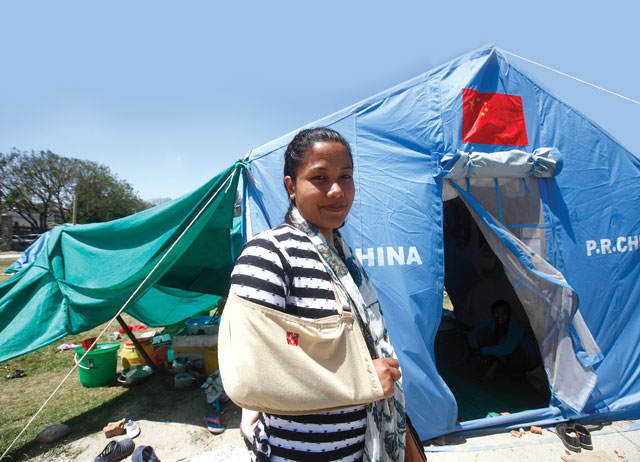
Photo: Gopen Rai
For the past one month Sita Timilsina’s (pic) daily routine has been the same. She wakes up in the morning, gets ready, then boards a micro van to yet another neighbourhood in Kathmandu looking for a room to rent. She has had no luck.
Most of the houses she has checked out have cracks and others that look safe charge steep prices. There is almost nothing in between: safe and affordable.
“It is impossible and I have looked everywhere,” said Timilsina, the frustration evident in her voice. Before the earthquake Timilsina paid Rs 4,500 for a three-room apartment, now the minimum price for a dingy room is Rs 10,000. So, Timilsina and her brother have no recourse but to continue living in a tent in Tundikhel. The house in Asan where the siblings shared a rented flat was reduced to rubble on the 25 April quake.
Timilsina is now expanding her search to the outskirts of Kathmandu and was on her way to Kadaghari when we met her. She agrees it will be a long commute to work but is ready to lease the space if the price is appropriate.
“What else can we do? We can’t live under a tent forever,” she said.
The shortage of rental space in Kathmandu has affected businesses too. Kritagya Shrestha, owner of a web designing company, was forced to relocate to his house after his office building was structurally damaged. “I contacted many brokers and even went through online directories and rental companies but I couldn’t find a proper space. I had no option but to move it home,” Shrestha told Nepali Times.
According to the National Population and Housing Census, over 300,000 housing units were rented out in the Valley in 2011. More than half the households in the capital rent their living space, and the earthquake destroyed over 70,000 houses in the Valley and damaged 60,000. This has left a lot of people homeless.