When Winston Churchill addressed the Canadian Parliament in December 1941, he recalled that generals of Nazi-occupied France had said that England would “have her neck wrung like a chicken”.
Churchill went on to quip: “Some chicken.” As the laughter and applause subsided, he added: “Some neck.” (Even longer laughter and applause)
We do not know who first started calling the narrow corridor that joins India to its northeastern states a 'Chicken’s Neck', but there also was the hint of a Churcillian connotation.
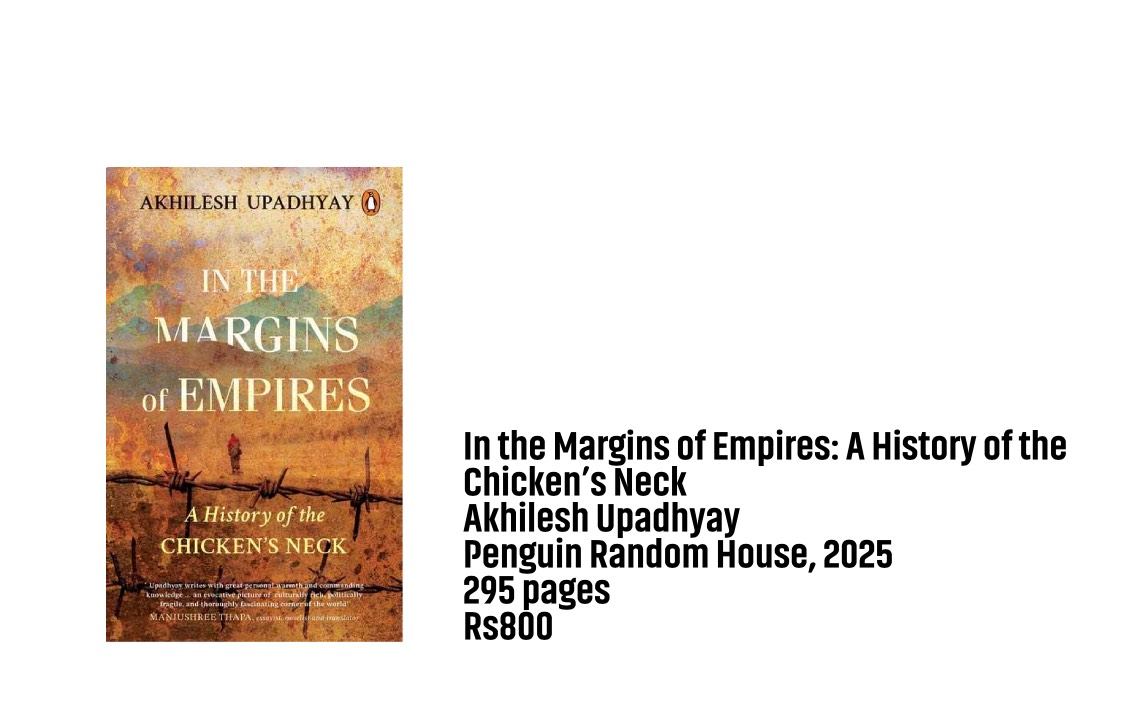
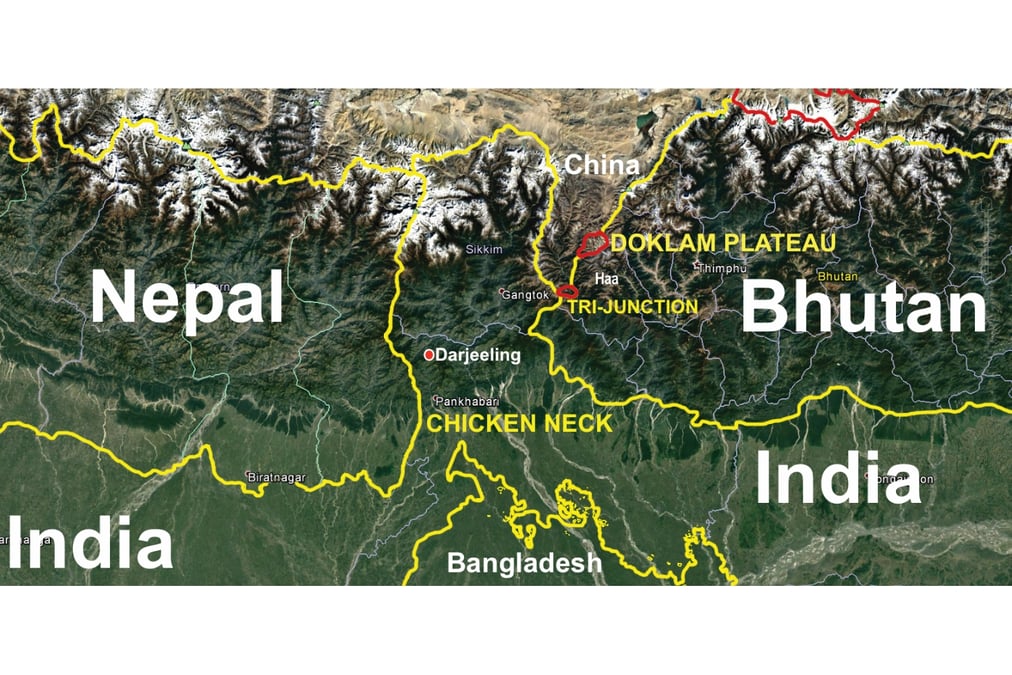
Akhilesh Upadhayay in his new book In the Margins of the Empires: A History of the Chicken’s Neck, uses this strip as an entry point to explore a region adjoining Nepal, Bhutan, China, Sikkim, Darjeeling, India’s northeast and the tectonics that shaped its geo-strategic terrain.
Upadhyay’s Chicken Neck is an organic whole, connected through centuries by transboundary traders, travellers, monks, spies, missionaries, mountaineers, and more. And as infrastructure and connectivity improves, smaller countries like Nepal and Bhutan (and earlier Sikkim) are caught up in the region’s rivalries.
The tri-junction of the Chicken’s Neck is a potential flashpoint that has obsessed India’s military strategists ever since Partition in 1947 and the formation of East Pakistan, and the Chinese annexation of Tibet.
India found itself squeezed between Chumbi Valley in China to the north and Pakistan to the south. So, when Sikkim started acting too independent for its own good 50 years ago, India engineered its annexation and turned it into its 22nd state.
The 1962 Sino-Indian war elevated its strategic importance even more. Alarm bells ring in New Delhi each time there is trouble around the Chicken’s Neck: the Naxalite uprising had to be swiftly crushed, the Indian military moved in to liberate Bangladesh, Gorkhaland and ULFA activities were dangerously nearby, Bhutan had to be appeased. Every once in a while things would flare up between India and China, as in the 2017 Doklam standoff.
And last year’s regime change in Bangladesh has rattled New Delhi enough to deploy its Rafael fighters and BrahMos cruise missiles in the Chicken’s Neck. It is now the most densely militarised strip of real estate in this part of the world.
As a journalist and former editor of Kathmandu Post, Upadhyay also peers at the Chicken’s Neck through Nepal’s perspective. After all, Jhapa (where the author is originally from) sits right there astride India’s strategic lifeline.
Geopolitics is at the front and centre of the book that takes readers back to the time Nepal was a closed Himalayan kingdom.
Nepal may be a yam between two boulders, but it may just as well be a thicker Chicken’s Neck as far as New Delhi and Beijing are concerned. Nepal’s rulers have always had to walk the tightrope between China and India. Khampa guerrillas, covertly helped by American and Indian intelligence, raided Chinese military convoys from bases in Nepal, and King Mahendra had to do some intricate diplomatic footwork.