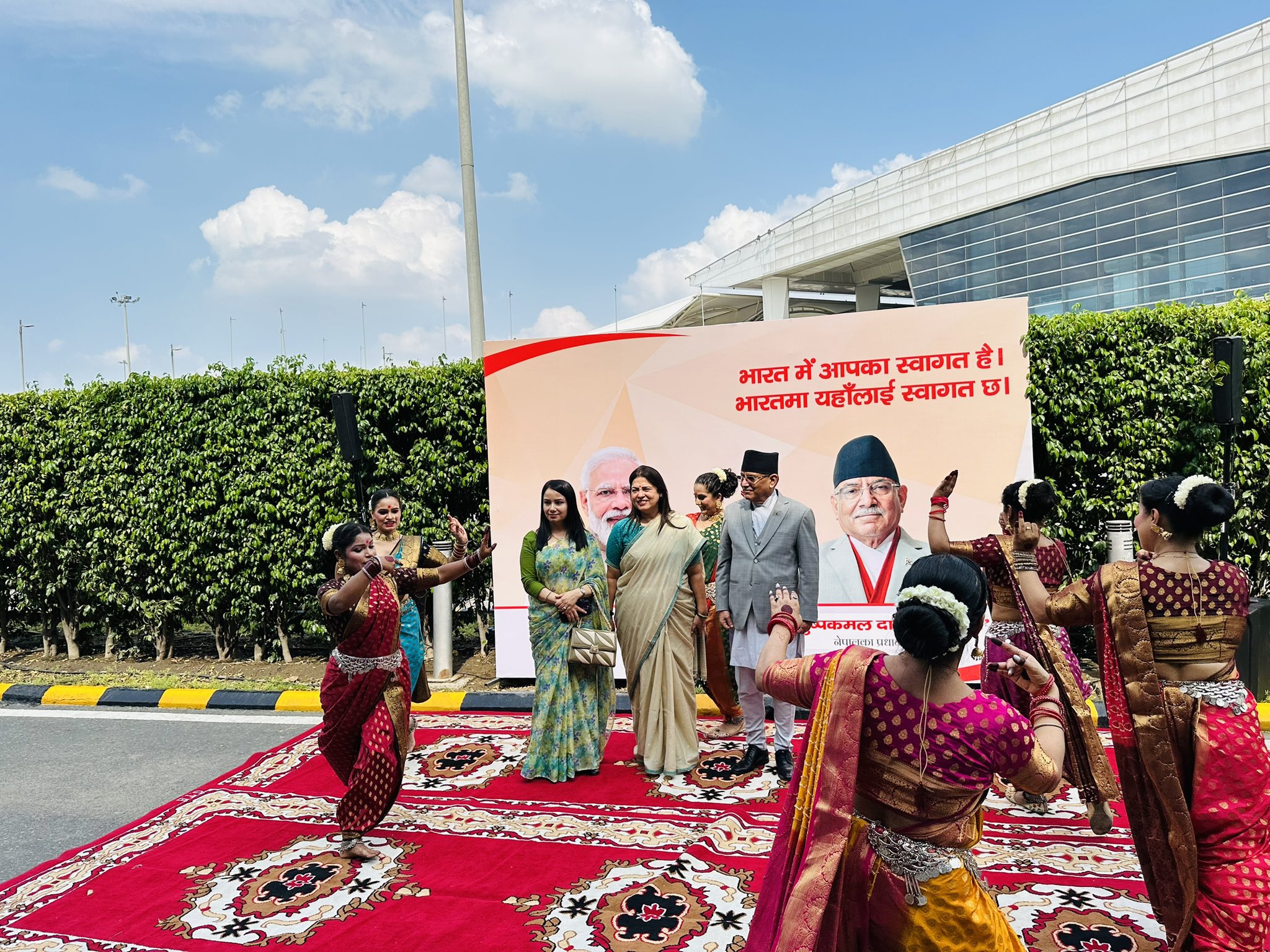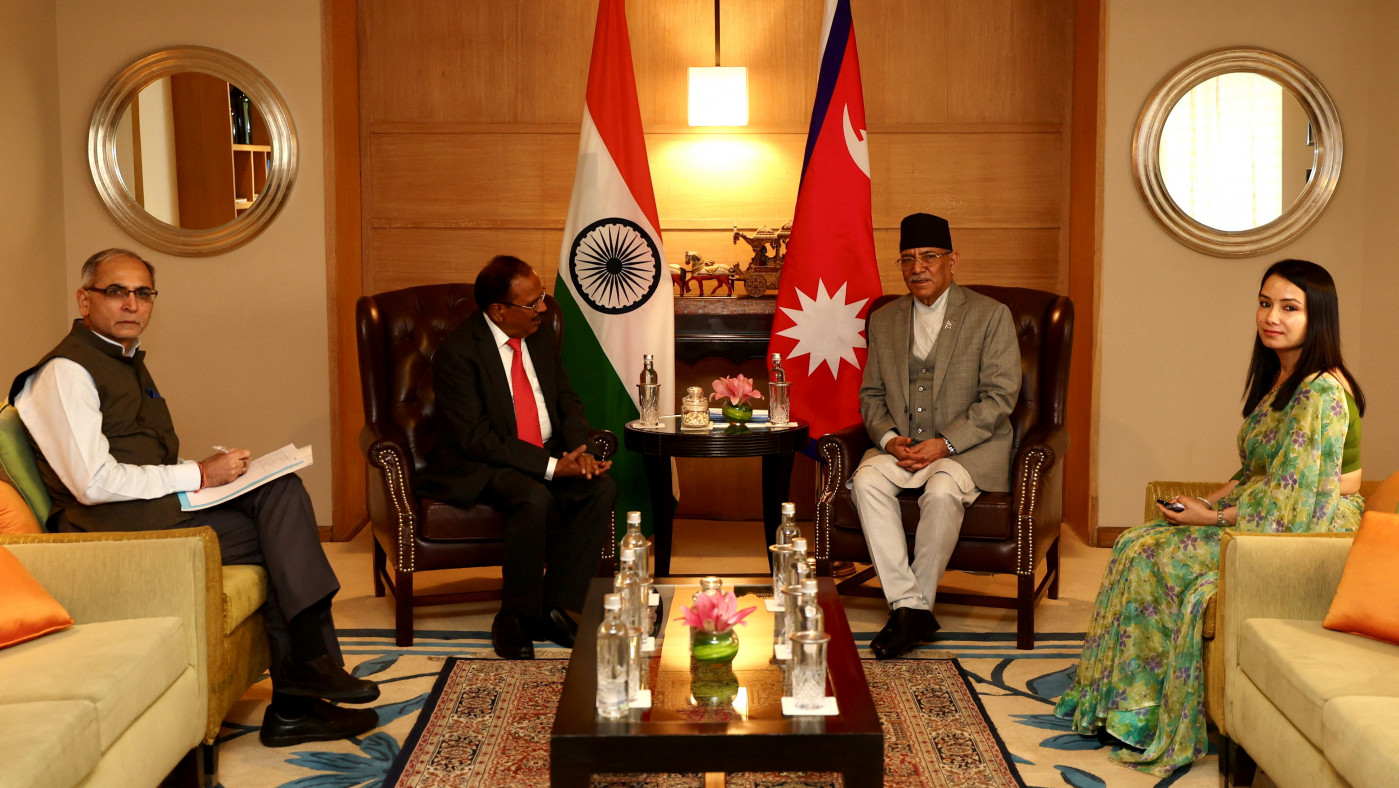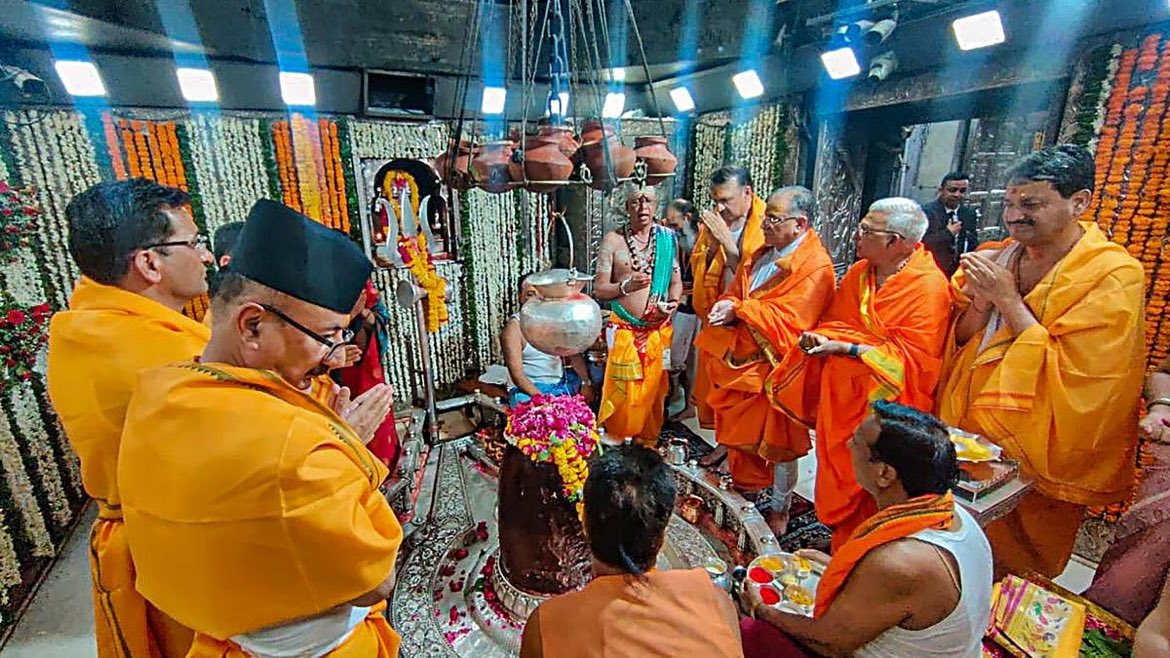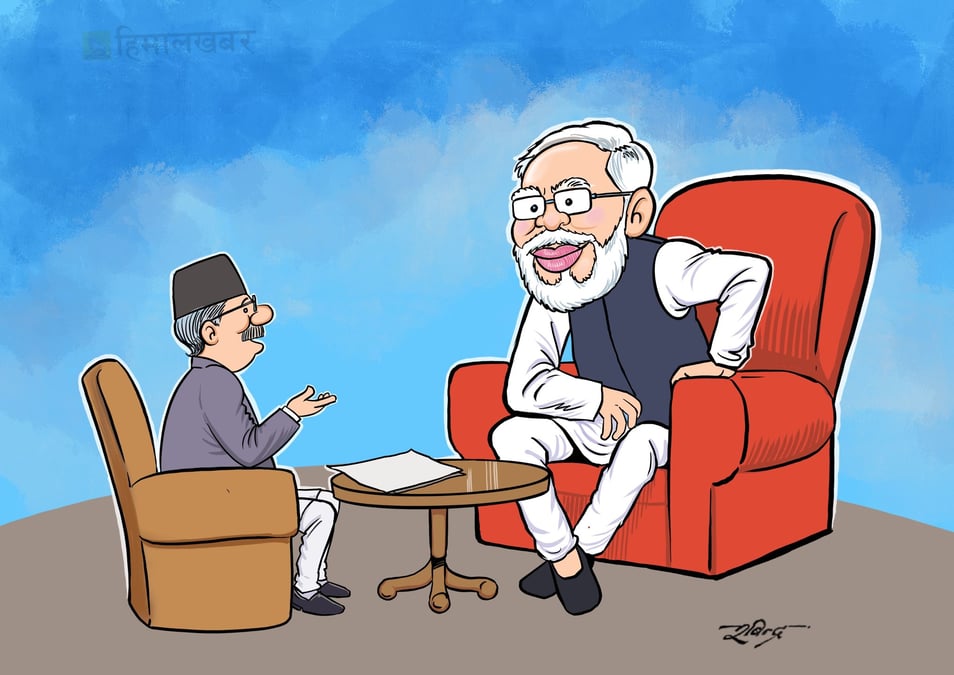
Even before Nepal’s Prime Minister Pushpa Kamal Dahal returned from a four-day official trip to India on Saturday, commentators and the social web back home had given the visit an F in his report card.
Welcoming Dahal before their bilateral talks on Thursday, Indian Prime Minister Narendra Modi had already declared that Dahal’s visit would be a “super-hit”. And indeed, from an Indian perspective it was.
Nepal had a long wish-list of things to be sorted out during the visit, but India was not giving in on any of the really substantial ones, and most of the outcomes were cosmetic.
Read also: Nepal PM to India to reboot ties, Chandra Kishore
The Nepali side has tried to highlight some of the positive achievements of the visit, but had to be satisfied with less than what it wanted.
Nepal had demanded a 25-year energy cooperation deal with India, but Modi only verbally announced that India would procure up to 10,000MW of power from Nepal in the next ten years.
The agreement on exporting only 40MW of power to Bangladesh via India was largely symbolic. The MoUs were signed in the presence of Dahal and Modi for the Lower Arun and Phukot Karnali hydropower projects (pictured below) had already got the green light in March.
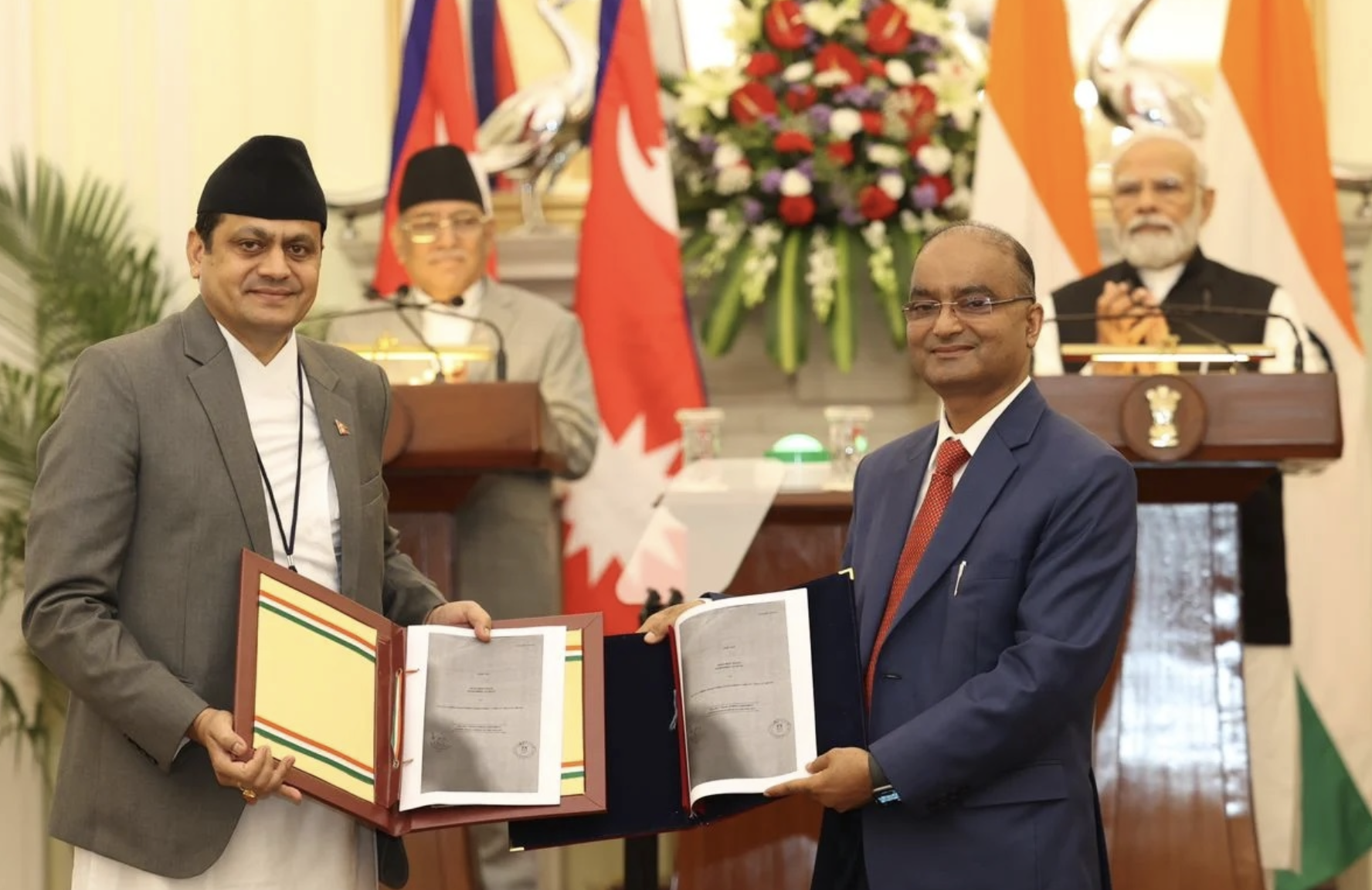
There is criticism from commentators in Nepal that those river project agreements, the Butwal-Gorakhpur transmission line as well as the ground breaking of two more petroleum pipelines in Nepal would disproportionately benefit India. Even the building of a new integrated checkpoints in Nepalganj and Dodhara Shandani would facilitate Indian exports to Nepal.
Building petroleum infrastructure at a time when Nepal should be focussed on meeting its 2045 net-zero decarbonisation goals appeared incongruous to many.
Nepal had insisted on two-way traffic on the L626 and B345 air routes west from Kathmandu that would shorten travel time and make inbound flights to Pokhara and Bhairawa airports more attractive to international operators.
But India grudgingly agreed only to lower flight level traffic eastbound on L626 below 15,000ft. This would only benefit short-haul turboprops into Nepal, and not international flights from Delhi, the Gulf or Europe.
India also agreed to provide access to its air space for ILS landings at the new Bhairawa airport, but said that inbound flights on B345 could not be allowed because of security concerns of its nearby air force base in Gorakhpur.
Instead of air routes, Nepal got a promise to allow the use of India’s inland waterways for transportation. And while the agreement for cross-border digital payments would make it convenient for citizens of both countries, there are misgivings about privacy issues of personal data of Nepalis.